With more than 700 employees and an HR team that hasn't grown, this CHRO is rethinking how the function gets work done
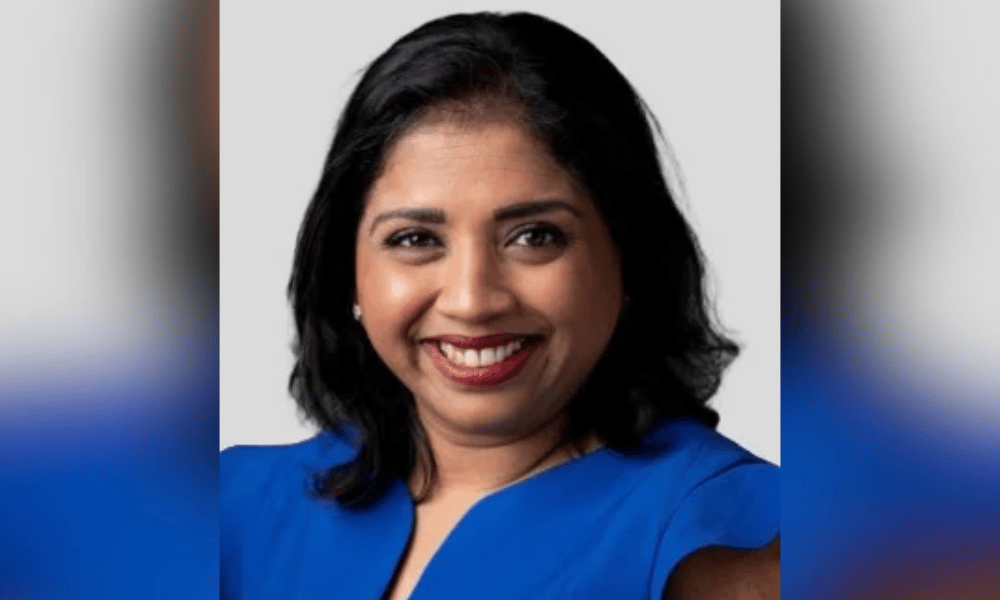
A little more than a decade ago, the Schwarzman Animal Medical Center (AMC) in New York City had about 250 employees. Today, it has more than 700, but the HR team supporting that workforce hasn't grown, according to its CHRO, Priya Jagannathan.
When Jagannathan joined the hospital in March as interim head of HR, many of its HR processes were still paper-based, despite the hospital's $125 million investment in an 83,000-square-foot renovation.
"When I joined, a lot of the processes in HR were on paper," she said. "It was like, oh my God, I've been transported in a time machine. That was 20, 25 years ago."
Now leading HR as CHRO, Jagannathan wants to give the function the kind of transformation the hospital has invested in elsewhere.
"We invested in transforming the building," she said. "Now I'm going to invest in transforming the function for the people that work here. Approaching that is through process transformation, automation, all with the backdrop of listening to my people and understanding their needs before I jump headlong into a change."
Automation before new hires
Rather than immediately expanding the HR team, Jagannathan wants to see how much work can be automated first. She made the case to AMC President and CEO Helen M. Irving for automating work before adding headcount.
"My pitch to Helen and the hospital has been, I'm not going to add people ASAP," Jagannathan said. "I am going to automate as much as I can before we start to add people, because right now we are in firefighter mode. Everybody does everything."
AMC has already automated reference checks and is using a tool called HireQuotient to identify licensed veterinarians and veterinary nurses and contact them by text message. With 27 open positions for licensed veterinary technicians (LVTs) and a talent acquisition team of just one, Jagannathan said the technology is helping expand the team's capacity to reach qualified candidates.
The goal isn't to eliminate hiring altogether. Jagannathan said she still plans to grow the HR team, but wants to prioritize positions that require human judgment and interaction. She's planning to add an employee experience director to oversee areas such as employee relations and benefits design, for example, rather than trying to automate those responsibilities.
Her focus on staffing also extends beyond the HR department. AMC remained open 365 days a year throughout four years of construction and treated about 57,000 patients last year, including 21,000 in emergency and critical care. Jagannathan said burnout is a real risk in that environment, making workforce planning another priority.
The problem is well documented across healthcare. HRD America has reported that heavy workloads and burnout are straining healthcare workers, while a 2022 study in Frontiers in Veterinary Science estimated that burnout costs the U.S. veterinary industry about $1.9 billion a year in lost revenue, including among veterinary technicians. The researchers pointed to organizational interventions such as improving workflow.
"Getting the workforce planning right, in terms of what is the staffing we actually need in order for people to not be burnt out, is the other thing I'm very focused on," she said. "That is going to take a little while because I'm still dealing with data on spreadsheets."
Using AI with a critical eye
Jagannathan is enthusiastic about AI, but her approach is informed by a healthy respect for its limitations. Her AI strategy training at Harvard reinforced the importance of being deliberate about the technology, particularly when it comes to the quality of the information being fed into it.
"AI, as we all know, hallucinates," she said. "You have to be very careful about what data you put in because whatever data you put in is what you kind of get the results and the outcome on."
The other lesson she took from the course and her own experience is that AI works in service of people, and she said she doesn't think it can ever replace them, especially in veterinary medicine. She pointed to the decisions involved in caring for an animal, including whether this is all that can be done, whether more can be done at a cost, or whether it's time to let the animal go.
"There's so much of the human judgment that comes into play that there is no way AI can replace or even take over 90% of what we do here in our medical center," she said.
That doesn't mean AI has no place in the hospital or its HR department, however. Jagannathan's team uses Microsoft's Copilot to record meetings and generate action items, and she has even used AI to rewrite HR policies with fewer errors. But she's also noticed that the technology can produce work that sounds convincing without necessarily making sense.
"I have team members who will sometimes give me stuff that makes no sense," she said. "Grammatically it makes sense, but it really doesn't make sense. And that's where the human comes in as to what kind of data have you input into it?"
Jagannathan said the output of AI depends on how people ask, rather than blindly asking a nondescript question. Separately, HRD America has reported that 44% of employers in ZipRecruiter's 2026 employer report said critical thinking is the skill candidates most often lack as AI moves into more everyday jobs.
Starting small, with guardrails
Jagannathan brings that same scrutiny to how AMC adopts new tools, and it shapes her advice for other HR leaders who are modernizing their workforce and introducing AI.
"Start small. Don't boil the ocean," she said. "I identified one or two things where AI could be used and used in a safe way, because you also have to look at data privacy, the ethical use."
Jagannathan said the 27 open LVT positions made recruiting a high-impact place to apply it.
"We could have done a lot more things with AI, but my approach is let's go slow, but let's go and do it in the most impactful areas," she said.
She said the HireQuotient project went through AMC's AI engineer, data privacy lead and IT leader before approval. Two people leaders have also told HRD America that governance and change management, not mandates, determine whether AI adoption sticks. The U.S. National Institute of Standards and Technology (NIST) publishes a voluntary AI Risk Management Framework that offers a starting point for that kind of review.
Jagannathan said she's proud of the approach AMC has taken so far.
"This is a good case study in coming in at a time when there's so much technology and integration that you can take advantage of, and grow a team in a very purposeful and strategic way instead of just coming in and adding people," she said.