‘Now is the most important time to be thinking about what is the perception out there of you as a company, you as an employer’
New Zealand workers are increasingly uneasy about how they are hired and how long their jobs will last, with new research showing deep discomfort about artificial intelligence (AI) in recruitment alongside widespread feelings of insecurity at work.
Overall, 52% of New Zealanders say they are uncomfortable or very uncomfortable with AI being used to decide who gets a job, according to findings from the GoGetta x Ipsos Job Mobility Survey of 1,000 full-time and part-time employees.
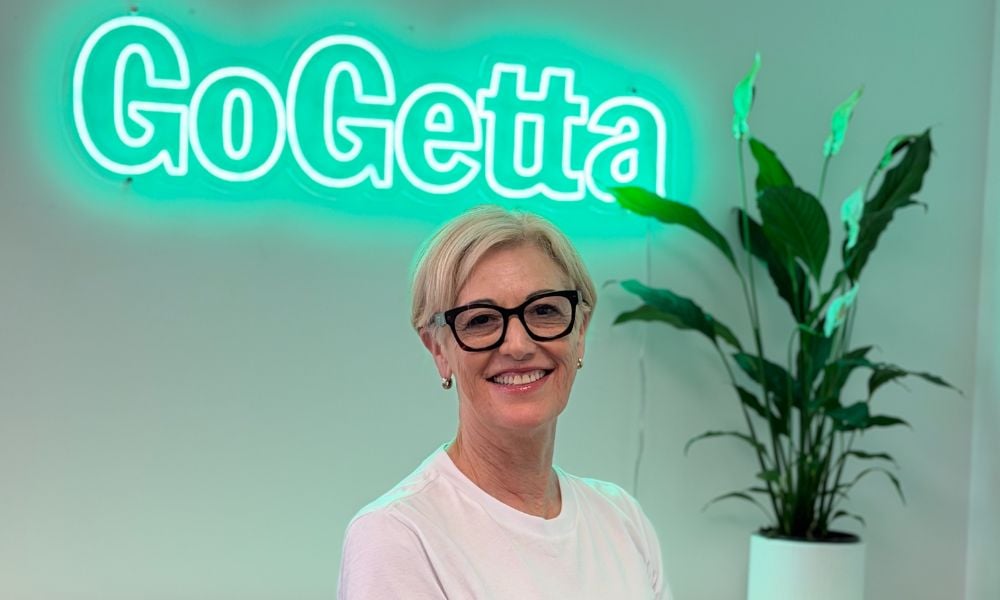
GoGetta founder and CEO Colleen Getley said the growing dependence on algorithms in hiring is colliding with a labour market in which many workers already feel vulnerable.
In an interview with HRD New Zealand, she noted that while 60% of workers feel secure in their roles, that leaves 40% feeling “insecure and vulnerable” in what she describes as a tight and unstable market. “There’s certainly a feeling of insecurity,” she said, warning employers that disengagement and mistrust can quickly become a business problem if not addressed.
Job openings for human resources and recruitment positions went up in NZ amid stabilising hiring activity in the country, according to a previous report.
AI screening raises fairness concerns
For many employers dealing with high application volumes in a weak economy, AI-enabled tools have become a standard way to manage recruitment. Getley said these systems typically extract keywords from job ads and compare them with keywords in CVs, grading and shortlisting applications automatically.
She said this can have unintended consequences for both fairness and candidate experience, particularly when strong applicants do not use the “right” language.
“You’ve got some very good people who may not have put their CV in a particular way that highlights their real skill sets,” she said. “When you are applying for a job, it’s your life… to get screened out by a non-human is really uncomfortable.”
That discomfort shows up in the survey data, where a majority of respondents oppose AI making hiring decisions, and in anecdotal feedback from candidates who never reach a human recruiter.
Getley said AI is now embedded even earlier in the process, with many employers using generative tools to draft job ads, while candidates use similar tools to write their CVs. The risk, she said, is that machines end up talking to machines.
“You’ve got an employer who wants a particular person with particular skills, a particular fit into the organisation… They’re getting AI to write their job ad, and then you’ve got someone else using AI to create their CV. The AI bots are matching each other, not the employer and not the candidate,” she said.
By the time the parties reach the interview stage, “there is quite often a mismatch of the expectations of both”, and the process has done little to assess cultural fit, personality or attitude.
Getley described AI as a “fantastic tool” to aid recruitment, but insisted it “can never replace the part of the human in there, that human screening and vetting process”. She also warned that organisations relying heavily on bots risk damaging their reputation with jobseekers.
“If you are only interacting using AI and bots, you’ve got a faceless organisation and therefore you’re not going to be seen as an organisation of choice and attract the top candidate you actually want,” she said.
Adoption of AI in New Zealand workplaces soars, but staff resistance remains a key challenge in implementation, according to a previous report.
Insecurity inside the workplace
The same economic conditions driving employers toward automation are also fuelling unease among existing staff.
Getley said some companies are cutting headcount to save costs, leaving remaining staff to absorb the extra work.
“Some companies, for example, are really reducing the size of their staffing to save costs but all that means is that other people are taking on more work,” she said. “If you’ve got disengaged employees then your business is not going to perform to the level it should be performing at and if it’s not performing to that level your revenue is going to suffer, your standing against your competition is going to suffer. I mean, at the end of the day, businesses are people.”
She argued that job insecurity can quickly translate into lower motivation and productivity if employees do not feel valued or supported.
“If you have a motivated workforce, you’re going to get more than a person’s effort out of them if they’re feeling engaged, looked after, secure and motivated,” she said, contrasting that with the performance risk of an anxious, overworked team.
New era of job mobility
Even as many workers feel exposed, the survey indicates they are willing to move if a better balance of pay, security and flexibility is on offer.
The research shows that 31% of New Zealanders would leave their job for less than a 10% pay rise, with that proportion rising to 34% among those earning under $100,000 and falling to 19% among those earning more than $100,000.
Getley described this as “a strange time for job mobility in New Zealand when on one hand people crave stability, but on the other hand they will take far less of a pay bump in order to jump ship”, calling it “a new era in recruitment” compared with five years ago, when most workers would not have moved for less than 10%.
She said the combination of insecurity and openness to change has created a “poachable majority” of employed workers who are not necessarily browsing job boards but are willing to talk if approached with the right role.
At the same time, she said, the shift toward automation risks making recruitment “increasingly automated and impersonal”. “The best candidates aren’t using ChatGPT to write their CVs, and the best recruiters aren’t sitting back and depending on AI to find and hire candidates,” she said in GoGetta’s launch announcement.
“Now is the most important time to be thinking about what is the perception out there of you as a company, you as an employer. What’s your employer brand looking like?” she said. “Because when [the] market changes and you’re going to start looking for staff, it is those that have consistently looked after their staff, whether they are employing or letting them go, that are going to attract staff that want to work for them.”