A 2017 letter promising "mutually acceptable" policy looked like a lock - until it wasn't
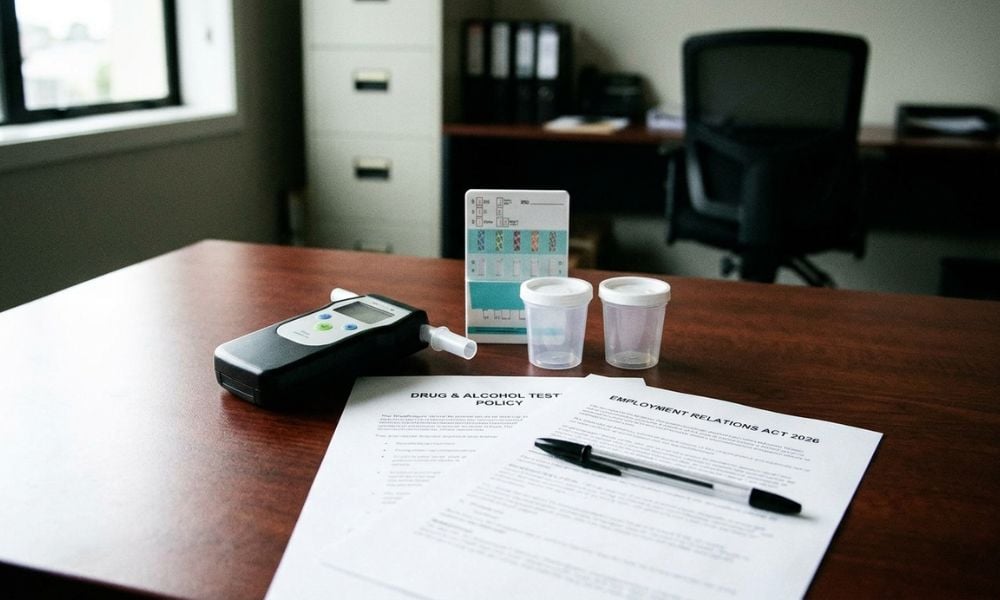
New Zealand Police cannot be forced to get their union's sign-off before rewriting the rules on workplace drug and alcohol testing - at least, not on the strength of a 2017 letter the union had been counting on.
The Employment Relations Authority ruled on October 19 that a letter sent by NZ Police to the New Zealand Police Association (NZPA) back in March 2017 did not lock in a permanent requirement for the union's consent before any changes could be made to the force's Drug and Alcohol Policy. The letter's commitments, the Authority found, were fulfilled when the policy was first developed in 2019.
The backstory stretches back more than a decade.
The Constabulary collective agreement for 2012-2015 included a memorandum committing both sides to cooperatively develop a "mutually acceptable" drug-testing program and an alcohol-management process. When the next collective agreement was negotiated in 2015, both parties agreed to take the memorandum out. The union's understanding, though, was that the underlying commitment hadn't changed - it was housekeeping, not a policy shift.
Then came the letter.
In March 2017, a senior Police manager wrote to the union president confirming that Police would "work collaboratively" with the NZPA in developing a drug and alcohol testing policy and that "any such policy must be mutually acceptable to both parties." For the union, that language was a handshake locked in ink - an ongoing right to say no.
A policy was duly developed and finalised in September 2019. It noted that random testing across the wider workforce was not yet included, but "may be included at a future date following further consultation and agreement." In 2023, a review clause was built into the policy requiring "consultation with the Police Association and Leaders Guild and agreement to any amendments proposed."
So far, so collaborative.
Then, in late 2025, Police began developing substantial proposed changes - including targeted testing, random testing, a reduced alcohol limit, changes to self-disclosure pathways, and a shift in the balance between rehabilitation and discipline.
The union raised concerns. Police kept moving.
In March 2026, Police briefed the union president on their plan to consult staff on what they called "fairly significant changes" and flagged a "key change that will impact a previous agreement." A week later, Police released the draft amended policy to the union before launching wider staff consultation. No further substantive discussion had taken place, the union said.
The NZPA filed proceedings on May 1, 2026, seeking a compliance order to force Police to honour what it said was a binding commitment to obtain the union's consent.
The Authority was not persuaded the 2017 letter carried that weight.
The language about working collaboratively "in developing" a policy pointed to something still being built - not something already in place and subject to future amendment. Once the policy landed in 2019, those commitments had been met. The 2017 letter "did not refer to any subsequent Policy amendments," the Authority found, "but the Policy remained in place until and unless any amendments occurred."
The Authority also found the letter was not a term of the collective agreement, and was not a valid variation of it - because the formal ratification process required for variations had not been followed.
That is not the end of it, though.
The Authority made clear it will now move to the next phase: the union's application for a compliance order and its claim that Police breached the duty of good faith. Those matters remain live, and costs have been reserved.
For HR teams navigating policy reform in unionised workplaces, this case is a sharp reminder that the document you are relying on to lock in consultation rights may not say what you think it says - and that the language of "developing" a policy and "amending" one can land very differently when tested.