He’d worked at the same site since 1995. Then came the one-page summary
A fitter suspended for nearly a year over complaints he was never allowed to see has won more than NZ$83,000 from the Employment Relations Authority.
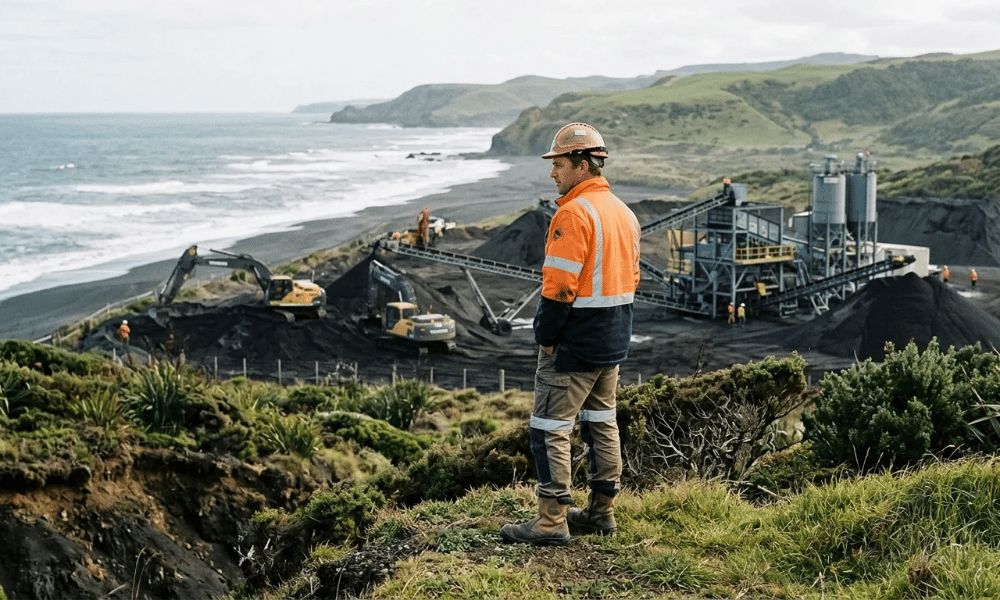
The worker had been employed at Taharoa Ironsands Limited’s (TIL) west coast North Island mining operation since 1995. TIL took over the site from New Zealand Steel Mining Limited in May 2017.
In November 2025, TIL received complaints from some of the worker’s colleagues. The allegations centred on behaviour described as intimidating and bullying, along with a failure to work cooperatively as part of a team. Two of the worker’s colleagues faced parallel complaints involving similar conduct.
Here is where TIL’s process came unstuck.
What the worker actually got
On November 12, 2025, TIL invited the worker to a disciplinary meeting. Along with the letter, TIL handed over a single signed statement - not the complaints themselves, but a one-page summary signed by members of senior management. It recorded that multiple staff had independently alleged intimidation, a hostile environment, deliberate lack of cooperation, and resistance to instruction. The complainants, the statement noted, were "extremely concerned for the personal repercussions, hence wanting to remain completely anonymous."
That was it. That one-page statement was the only written material the worker ever received about the case against him.
His union representative wrote back the next day requesting specifics: when the alleged behaviour occurred, what exactly happened, and who was involved. TIL did not provide any further information.
Three months on full pay, then the money stopped
TIL suspended the worker on full pay from November 17, 2025. He objected, pointing out there was no basis for the suspension when he had no real knowledge of the complaints. TIL said the suspension would enable "a fair and thorough investigation" while ensuring staff safety.
There was no provision for suspension in the collective agreement or in TIL’s own policies.
Two disciplinary meetings eventually took place in February 2026. At the first, on February 4, TIL’s managing director verbally provided further detail about the allegations. The worker took handwritten notes, recording claims that ranged from not saying hello to colleagues through to vandalising a work vehicle. He responded to the vehicle allegation on the spot but said he could not address the rest without seeing the actual complaints.
Before the second meeting on February 11, the worker again requested the full complaints and any interview notes. TIL again refused. The meeting broke down - disputes over whether it could be recorded, whether the worker could be properly represented, and counsel availability.
TIL’s response was immediate. The worker was moved to unpaid suspension from February 12, 2026. He remained unpaid through to the date of the determination - more than eight months.
What the Authority found
The Authority found the worker was unjustifiably disadvantaged on both fronts.
On the disciplinary process, the problem was fundamental. The Employment Relations Act requires an employer proposing a decision that could end someone’s job to give the employee access to the information behind that decision - and a genuine chance to respond. TIL had warned the worker that outcomes up to and including termination were on the table. That meant "relevant information" included the complaints and any interview notes TIL would rely on, not just a management-level summary of themes.
The Authority put it plainly: the provision of information "goes to the heart of natural justice because an employee has a right to know what they have been accused of, with sufficient detail provided, so they can respond appropriately."
On the suspension, four problems stacked up. TIL’s letter did not show it had weighed the worker’s objections. There was insufficient evidence that the worker’s continued presence would have caused significant issues. Because TIL had only provided the management summary, the worker could not address TIL’s safety concerns. And there was insufficient evidence that TIL had actually progressed the investigation after suspending him - the stated reason for the suspension in the first place.
There was also a practical reality TIL had overlooked. The worker continued to live in the village alongside the very colleagues he was supposedly being kept away from.
The shift to unpaid suspension fared no better. The underlying justification had not changed, and by that point the worker still lacked the information he needed to respond.
Tikanga and community standing
The determination gave specific weight to tikanga. TIL’s mining operation sits on whenua leased from Taharoa C Incorporation and the original owners. The worker is a kaumatua within the community. The Authority accepted that TIL’s actions had undermined his mana and did not reflect tikanga concepts such as manaakitanga, tika, and pono.
Being placed on suspension carried particular force in a close-knit community where the worker lived in the village alongside colleagues.
The numbers
The Authority ordered TIL to pay the worker NZ$23,000 in compensation for humiliation, loss of dignity, and injury to feelings - NZ$15,000 for the suspension and NZ$8,000 for the failure to provide information. TIL was also ordered to pay NZ$60,889.89 in lost wages from the period of unpaid suspension. The orders are payable within 28 days.
TIL argued the worker’s remedies should be reduced on the basis he had not engaged constructively with the process. The Authority disagreed. The worker had written to TIL objecting to the suspension and seeking information. He attended both disciplinary meetings. The problem was not his engagement - it was that he had not been given enough to engage with.
The Authority declined to impose a penalty on TIL for a breach of good faith, finding insufficient evidence that the failure to provide information was deliberate, serious, and sustained, or intended to undermine the employment relationship. Costs were reserved for the parties to resolve between themselves.
For HR teams managing anonymous complaints, the case draws a hard line: protecting complainant identity does not excuse withholding the substance of the allegations from the person accused - especially when termination is a possible outcome and the employer has no contractual or policy basis for suspension.