Tips for building a lean but powerful HR analytics capability
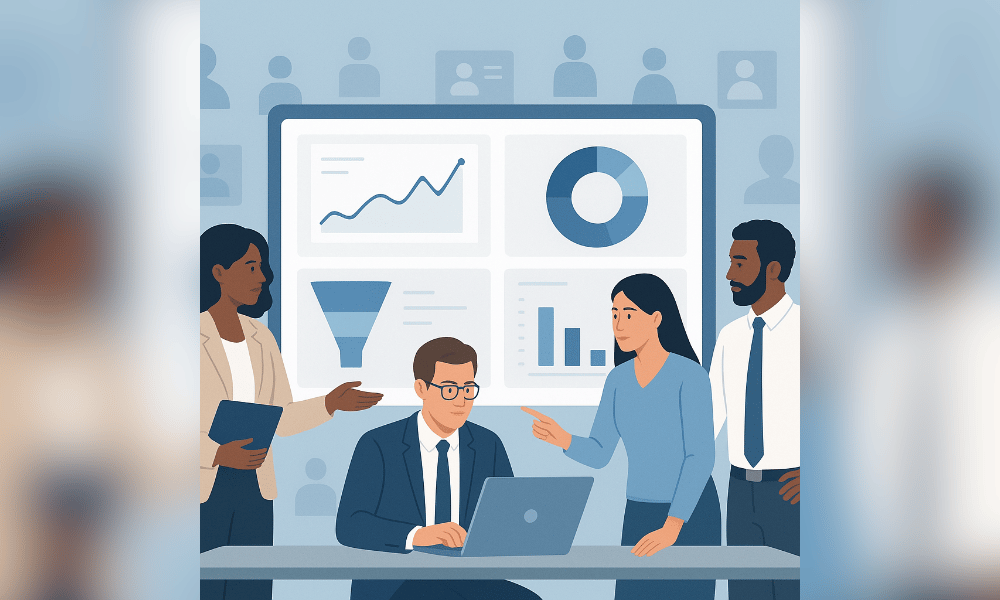
Senior HR leaders are facing an inflection point amid a shift from intuition-led decision-making to evidence based, data driven strategy.
As Able Australia’s chief people officer Justine Figo puts it, the often-held view of HR as “soft and fluffy” hasn’t been about the work itself – it’s been about the lack of robust data to make HR’s impact measurable.
“People and culture has historically been seen as soft and fluffy because we haven’t had the right data,” she said.
“In the marketing function, once you had click throughs, and access to tailored data and personalisation tools, the function became far more evidence-based and targeted. That evolution is now happening in people and culture.”
The opportunity now is not merely to collect more numbers, but to use analytics to solve concrete business problems, shape strategy and strengthen culture.
For those unfamiliar with data and analytics and its potential, Figo urged them to treat HR as having its own “click throughs”.
Marketing’s evolution offers a useful mental model. Once marketers could track how people behaved – what they clicked, opened, ignored and bought – their conversations with the C-suite changed.
HR now has access to similar levels of visibility on the workforce.
Modern HCM and related systems, give HR the ability to:
- See patterns of leave, absenteeism and turnover in real time.
- Identify inefficiencies within the HR function itself (e.g. bottlenecks in recruitment, onboarding, case management).
- Track the types of questions employees and managers are asking, and where policies or processes aren’t clear.
- Understand workforce costs by role, team and service line.
- Model workforce planning scenarios based on demand and constraints.
In other words, HR can increasingly answer questions it has always wanted to answer – but with evidence.
The shift for HR leaders is mindset: stop seeing “HR data” as basic headcount reports and start seeing it as behavioural insight into how your organisation actually works.
One of the most common traps Figo sees is HR teams building long lists of people metrics without a clear line of sight to business outcomes.
“It’s very easy to get lost in a lot of metrics and not know what the end outcome is,” Figo said.
An example is focusing on "average notice period for leave requests (paid and unpaid)" as a key HR metric. On the surface it’s operational hygiene, it affects rostering stability, cost of backfilling, client experience, leadership capability and pipeline planning.
Don’t start from, “What HR metrics should we track?” Start from, “What business outcome must we move, and what people data helps us do that?”
Build a lean, embedded analytics capability – not just a big project
Many organisations assume serious people analytics requires a large transformation program or a big central team. Figo’s experience suggests the opposite: you can create meaningful impact with lean, embedded capability, if you design it well.
While a one-off HCM implementation can be essential, HR leaders also need a standing commitment to “systems and data improvement” inside the HR function.
Acceleration comes when HR data is tightly linked to financial performance – and that requires an intentional partnership with finance, Figo explained.
“The relationship between the overall budget and the financial performance driven by your people is where we’re finding opportunities to provide better client service and move a lot faster,” she said
Practically, that means moving beyond using finance only for budget sign‑offs or static salary reports.
Finance often has the modelling skill and data discipline; HR has the context about roles, behaviours and work design. Together, they can create analytics that genuinely drive decisions, not just inform them.
Ironically, as data and analytics mature, culture becomes the main determinant of whether they create value.
Figo believes the real strength is not the sophistication of the dashboards, but the ability of the CEO, executive team and HR to sit together, define the right questions and respond constructively to what the data shows.
For all the emphasis on systems and metrics, Figo’s final message to HR leaders is about something more fundamental: purpose.
She argued that being “maniacal about purpose” is non‑negotiable if data is going to matter at all.
“Our purpose is absolutely to care for our clients and put our clients at the centre. There’s no point to the data, there’s no point to the conversation, there’s no point to the culture unless everything at the end of the day is about doing what we’re here to do,” Figo said.
Translated to any sector: if your analytics program cannot clearly explain how it helps you serve your stakeholders better, it will eventually lose energy and support.
Where to begin
For HR leaders looking to lift their use of data and analytics, the following sequence reflects Figo’s approach and broader best practice:
- Clarify 1–2 organisational outcomes you must improve in the next 12–24 months.
- Map the workforce drivers behind those outcomes and select a small set of high leverage HR metrics.
- Build or strengthen a lean analytics capability in HR that can own systems, data quality and reporting.
- Deepen your partnership with finance so people analytics and financial performance are woven together.
- Invest in the culture and conversations around data – especially at board and executive level.
- Keep purpose front and centre as your ultimate decision-making lens.
Data and analytics in HR are not about proving the function’s worth for its own sake – they’re about helping organisations “serve your people and your clients better.”