Is 'time travel' being used to try to fool you?
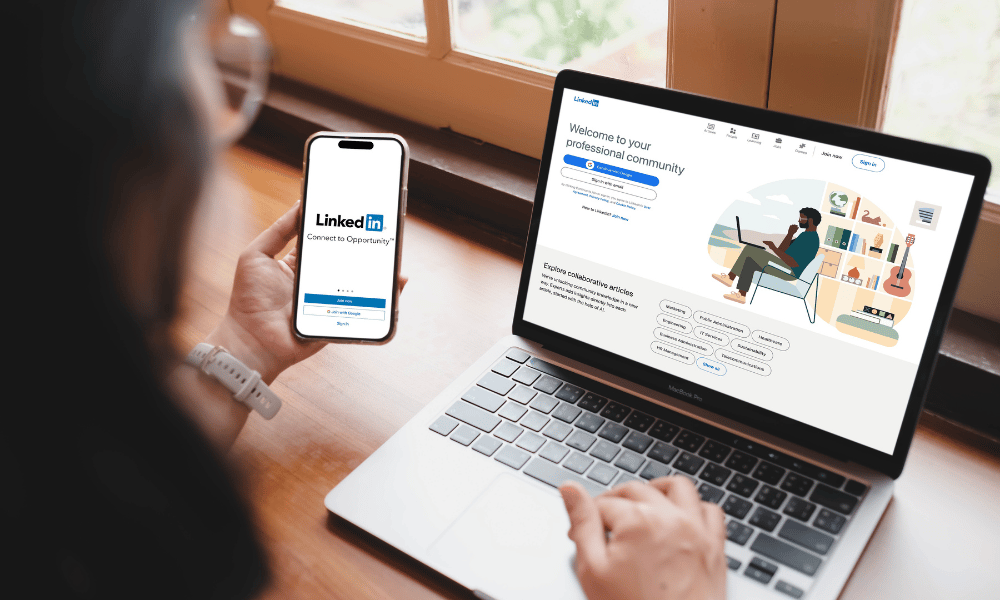
Check a candidate's LinkedIn profile today, and it's tempting to assume a job they held five years ago reads the same way it did back then. New research says that's often not true, and what's changing tells you a lot about where the job market is headed, in Australia as much as anywhere.
A working paper out of Stanford University and workforce data firm Revelio Labs, released through the National Bureau of Economic Research this July, finds that nearly one in five established US LinkedIn users, 19.7%, have gone back and edited the title or description of a job they'd already left. Researchers Nicholas Bloom, Gideon Moore, Lisa K. Simon and Caelan Wilkie-Rogers call it "time travel": rewriting the past to fit the present. The study is US-based, but LinkedIn's editing tools work exactly the same way here, so there's no reason to think Australian candidates are behaving any differently.
This isn't someone fixing a typo the week after starting a new job. The median edit happens more than four years after a person has left the role, long after the actual work has stopped changing. What's different isn't the job. It's how people choose to talk about it, after the fact.
What people are adding, and what they're quietly dropping
The researchers tracked how language tied to three in-demand skill areas moved through these edits between 2021 and 2026: artificial intelligence, remote work, and diversity, equity and inclusion.
AI-related terms, things like "AI," "GPT," "LLM" and "artificial intelligence," have been added to old job descriptions at more than six times the rate seen before ChatGPT launched in late 2022, though the study notes that growth has cooled off in recent months. That tracks with what's happening in Australian job ads too, where AI skills now command a wage premium of up to 62% as postings requiring AI capability have roughly doubled year on year.
Work-from-home language tells a different story. Additions of terms like "remote" and "hybrid" slowed down steadily through 2024, and by the end of the study period, people had stopped net-adding remote language to old roles altogether. Australian employers have watched something similar play out through a wave of return-to-office mandates that have triggered retention and hiring headaches, even as Victoria moves to give some workers a legal right to work from home.
DEI-related terms saw the sharpest reversal of all. Additions of words like "diversity," "equity" and "inclusion" fell off sharply at the start of 2025, right when the Trump administration's executive orders targeting DEI programs kicked in across the US federal government and among federal contractors. Some Australian employers that scaled back their own DEI commitments in response have found it came at a cost: nearly half of organisations that dropped DEI policies say they're now worse off for it, citing lower morale and weaker retention of diverse talent.
Why this matters if you're hiring
The paper's authors are careful to say these edits aren't just resume padding. Since a worker's actual duties in a past job can't change after the fact, any edit to how that job is described is really a shift in what the researchers call "branding," how someone chooses to sell experience they already have. When a worker retroactively adds AI language to an old role, it may say more about what they think you want to hear than what they actually did differently at the time.
That's worth keeping in mind if you're trying to verify what a candidate is claiming. If a growing share of the AI experience on a resume was added well after the fact, sometimes years later, it gets a lot harder to treat someone's LinkedIn history as proof of when they actually picked up a skill.
Read next: How can HR spot candidates padding AI terms on resumes?
The study also found a strong link between these edits and active job hunting. Workers who go on to change employers are more than twice as likely to have made a retroactive edit a full year before their move, and that rate climbs further in the six months before the switch, hitting roughly double the baseline right around the move itself.
The editing wasn't spread evenly across the workforce, either. Tech and information workers time-travel far more than most, nearly one in three, according to the study, compared with roughly one in seven in construction or real estate, and MBA holders topped every education group at 29.3%.
Workers under 30 were nearly four times more likely to edit an old job than those over 60.
Read next: Employers now have an obligation to build AI skills, even when workers leave
A word of caution for your own workforce data too
There's a broader lesson here for anyone using LinkedIn or similar platforms to track skills trends across an industry or region. The researchers found that pulling AI-skill data from a single, present-day snapshot of LinkedIn overstates how common those skills actually were back in 2022 by around 30%, simply because so many mentions were bolted on after the fact.
If you're benchmarking your own workforce against "what LinkedIn shows" for a past period, including comparing local talent pools to global ones, treat those historical comparisons with a grain of salt. The platform's record of the past keeps changing.
Read next: Trump's DEI, immigration shifts hit employers hard in 2025
None of this means candidates are lying, the authors are careful to note. Someone might just be filling in detail they left out the first time, or describing old work in language that better reflects what they actually did.
But if you lean on professional profiles as a stand-in for skills and experience, the takeaway is simple: what you're looking at isn't a fixed historical record. It's a living document, edited with an eye on what comes next.
Read next: Is full-time WFH working out?