Safe Work Australia analyses actions or events that led to serious work injuries

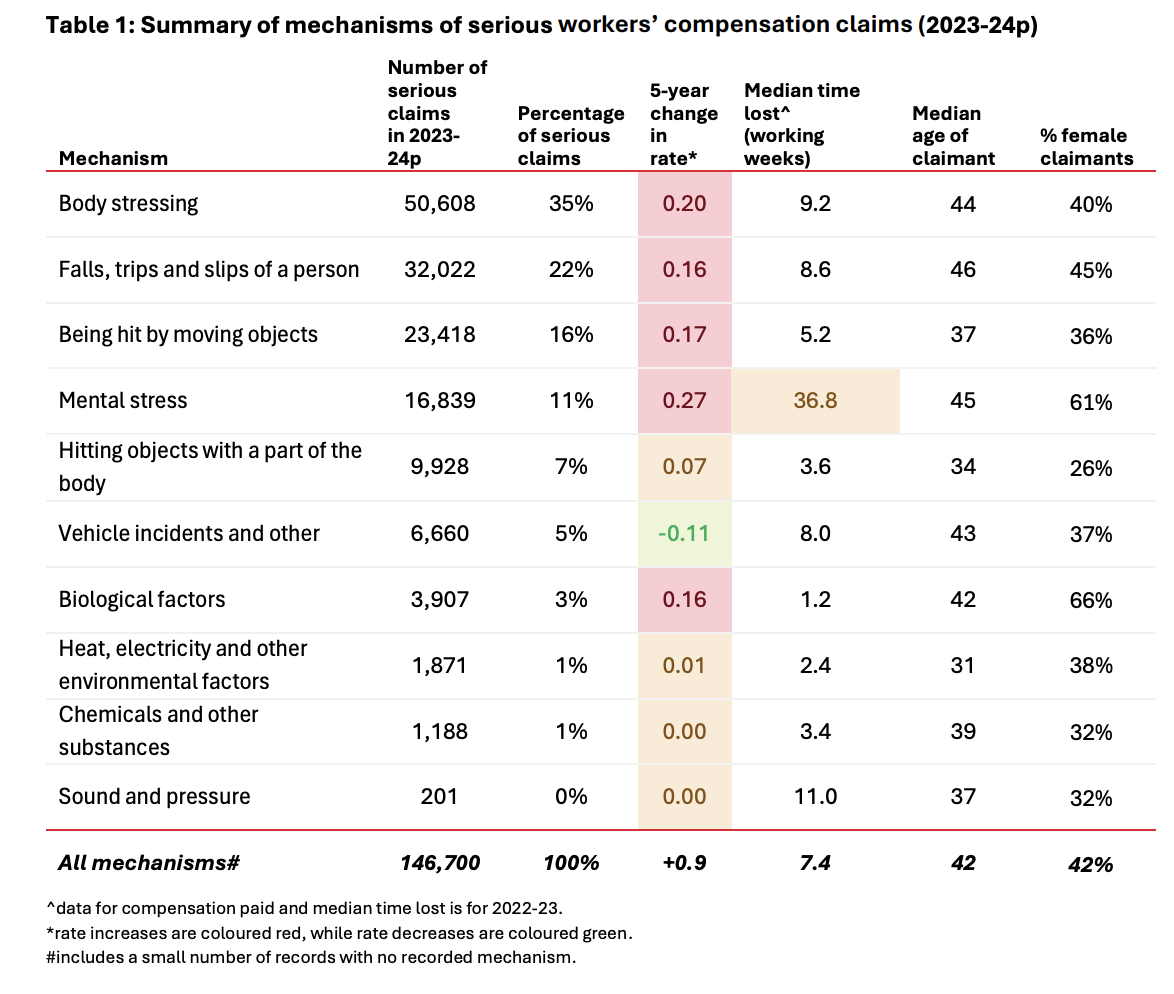
Mental stress has emerged as the fastest-growing "mechanism of incident" behind serious work-related compensation claims, according to a new report from Safe Work Australia.
In its newest analysis, Safe Work defines "mechanism of incident" as the overall action, exposure or event that most directly led to a serious work-related injury, disease or fatality.
"It captures how the incident occurred, rather than the specific hazard involved," Safe Work said in the report.
It found that mental stress is the fastest-growing mechanism across the country, as the past decade saw an increase of 123% in serious workers' compensation claims because of it. The most common types of mental stress serious claims include:
- Harassment / workplace bullying (33%)
- Work pressure (24%)
- Exposure to occupational violence (16%)
Mental stress also logged the longest median working time lost, with 36.8 working weeks.
Three industries accounted for 65% of all mental stress serious claims, namely Health Care and Social Assistance, Public Administration and Safety, and Education and Training.
"Mental stress is the most common serious claim type for police officers, and accounts for a high proportion of serious claims among secondary school teachers and prison officers," the report read.
"Across all age groups, females have higher rates of mental stress than males."
Mechanisms behind workplace harm
Meanwhile, the report found that body stressing is the most widespread mechanism for serious workers' compensation claims, accounting for 35%.
"The incidence of body stressing increases with age," the report read. "While rates of serious body stressing claims have increased slightly when compared to five years ago, they remain notably lower than levels 15 years ago."
Overall, the injury patterns reported for serious claims include the back (36%), shoulder (19%), and knee (9%).
But the report noted that there are clear differences between the causes of serious workers' compensation claims and worker fatalities.
Vehicle incidents reported the greatest share of fatal injuries, accounting for 42% of all worker fatalities, the highest of any mechanism.
The industries where vehicular incidents were more common include:
- Transport, postal and warehousing (54%)
- Agriculture, forestry and fishing (16%)
- Construction (9%)
"Workers aged 55-64 years recorded the highest number of vehicle incident fatalities of any age group," the report read.
"Trucks, semi-trailers and lorries were the most commonly involved vehicles, accounting for 48% of vehicle incident worker fatalities."
Safe Work said it is using its findings to better understand risks, hazards and trends that lead to serious work-related injuries, illnesses and fatalities.
"It highlights key trends to inform work health and safety and workers’ compensation policy, and to support safer, healthier work across Australia," it said.