Public school staff will walk off for 24 hours on 23 July, reigniting a fight over pay, workloads and chronic underfunding
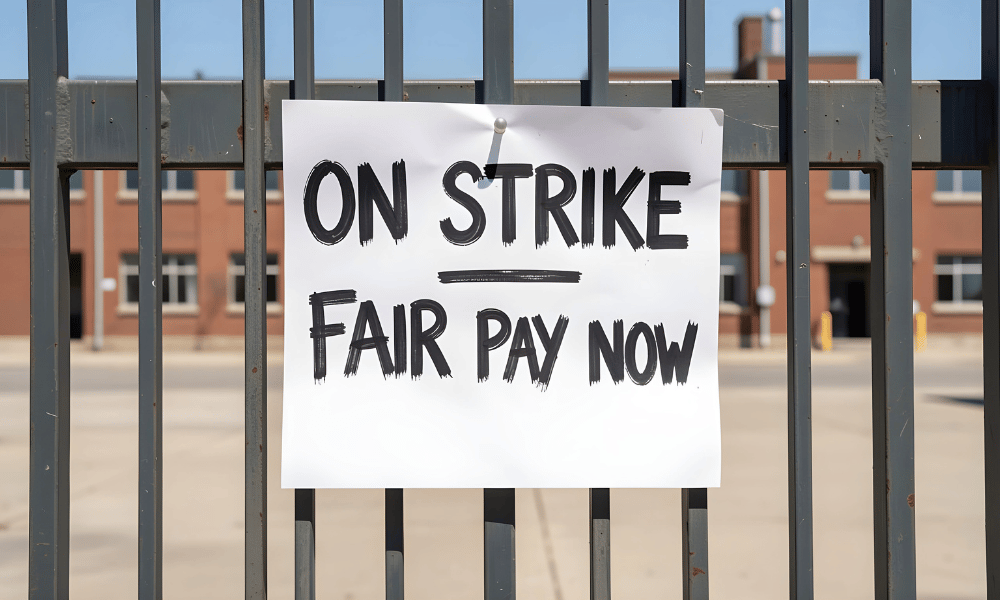
Victorian public school teachers will stage a second statewide 24-hour strike this year, after enterprise bargaining talks with the Allan Labor government broke down again. The Australian Education Union (AEU) Victorian Branch confirmed members will stop work on Thursday, 23 July, alongside a renewed ban on unpaid overtime.
For HR leaders outside the education sector, the dispute is a live case study in what happens when workload pressure, pay dissatisfaction and a rejected in-principle agreement collide and how quickly a "resolved" bargaining round can unravel.
The action follows a in-principle agreement the AEU reached with the Victorian government in May, which offered public school educators pay rises of between 28 and 32 per cent over four years, along with additional student-free days. Members rejected that offer in June, against the recommendation of their own union leadership — an unusual split that AEU Victorian Branch President Justin Mullaly has attributed to unresolved concerns about funding and workload rather than pay alone.
"The Allan Labor government is purposefully denying at least $2.4 billion in funding for Victorian public schools," Mullaly said.
Unpaid overtime at the centre of the dispute
Workload, rather than headline pay figures, has become the union's central argument. Mullaly said the union's own data shows staff are absorbing significant unpaid hours to keep schools running.
"In this underfunded system, teachers, principals, and education support staff are working an average of 12 hours unpaid overtime every week," he said.
He also linked the workload issue directly to retention, a concern that will be familiar to HR and people leaders managing burnout risk in any high-demand, people-facing industry.
"Just three in 10 employees expect to remain working in public schools until retirement, and report that excessive workloads are one of the reasons why they will leave," Mullaly said.
Government calls for a return to the table
A Victorian government spokesperson urged the union to resume negotiations rather than proceed with industrial action, defending the rejected in-principle offer as one of the strongest in the country.
"This deal, which was endorsed by the AEU leadership, would have made Victorian teachers the best paid in the country together with the best conditions," the spokesperson said. "We call on the Australian Education Union to end its planned industrial action that will disrupt families across Victoria and continue negotiating in good faith."
Second strike since March
This will be the second statewide strike by Victorian public education staff in four months. An estimated 35,000 teachers, principals and support staff marched on Victorian Parliament in March – the first such statewide action in more than a decade, since AEU members took industrial action in 2013 under the former Baillieu Coalition government.
Why HR leaders should be watching
Beyond the immediate disruption to Victorian schools and families, the dispute illustrates a pattern increasingly familiar to HR and industrial relations practitioners across sectors: an in-principle agreement that satisfies leadership but fails to secure member or employee buy-in on the ground, followed by a resurfacing of workload and burnout concerns once pay is no longer the sole sticking point.
For employers navigating their own enterprise bargaining rounds, the episode is a reminder that headline pay increases alone rarely resolve disputes rooted in workload, staffing levels and unpaid labour.
The AEU has said it will meet again on 31 July, or earlier if the government returns with a revised offer.