Richard Durand on why unions, remote life and foreign ownership make industrial relations here like no other
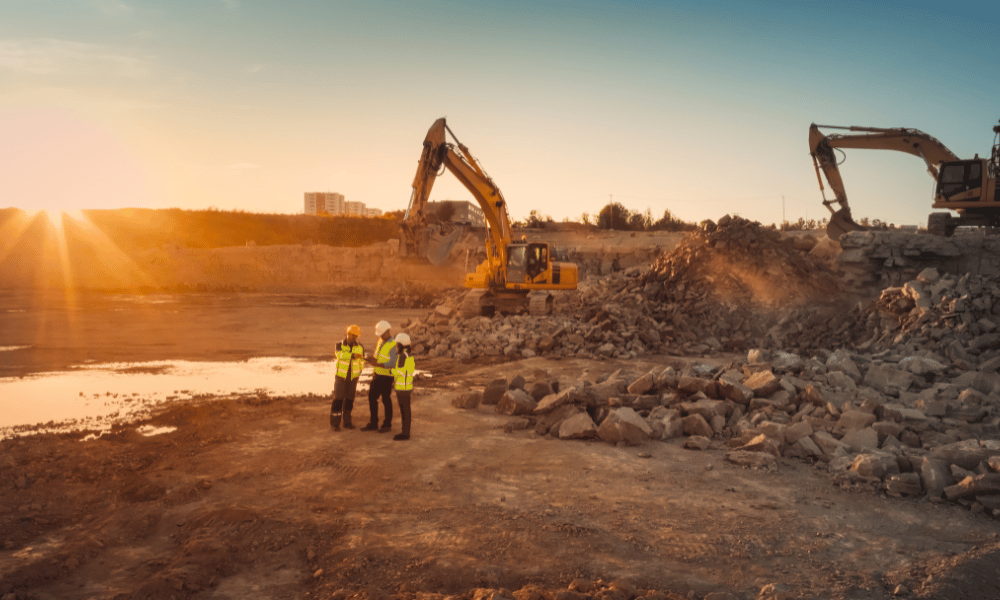
As Grange Resources closes in on a new enterprise agreement (EA) with three unions at its Savage River mine, the operation's head of human resources and industrial relations (HR and IR) says two decades outside HR – and a policy of never shutting his office door – have taught him more about the job than any qualification.
Richard Durand, head of human resources and industrial relations at Grange Resources in Tasmania, has spent almost two years leading HR for the company's roughly 700-strong workforce, split between the Savage River mine in the state's northwest and the Port Latta pellet plant and port on the coast. Savage River has operated for more than 50 years, making it one of Australia's longest continually running mines.
A premium product mined in the Tarkine
Grange extracts high-grade magnetite iron ore at Savage River and processes it on-site into pellets, rather than shipping raw ore offshore for processing as many Western Australian operations do.
The crushed ore travels 80 kilometres by pipeline to Port Latta, where it is turned into pellets and loaded onto around 45 to 50 shipments a year bound mostly for China and South Korea, with some cargo going to Port Kembla for steelmaking.
Durand said the ore's low-emission properties when burned attract a premium over the benchmark price. "The average iron ore price is around $104 a tonne. We get about $140 a tonne," he said, comparing the product to a top-shelf wine or beer that buyers are prepared to pay more for.
Managing a foreign-owned board and three unions at once
Grange's two largest shareholders are entities linked to Jiangsu Shagang Group, one of China's largest steelmakers, which together hold a combined stake of nearly 48 per cent, according to MarketScreener.
Durand noted that as a majority Chinese-owned business with a Mandarin-speaking chief executive and a board dominated by the parent company, there are understandably some hurdles.
"Everything takes twice as long," Durand said of working across the language barrier. "You do want to make sure that the translation to him is correct and correctly translated, but then also the flip side – that we understand what he's trying to do. It can be a challenge at times, but that's okay. You've got to have a lot of patience."
Alongside managing the ownership structure, Durand is the sole HR generalist negotiating the company's enterprise agreement with the Australian Workers' Union (AWU), the Communications, Electrical and Plumbing Union (CEPU) and the Australian Manufacturing Workers' Union (AMWU).
He credits a long-standing relationship with the union movement for keeping negotiations – held against the backdrop of cost-of-living pressures during bargaining – on track for a vote in the coming weeks.
"I've known the head of the AWU here, Robert Flanagan, for 25 years, so that always helps," Durand said. "The CEPU, not as much, but there's a healthy respect there because neither of us are newbies."
Trust built through visibility, not policy
Durand said his approach to industrial relations was shaped by ten years working outside HR, including stints in the power utilities sector and at mining company Newcrest, before moving into the profession.
"I'm not your conventional HR guy," he said. "I didn't start in HR – I spent 10 years working before I got into HR. I'm a real pragmatist, and I take a different view on things."
That philosophy extends to how he runs his office. "My phone's pretty much always on, and my office door is always open," Durand said. "I do have the potential to put a blind down and shut the door – I don't do that. I think it's about making yourself visible, front and centre, and accessible."
Grange also runs a monthly consultative committee of about 18 to 20 employee representatives from across its sites, chaired by Durand alongside the mine manager and senior operations manager, to surface issues ranging from site amenities to enterprise bargaining. Requests approved through the committee have included a golf simulator, at a cost of roughly $7,000, to help retain staff at the remote site.
The isolation of fly-in, drive-in rosters is also front of mind as new psychosocial risk obligations reshape how employers manage mental health on site.
"If you're a young dad or a young mum and you're lying in your donga on a minus-two night in Savage River and you're away from your family, that can have an effect on some people," Durand said, referring to the on-site accommodation used across Australian mine sites. "It doesn't matter who you are, it can take a toll."
The company recently introduced a special leave provision in its enterprise agreement, allowing staff facing serious personal circumstances to take paid leave outside standard sick and annual leave entitlements.
Durand pointed to a senior employee whose wife required cancer treatment interstate as an example. "We just wanted to put our arms around him and support him," he said. "You're more worth it than that. So we'll suck it up for a couple of months, pay you, and go from there."
For HR leaders considering a move into heavy industry, Durand's advice centres on lived experience over theory – a view echoed by other senior figures who say the mining and resources sector is entering a new era with HR at the centre.
"I find way too many HR people don't understand what it's like to be a core employee," Durand said. "I love getting people into HR who've been in another industry or vocation before HR, because you've walked in your employee's shoes and you understand the issues that are there."