The winner of Australian HR Director of the Year award at the 2025 Australian HR Awards reflects on the state of the function
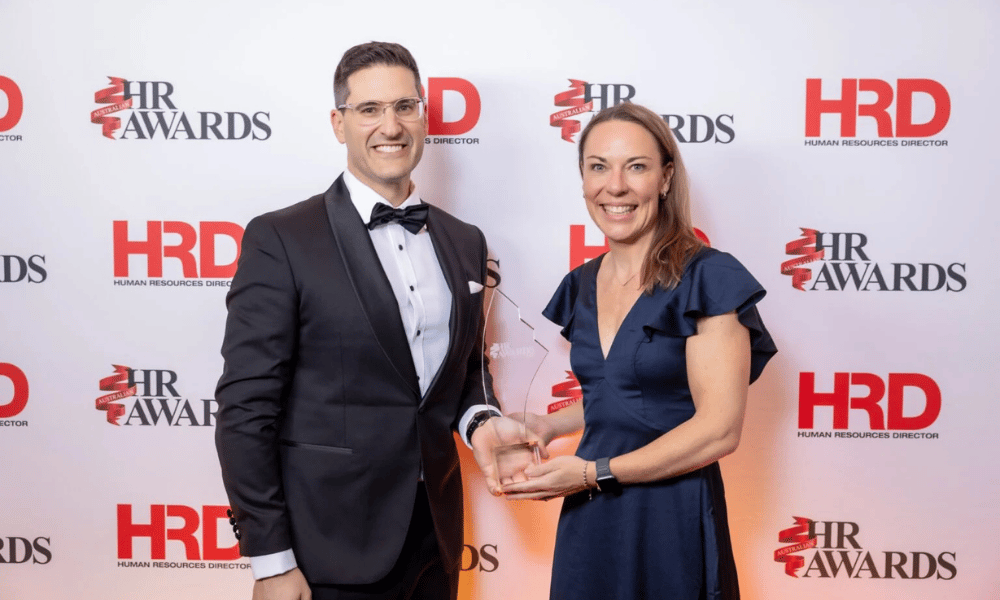
HR in Australia’s mining and resources sector has undergone a fundamental shift from support function to strategic engine room – and the pace of change is only accelerating, according to Anglo American’s Ben Mansour.
Mansour, vice president people and corporate relations – Australia at Anglo American and a 2025 recipient of the HR Director of the Year award, said the expectations placed on HR have expanded dramatically in the years since his win.
“HR has moved definitively from a traditional support role into a role that is genuinely operational and strategic,” he said.
“In periods of uncertainty and disruption, it’s increasingly HR that leaders are turning to to provide stability, clarity and confidence for the workforce.”
From ‘initiatives’ to core business
Across the mining and resources sector, Mansour says HR is now deeply embedded in day‑to‑day decision making and held accountable for outcomes well beyond traditional people metrics.
In this environment, culture, inclusion and wellbeing can no longer be treated as add‑ons or projects.
“Culture, inclusion and wellbeing are no longer ‘initiatives’; they’re recognised as core drivers of operational performance and social licence,” Mansour said.
He’s also observed a significant lift in capability as HR teams embrace data and technology.
“HR has become far more data driven. Real time insights and AI‑enabled analytics are now part of the basic toolkit, not something sitting on the fringe,” he noted.
“The last couple of years have reinforced for me that strong people leadership isn’t a soft lever – it’s central to resilience and continuity in this sector.”
2026 and beyond: Defining years for HR in mining
Looking ahead, Mansour believes the next few years will be “defining” for HR in mining, with major opportunities in workforce design, technology and safety.
“There’s a clear opportunity for HR to lead the move toward more stable, capable workforce models,” he said.
“Across the sector, organisations that invest in permanent employment, skills development and regional talent pipelines will be better positioned in an increasingly tight labour market.”
He expects artificial intelligence to shift rapidly from experimental to essential.
“AI is another major opportunity. I expect it to move quickly from innovation to foundation – supporting predictive workforce planning, real time safety insights, automated compliance and smarter, faster decision making.”
Psychosocial safety is also emerging as a core responsibility for HR as reforms aligned to the Broderick review continue to embed across the industry.
“HR has a real opportunity to integrate psychosocial risk management into everyday operations in a way that strengthens both safety outcomes and employer reputation,” Mansour said.
At the same time, he sees inclusion entering a more “mature phase”.
“We’re seeing a shift away from setting targets alone and toward building systems that genuinely lift female participation, strengthen Indigenous employment pathways and embed cultural safety across our workplaces.”
Familiar pressures, sharper expectations
Despite the opportunities, Mansour is realistic about the headwinds HR leaders will continue to face: workforce uncertainty, skills shortages and unrelenting change.
“Many of the challenges ahead are already familiar to HR leaders across the resources sector – including workforce uncertainty, skills shortages and continuous change,” he said.
“Managing uncertainty requires clear communication, credible pathways, strong psychosocial support and constructive relationships with unions and regulators. Skills pressure will demand more deliberate workforce planning, regional pipelines and long term capability investment.”
Sustaining culture and engagement in a context of ongoing transformation remains a critical test.
“From what I’ve seen, strong leadership rhythms, clear behavioural expectations and real time engagement and safety insights are critical in staying connected to what the workforce is experiencing,” he says.
He also warns that as digital transformation accelerates, fatigue among employees and leaders is a genuine risk.
“As digital transformation accelerates, change fatigue is a real risk. HR will need to stay focused on co‑design with frontline teams, keeping systems simple and being able to clearly articulate the safety and productivity benefits of change.”
‘A new era’ for mining and resources
For Mansour, the sector is on the cusp of a structural shift – and HR’s role has never been more central.
“The mining and resources sector is entering a new era – defined by workforce stability, digital capability, inclusion and stronger community connection. HR now sits at the centre of that shift,” he said.
“What I’ve seen over the past few years is just how powerful the function can be when it leads with clarity and purpose. The challenge ahead is to sustain that leadership and scale its impact across the industry."
Australian HR Awards
The 2026 Australian HR Awards will take place on Friday, 4 September at the Fullerton Hotel in Sydney. To learn more, click here.