
The public has since weighed in on the incident
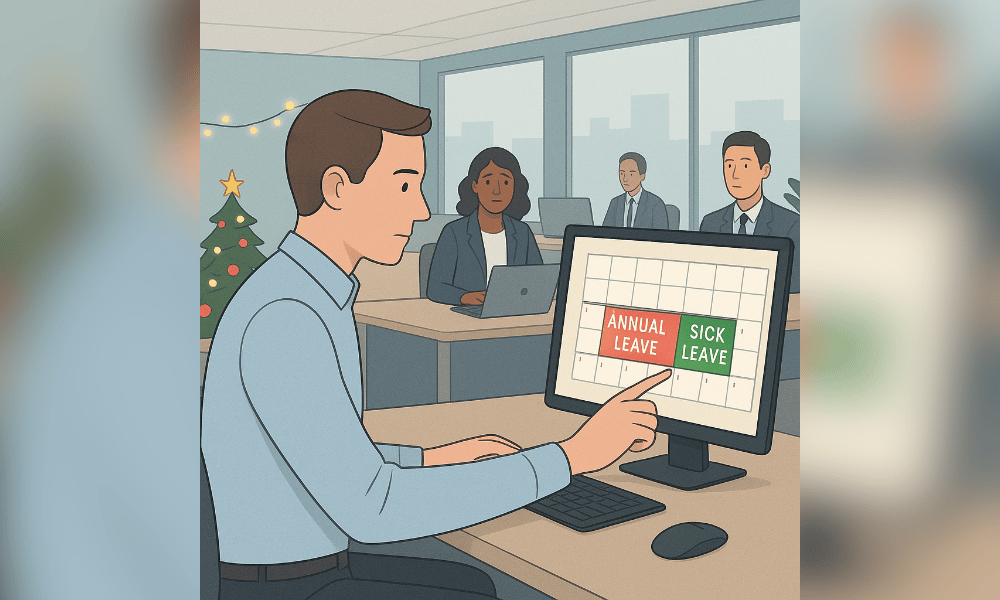
An Aussie employee has reportedly changed their annual leave days over Christmas to sick leave after claiming they were sick, prompting discussions of the legalities involved across social media.
The Aussie Corporate Instagram account broke the story and polled its audience on whether this tactic was “play on” or “ridiculous,” with the vast majority in favour (81%) compared to just 19% who disagreed.
Commenting on the post, an anonymous HR director said it was completely legal to change annual leave to personal leave so long as a medical certificate is provided. However, the same director said it leaves the door open to misuse.
This is supported by the Fair Work Ombudsman, which states: “If an employee is sick or injured while on annual leave, the employee can use their paid sick leave instead of their annual leave. They can also use their paid sick and carer's leave instead of their annual leave for caring responsibilities or family emergencies.”
“The amount of leave taken is deducted from the employee's sick and carer's leave balance… The employee will need to give their employer notice and provide evidence if their employer asks for it.”
If the employee does not have enough sick leave, they can come to an agreement with their employer. This could include continuing annual leave or taking unpaid leave.
Commenters weigh in
People were quick to comment on the employee incident. One commenter described it as a “massive career limiting move” while others defended it, saying it was “100% allowed”.
Another said if precedent was to be set from this that there “will be utter chaos.”
Some commenters went even further by suggesting the employee “might as well start looking for another job” unless the situation was dire, while another said they will “definitely be playing this card this year.”
In the end, this incident highlights a growing tension between lawful entitlements and perceived loyalty in the modern workplace.
Under Fair Work rules, employees are clearly within their rights to convert annual leave to sick leave if they are genuinely unwell and can provide appropriate evidence. Yet the polarised reaction – from warnings of a “career limiting move” to declarations it’s “100% allowed” – shows how much these decisions are still judged through a cultural lens as much as a legal one.
For employers, the challenge is to set clear policies and expectations that deter misuse without undermining genuine sick leave rights. For employees, the message is that while the law may be on their side, how they exercise those rights can have longer-term implications for trust, reputation and career progression.


