Tax reform, AI accountability, and workforce investment headline a Budget with serious implications for Australian employers
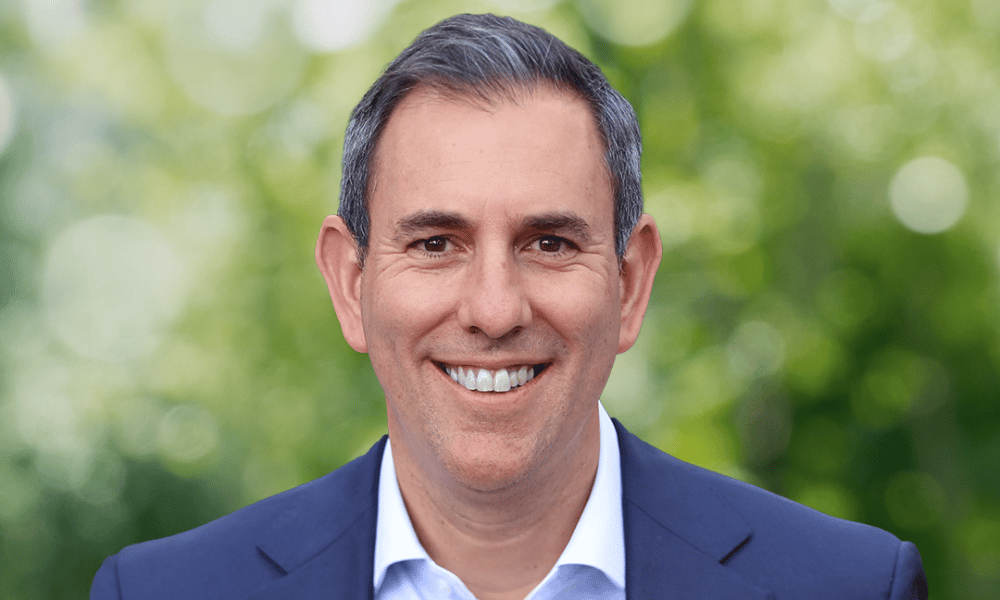
Australia's businesses are bracing for one of the most significant tax and productivity reform packages in recent years, as Treasurer Jim Chalmers prepares to hand down the 2026–27 Federal Budget on 12 May – with wide-ranging consequences for HR leaders, SME operators, and employers across every sector.
From changes to capital gains tax and negative gearing, to expanded R&D incentives and a recalibrated electric vehicle fringe benefits exemption, the Budget is being framed around intergenerational fairness and economic resilience.
But for HR, the stakes are more immediate: workforce costs, compliance burdens, and the pace of technology adoption are all in play.
A productivity package with real workforce implications
Law firm Mallesons has flagged that the government's productivity package is expected to include a material expansion of the Research and Development Tax Incentive (RDTI), with the existing $150 million cap on eligible R&D expenditure set to be lifted – potentially to between $250 million and $300 million.
This would be partially offset by raising the minimum claim threshold from $20,000 to $150,000, effectively redirecting the incentive toward high-impact activity. For employers investing in R&D talent, particularly in the start-up and innovation sectors, the changes could provide an immediate and meaningful financial benefit.
Separately, a phased reduction to the FBT exemption on electric vehicles is expected, with EVs priced above $75,000 moving to a 25% discount from 1 March 2027. Vehicles below that threshold would retain the full exemption until April 2029, preserving a genuine salary packaging incentive for the majority of employees entering novated leases.
SMEs need more than high-level reform
While the big-picture tax changes dominate the headlines, smaller employers are calling for practical, targeted support. Deputy’s CTO Ciaran Hale argued the Budget must go further to address the day-to-day operational pressures facing Australia's SME sector.
"Daily operational efficiency, rostering, real-time cost management, and compliance are the core of SME productivity," Hale said.
"The Budget should offer practical, targeted support, including investment in automated compliance systems, incentives to move from paper-based processes, and stronger support for workforce technology investment."
Hale is calling for direct government investment in automated compliance tools to help businesses manage complex workplace laws, as well as incentives for advance and fair rostering, arguing that predictability in shift-based industries is a proven driver of workforce retention and engagement.
He also wants workforce management skills embedded into vocational training, particularly for the hospitality, retail, and healthcare sectors.
"Ultimately, lifting productivity requires supporting the day-to-day operations of businesses, not just high-level reform," Hale said.
For HR leaders, these calls will resonate. Wage underpayment risk, compliance complexity, and the administrative burden of workforce management remain persistent challenges – ones that technology investment, if properly incentivised, could substantially reduce.
Industry warns of structural risks
The broader business community is watching the Budget with urgency. Innes Willox, CEO of Australian Industry Group, described the current environment as one of "unparalleled challenge", citing a global oil shock, energy system stress, rising inflation, and an economy he says is "on the cusp of recession."
"Will we go down the path towards a welfare state increasingly reliant on government supports and handouts that drive up debt and blunt our prospects for economic dynamism and relevance? Or will we look to turn the ship around to truly reform our tax and regulatory systems, address spending and focus on growth and productivity to allow for sustainable wage increases, greater business investment and rewards for effort, risk and achievement?" Willox said.
For Willox, the test of any tax reform is whether it delivers a more efficient, equitable and simple system — not whether it raises revenue. His warning to the Treasurer is clear: piecemeal changes will not fix structural dysfunction.
AI investment must be matched by organisational redesign
Alongside the fiscal settings, AI adoption is emerging as a defining challenge for Australian employers – and HR leaders are being told the stakes go well beyond technology procurement.
Anna Volkova, head of people at HiBob APJ, argues that productivity gains from AI will only materialise if organisations are willing to fundamentally rethink how work is structured, not simply bolt new tools onto existing processes.
"With the Treasurer placing productivity at the very core of this Budget, we must recognise AI investment will only deliver results if organisations fundamentally redesign how work gets done," Volkova said.
"Most companies are still layering AI on top of existing workflows instead of working around it. However, real productivity gains only appear when organisational design and workforce planning are fundamentally redesigned, not just augmented."
Volkova identified mid-level management as the critical inflection point. It is where process ownership sits and where AI adoption either scales across an organisation or stalls entirely. HiBob data reinforces the urgency as 67% of Australian employees believe it is their employer's responsibility to prepare them for the impact of AI.
"The real productivity risk is underinvesting in leadership capability and manager readiness," Volkova said.
"AI is already shifting how frontline work gets done, requiring managers to move from monitoring execution to coaching for judgment and managing human-led AI outputs. If the government's productivity package doesn't account for this leadership enablement, these gains will stall."
Her view is that the real multiplier is not technology alone, but the combination of leadership capability and AI – determined by how quickly leaders align on new ways of working, how well managers are equipped to lead through the transition, and how clearly organisations reset expectations for a human-plus-AI workforce.
New Salesforce research of more than 2,000 ANZ knowledge workers reinforces this picture. Three in four (76%) say they have already interacted with AI agents at work, and 37% are delegating tasks to them independently.
But confidence is largely being built outside the workplace as 74% said personal use of AI had increased their trust, and accountability remains the leading concern, cited by 38% of workers as their top worry.
"Accountability is the one thing AI cannot automate, and it's time we treat it as the most critical component of the agentic enterprise," said Justin Tauber, GM, agentic technology, trust and adoption at Salesforce.
The gap is sharpest among frontline employees as 59% of non-managers cited lack of accountability as a concern, compared to just 29% of managers. For HR leaders, this signals that workforce AI governance not a future problem – it is arriving now, ahead of most internal frameworks.
As the Budget takes shape, HR executives would do well to track not just the tax measures, but what the government signals about workforce technology investment and SME support. The structural pressures – compliance, retention, productivity, and AI accountability – are converging at exactly the moment Australia's employers need clear policy direction on workforce management.