A "substation" that technically isn't one sparked issues beneath Melbourne's CBD
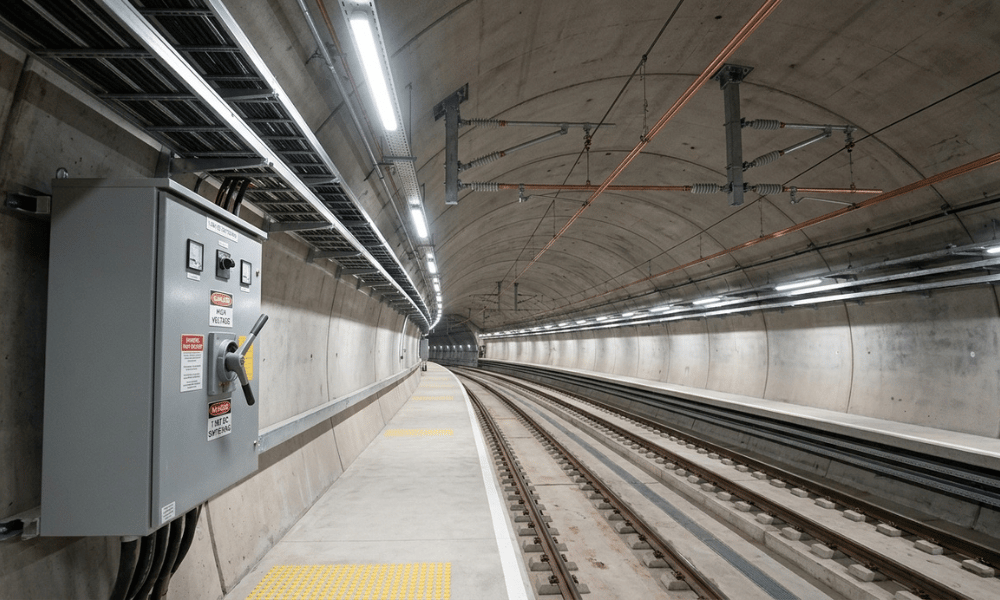
Melbourne's rail operator can direct its overhead lineworkers to perform high-voltage switching inside the Metro Tunnel without first consulting the union or putting it to a staff vote, the Fair Work Commission has found.
The October 16 decision settled a dispute between the Communications, Electrical, Electronic, Energy, Information, Postal, Plumbing and Allied Services Union of Australia (CEPU) and Metro Trains Melbourne over a deceptively simple question: who gets to operate the line switches deep beneath the CBD?
Two trades, one tunnel
The Metro Tunnel is a twin-tunnel rail line running under Melbourne's CBD, connecting the Sunbury, Cranbourne, and Pakenham lines through five new underground stations. It opened to the public in late 2025.
Trains in the tunnel - like the rest of Melbourne's metropolitan network - run on 1,500-volt direct current drawn from overhead lines. When a section needs maintenance or a fault crops up, someone has to physically operate a line switch to cut the power. That task is called "isolation," and it is a critical safety control.
Across Melbourne's outdoor rail network, Overhead Lineworkers have always done the switching. There are some 20 to 30 different types of outdoor line switches across the network, and operating them is a routine, long-standing part of the lineworker role.
But underground is different. Inside the Metro Tunnel, the line switches are three-position metal-clad switches housed inside walk-in metal cubicles, located in eight enclosed rooms known as OHLE (Overhead Line Equipment) rooms. Since high-voltage power was first connected to the tunnel in 2023, only Substation Electricians had operated those switches.
Metro wanted to change that. It proposed training Overhead Lineworkers to also operate the OHLE room switches - not to replace the Substation Electricians, but to work alongside them. The rationale: at any given time, seven or eight lineworkers are rostered for faults, compared to just three "reactive" Substation Electricians. Metro's head of infrastructure delivery estimated faults could be resolved about an hour faster if lineworkers could handle the switching, since they are also the only workers who can apply the secondary safety measure of earthing - and earthing cannot begin until isolation is complete.
The union's case
The CEPU fought the proposal on three fronts under the Metro Trains Melbourne Infrastructure Enterprise Agreement 2023.
First, it argued the proposal was a "major change" to the organisation of Metro's enterprise, triggering formal consultation under clause 8.
Second, it said the change amounted to altering "Electrical Trades qualifications" - a phrase in clause 8.7(h) and clause 11.4(a) of the agreement. Clause 11 requires Metro to win agreement from a majority of affected employees before changing those qualifications. The union's logic ran like this: the OHLE rooms are "substations" under industry definitions; only Substation Electricians hold the Certificate III in Electrotechnology Systems and A-grade electrician licence needed to work in a substation; therefore, sending lineworkers into the OHLE rooms meant changing what qualifications lineworkers needed.
Third, the union argued the proposal conflicted with the agreement's classification appendices, which set out qualifications and competencies for each workgroup.
Is a switch room a substation?
A significant part of the dispute turned on that question.
Under the Victorian Traction Industry Electrical Safety Rules - known in the industry as the "Orange Book" - a substation is "any enclosed or fenced location in which high voltage supply is generated, converted, controlled or transformed." Metro's own electrical safety manual uses a near-identical definition. An OHLE room is enclosed. Switching controls high-voltage supply. Metro's head of infrastructure delivery conceded in cross-examination that the OHLE rooms fell within both definitions.
But the Commission drew a practical line. Unlike a traction substation, an OHLE room does not convert alternating current into direct current. Unlike a tie station, it does not regulate voltage across the network. Its sole job is switching - the same function lineworkers perform routinely at outdoor switches across Melbourne. The Commission described it as, in effect, a "switch room."
Technically a substation by definition. Functionally, a different beast.
The qualification question
The Commission then separated two concepts that the agreement treats differently: qualifications and competencies.
"Electrical Trades qualifications" - the phrase that triggers both consultation and the employee agreement process - means formal credentials: AQF certificates and licences issued by external bodies, like a Certificate III or an A-grade electrician licence. It does not extend to the internal training and competency assessments Metro uses to authorise workers for specific tasks.
That distinction traced back to the bargaining history. The clause was born from a specific grievance: under the previous 2019 agreement, Metro had appointed someone to a Railway Signalling position without requiring them to hold the diploma other employees in that role needed. The CEPU's bargaining claim was designed to stop that from happening again - to protect formal qualification requirements, not to give the union a veto over every internal training decision.
Since Overhead Lineworkers already hold the qualifications their role requires - a Certificate III in ESI Power Systems (Rail Traction) and an ESV Lineworker Licence - and Metro was not proposing to change those requirements, the Commission found no change to "Electrical Trades qualifications" arose from the proposal.
Not major change, either
On the "major change" question, the Commission acknowledged that the proposal shifted how switching was allocated in the tunnel. Substation Electricians would lose their exclusive hold on that function.
But switching is something lineworkers already do every day across the rest of the network. The OHLE rooms are not traction substations or tie stations - Metro was not proposing to send lineworkers into those more complex facilities. And the evidence did not support the union's claims that the proposal would lead to job losses, restructured roles, or altered hours for Substation Electricians.
The classification appendices did not help the union either. The Commission found nothing in Appendix 4 (Substations) or Appendix 8 (Overheads) that expressly prohibited Metro from assigning the switching task to lineworkers.
What HR teams should take from this
For HR professionals managing multi-trade workforces under enterprise agreements, the decision draws a sharp line between protecting formal qualifications and controlling day-to-day task allocation - and it suggests consultation clauses, however carefully bargained, will not stretch to cover the latter unless the agreement says so in clear terms.