A screening test flagged workers for being male, over 50, or having a large neck
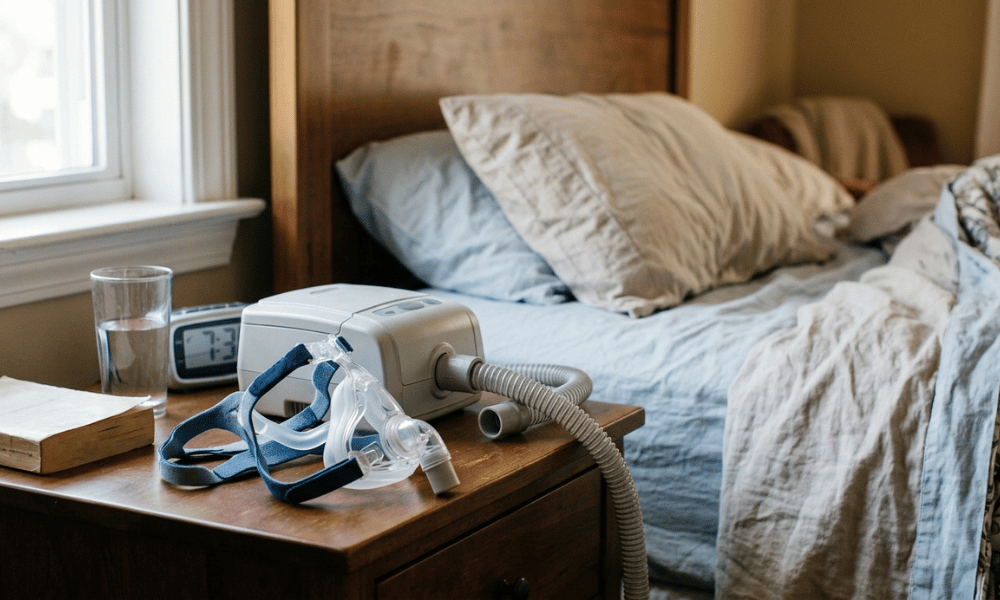
Sydney Trains does not have to buy CPAP machines for workers flagged with sleep apnoea through mandatory rail safety screening, the Fair Work Commission has found.
The decision, handed down on October 16, landed in a dispute between the CEPU union and the rail operator over a deceptively simple question: when compulsory health assessments lead to a sleep disorder diagnosis, who pays for the machine a worker needs to keep working?
The answer, according to the Commission, is the worker. The machines can cost up to approximately $3,950.
It all started with a questionnaire
The dispute traces back to changes the National Transport Commission made to the National Standard for Health Assessment of Rail Safety Workers in October 2024. The update introduced a new screening tool - the STOP-Bang questionnaire - designed to flag obstructive sleep apnoea risk in safety-critical rail workers.
The questionnaire asks eight yes-or-no questions covering things like snoring, tiredness, observed breathing stoppages, blood pressure, BMI, age, neck size, and gender. Score three or more "yes" answers and you get referred for a sleep study.
The catch? It is not hard to hit three. The Commission itself accepted it "would not be difficult" for many workers to reach that threshold. One worker triggered a referral simply by being male, having a large neck, and a high BMI. He had never experienced snoring, tiredness, or breathing difficulties.
A union survey of 155 members laid bare the scale of the issue. Of the 132 Category 1 safety-critical workers who responded, 69% had taken the STOP-Bang questionnaire. Of those, 75% were referred for sleep studies. And 60% of those referred did not pass.
Forty-two Category 1 workers had been required to purchase or rent a CPAP machine through Sydney Trains' external assessor. The cheapest machine a union organiser could find online was $688 - without a mask or accessories. The cheapest complete kit was advertised at $794. Workers reported ongoing costs for filters, water, masks, hoses, and servicing ranging from $35 to $3,000.
"I've never had sleep issues"
Two workers gave evidence challenging the reliability of the screening results.
A substations infrastructure worker, classified as Category 1, underwent a periodic health assessment in November 2024. The STOP-Bang questionnaire flagged him for a sleep study because he answered "yes" to questions about his gender, neck circumference, and BMI. He said he had never experienced issues with snoring, tiredness, breathing difficulties, or other sleep problems.
He took an at-home sleep study through a business recommended by the external assessor. The clinic called to tell him the study had detected moderate sleep apnoea - and in the same conversation urged him to sign up to an instalment plan for a CPAP machine costing approximately $3,950. He refused.
Unconvinced by the results, he visited his GP, got referred to a sleep specialist, and eventually paid for an overnight study in a clinic under observation by a technician. That result: no significant obstructive sleep apnoea.
A signal electrician had a similar experience. Called back to work for an emergency after midnight - just after attaching his at-home monitoring device - he disconnected it, returned home at 7am, reattached it, and managed only four hours of sleep. The external clinic diagnosed severe obstructive sleep apnoea and later contacted him trying to sell a CPAP machine at a discount.
He had never been diagnosed with a sleep condition despite undergoing annual health assessments since 2009. He has not purchased a CPAP machine. Sydney Trains reclassified him as a Category 3 worker, restricting him from duties including driving track vehicles, acting as a protection officer, and signing off on safety-critical repairs alone.
The clause that could not stretch far enough
The union's case hinged on clause 43.9 of the Sydney Trains and NSW Trainlink Enterprise Agreement 2025, which states:
"Where there is a medical requirement and it is needed for the task, prescription eye wear, alternate footwear or other specialty aids, devices and equipment will be provided to ensure control of safety hazards associated with the task."
The union argued CPAP machines fell squarely within that clause. Workers diagnosed with sleep apnoea through the mandatory screening could not legally perform safety-critical work without one, so the machine was "needed for the task."
Sydney Trains did not dispute that a CPAP machine could be a specialty device, or that it could be medically required. The sticking point was four words: "needed for the task." The employer's position was that the clause covered PPE used directly while performing specific work duties - prescription safety glasses for grinding, orthotic boots for track work. A CPAP machine, used at home while sleeping, was a different thing entirely.
The Commission agreed. The clause sat under the heading "Uniforms and Personal Protective Equipment." The named examples - prescription eyewear, alternative footwear - were items worn on the job. A CPAP machine, defined in the Macquarie Dictionary as "a device used by a sleeping person," treats a health condition that affects whether someone is fit for work. It is not needed for the work task itself.
The Commission also noted where the union's logic would lead if accepted. Employers could find themselves on the hook for pacemakers, blood glucose monitors, and insulin syringes - anything used to manage a health condition that might create a safety risk if left untreated.
That said, the Commission did not let the screening process off the hook entirely. It accepted the evidence about questionable at-home sleep study results and suggested Sydney Trains "may wish to test and review its arrangements with external providers to ensure that the method of the sleep study generates a reliable result and workers are only recommended use of an expensive CPAP machine where there is a genuine need."
For HR teams managing fitness-for-duty programs, the decision draws a practical line: an enterprise agreement obligation to provide specialty work equipment does not extend to medical devices used off-site to manage an underlying health condition - even when the employer's own screening process identified it.