Two decades of alleged failures across dozens of mine sites - and the cases just got stronger
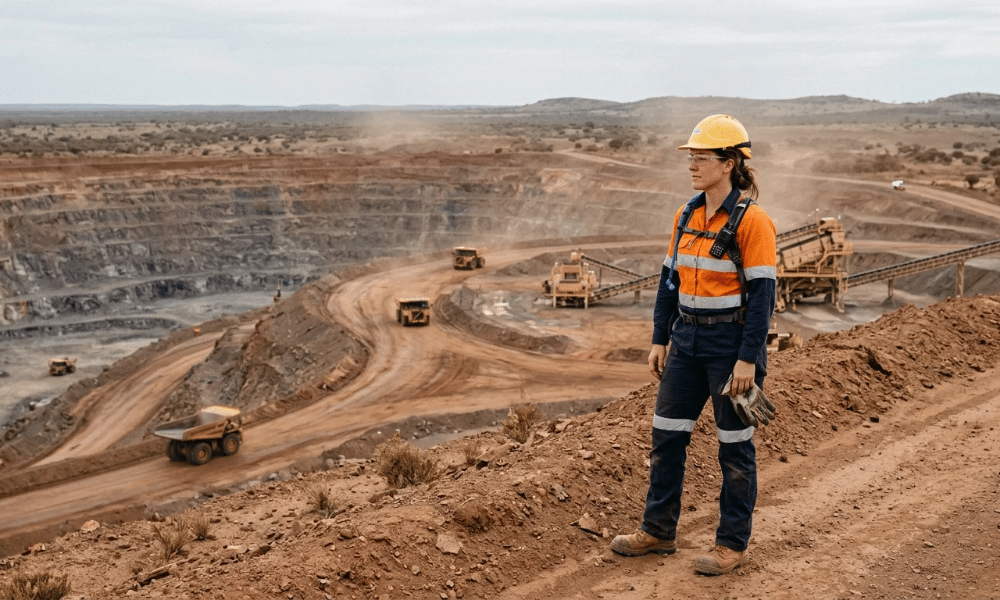
Two of Australia's biggest mining companies just lost a significant courtroom fight.
The Federal Court on October 23, 2026 handed down its ruling on interlocutory applications in twin class actions against Rio Tinto Ltd and BHP Group Ltd - brought by women who worked at the companies' Australian mining sites. The applicants allege systemic sexual harassment and sex discrimination spanning two decades and dozens of worksites. Both respondents had tried to have the claims struck out, in whole or in part. They largely failed.
The decision dealt with four interlocutory applications heard together in January 2026. The applicants sought leave to amend their group member definitions and, in Rio Tinto's case, to file an amended pleading. The respondents sought to strike out the pleadings on jurisdictional, procedural, and specificity grounds.
The big picture
The cases cover a claim period running from November 12, 2003 to early 2024. In the Rio Tinto proceeding, 55 sites were identified as "Rio Tinto's Australian Workplaces." In BHP's case, 57 operations and projects were listed in the schedule to the pleadings. Both applicants bring claims on their own behalf and on behalf of group members under Part IVA of the Federal Court of Australia Act 1976 and the Australian Human Rights Commission Act 1986.
The claims rest on two causes of action: unlawful discrimination under the Sex Discrimination Act 1984, and negligence. The applicants allege the mining companies knew or ought to have known about the risk of sexual harassment at their worksites and failed to put adequate policies, procedures, and training in place to address it. They say the respondents are liable because they "permitted" the alleged conduct under s 105 of the Sex Discrimination Act, or are vicariously liable under s 106 of that Act.
Both applicants operate under pseudonym orders - referred to as KTM24 (Rio Tinto proceeding) and KXO24 (BHP proceeding) - granted in June 2025 to prevent prejudice to the administration of justice.
Standing and scope
Rio Tinto mounted a strong challenge on standing. The company argued that KTM24 could not represent group members because their individual experiences of alleged harassment were too different from her own - different sites, different time periods, different forms of conduct. The court was not persuaded, holding that the statutory framework does not confine a representative complaint to a common set of alleged acts, and does not require the complainant to be personally aggrieved by the same experiences as every group member.
That said, two specific claims in the Rio Tinto proceeding were found to fall outside the scope of the complaint that had been terminated by the Australian Human Rights Commission. A personal victimisation claim and a group member sexual assault claim were struck out on the basis that they did not form part of the "terminated complaint" for the purposes of s 46PO of the AHRC Act. A separate allegation of "bullying conduct" survived, with the court accepting it was consistent with the substance of what had been put to the Commission.
The class action threshold
BHP's central argument focused on whether the claims were too varied to qualify as a class action. BHP said there was a "huge disparity" in circumstances across 57 sites over 20 years, and that the claims could not be said to arise from the same, similar, or related circumstances under s 33C(1)(b) of the Federal Court Act.
The court rejected that. It found the pleadings revealed a common core: all group members are women who worked at the respondents' Australian worksites, where centralised policies and procedures applied. The respondents were alleged to have assumed responsibility for health, safety, and workplace culture at those sites, and to have known of the risk of harm. The court distinguished the case from earlier tobacco litigation where multiple respondents were not alleged to have engaged in a collective course of conduct. Here, one respondent and one alleged system were in play.
The branded shirt that did a lot of heavy lifting
On the strike out applications under the court's pleading rules, the result tilted toward the applicants but was not a clean sweep. Both respondents argued the pleadings were too vague - that the applicants had not identified enough material facts to let the companies know the case against them, particularly on whether workers at subsidiary-operated sites could be treated as employees or agents of the parent company.
The court found the pleadings were sufficient to put the respondents on notice, even if they would benefit from further detail. In one telling passage, the court held that a plea that workers wore shirts bearing the respondent's branding - combined with allegations of control over the worksites - was enough to articulate the basis of the agency claim. Not embarrassing in the legal sense, even if the merits remain to be tested at trial.
But the court did strike out certain paragraphs relating to the negligence claims - specifically where the pleadings failed to identify with enough clarity what BHP had done to audit compliance with its own policies, what its risk management systems looked like, and how the alleged breaches caused the claimed loss. Leave was granted to replead those paragraphs.
The applicants were also granted leave to amend their group member definitions, with one significant caveat. The court found that elements of the proposed definition relating to whether the respondent "permitted" the conduct or was vicariously liable did not describe characteristics of group members - they described elements of the cause of action. Including them in the class definition created uncertainty, and they were struck out.
Both respondents were ordered to pay the applicants' costs.
The decision was embargoed until 5:00pm on October 23, 2026, with the parties given until November 6, 2026 to seek variations to the orders.
For HR leaders at large, multi-site employers - particularly those running subsidiary and contractor structures - the case puts a practical question on the table: if you set the policies, control the worksites, and put your brand on the shirts, a court may hold that is enough to plead the workers were yours, whatever the corporate structure says.