A 10-minute rounding rule quietly erased minutes from every shift for years
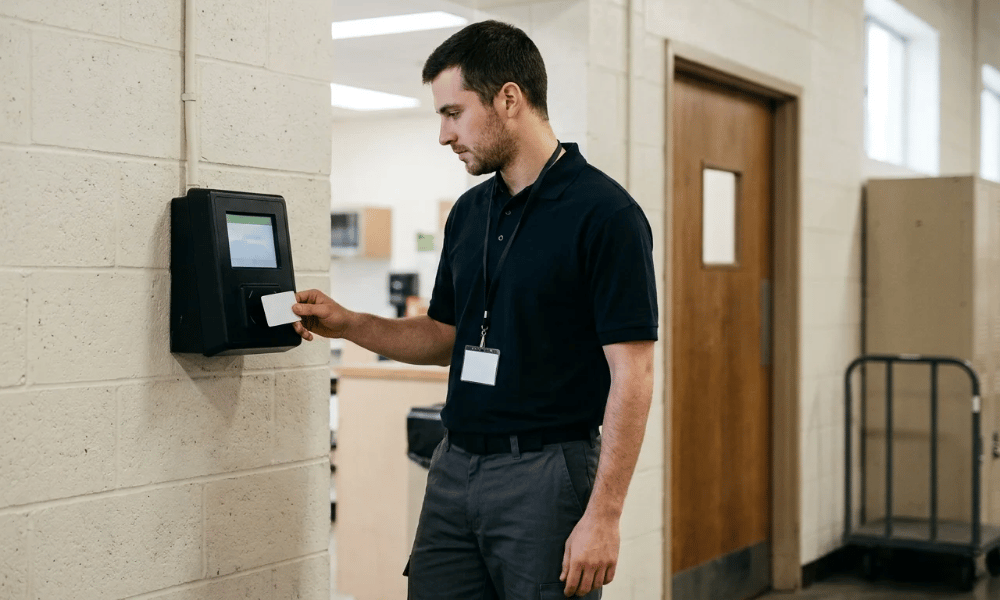
A clock-in system that quietly trimmed minutes off every shift has landed ALDI Foods with an approved class action settlement estimated at $55.2 million.
The Federal Court of Australia approved the settlement on October 23, 2026, resolving claims brought on behalf of 32,308 current and former ALDI employees across the country. The workers say they performed unpaid work before and after their rostered shifts - and that ALDI's timekeeping system masked the shortfall for years.
The clock that rounded down
The case centred on ALDI's Kronos timekeeping system. Store employees could punch in up to 10 minutes before a shift or punch out up to 10 minutes after. But the system automatically rounded those times to match the rostered schedule. The practical effect: employees were not paid for the actual minutes they spent at work outside their rostered hours.
For warehouse staff, the problem looked different. Workers performed a range of tasks before their shifts started - gearing up, preparing equipment, getting to their stations. A 2022 Federal Circuit Court decision found that these "pre-commencement tasks" constituted paid work. ALDI had previously treated them as "getting ready for work" - not something that triggered a pay obligation.
The voluntary fix that fell short
After that 2022 ruling, ALDI launched a voluntary payment program. It reviewed records, paid current warehouse employees for pre-shift tasks, and later extended payments to current store employees backdated to March 2017. All up, it paid out approximately $28.9 million.
The Shop, Distributive and Allied Employees' Association (SDA) - the union representing ALDI staff - found the program had significant gaps. Of the 32,308 affected workers, 16,378 had not received a cent. Most were former employees. The union also identified that flow-on entitlements triggered by the extra time - allowances, loadings, penalty rates, paid breaks, and superannuation - had not been properly accounted for.
That gap drove the class action.
What the settlement delivers
On top of the $28.9 million already paid, the settlement adds an estimated $16.3 million in further payments, plus interest. The SDA estimated the total liability - including what has already been paid and interest - at approximately $55.2 million.
No deductions come out of the employees' share. There is no litigation funder taking a cut. No legal fees are skimmed from the settlement pool. The SDA bankrolled both proceedings, and ALDI's $1.5 million costs contribution - paid through a separate penalty proceeding - covers those expenses entirely. Each of the three lead workers receives $10,000 for their personal contributions, also paid outside the settlement pool.
The court described this structure as "atypical" and "entirely fair and reasonable."
ALDI runs the payout
In an unusual arrangement, ALDI itself was appointed to administer the scheme - calculating and distributing payments to each worker. The court accepted this made practical sense: ALDI holds the employment records, already built a calculation method through its voluntary program, and appointing an outside administrator would have duplicated significant work at a cost ultimately borne by employees.
Accounting firms PricewaterhouseCoopers and KPMG will independently verify the calculations. The SDA retains the right to audit ALDI's compliance. Workers who disagree with their assessed payment can request an independent review at no cost - and that review cannot result in a lower figure than originally assessed.
Current employees are automatically included. Former employees need to register through a portal. The court acknowledged that some former staff may never come forward - a "necessary outcome" when dealing with a group this large.
The settlement landed on a without-admissions basis. ALDI does not agree it breached any workplace agreements and had sought to have the proceedings dismissed before settlement talks advanced.
The road not taken
The court weighed up what a trial would have looked like. The applicants' lawyers estimated costs in the order of $18 million. Document discovery alone was not expected to wrap until mid-2027, with a trial unlikely before mid-2028 - and even then, only to resolve the lead applicants' individual claims. If the case dragged on, the SDA would likely have sought a common fund order - a mechanism allowing the union to recover its litigation costs from the settlement pool, which would have reduced payouts to workers.
Of 32,308 group members, just 17 opted out. One person objected.
Payments are expected to start by May 2027, with all identified workers to be notified of their assessed entitlements by April 15, 2027.
For HR teams managing large workforces, the practical takeaway is stark: timekeeping system settings - rounding rules, automatic adjustments, pre-shift task policies - can quietly generate liabilities that compound across thousands of employees and many years.
The settlement has been approved by the Federal Court and is not subject to further appeal. ALDI has not admitted liability.