Nine committee members also face personal fines after years of ignored warnings
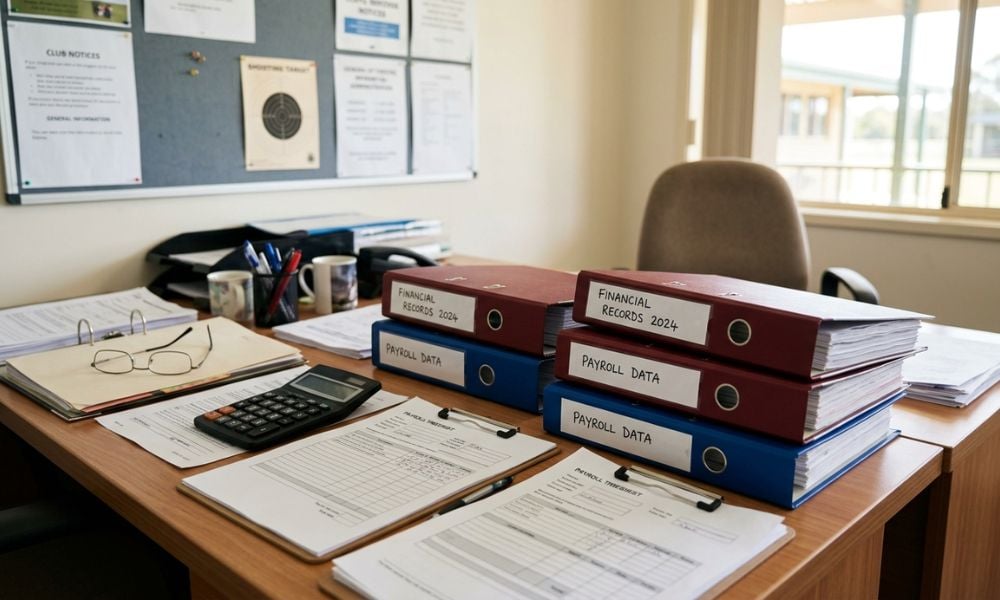
For nearly 15 years, a shooting club in southern Queensland paid its manager $250 a week.
The Gold Coast Pistol Club has now been ordered to pay $476,100 in penalties after the Federal Circuit and Family Court found it systematically underpaid the worker's wages, superannuation, and leave entitlements across nearly six years of the claim period. Nine members of the club's governing committee were also hit with personal penalties totalling more than $52,000 for their part in the breaches.
The penalties were handed down on September 30, 2026.
The worker, who turned 80 during the proceedings, first joined the club as a member in 1981 and began part-time bookkeeping in November 2005. By mid-2006, she had stepped into the role of club manager, running the day-to-day operations of the Ashmore facility. She moved into a caretaker's cottage on the club's grounds in 2007, paying $100 a week in rent.
Her responsibilities were anything but part-time. She managed the club's finances, processed memberships, supervised volunteers, trained junior shooters, handled weapons licensing paperwork, ran stocktakes, attended every committee meeting, and was the responsible person for the liquor licence. The club's own information book described her as the person members would "most likely have the most to do with on a day to day basis."
For all of that, she received $250 a week. No pay slips. No superannuation at the correct rate. No annual leave. No formal contract.
The earlier liability decision, delivered in April 2025, found the club had broken workplace law by failing to pay the worker minimum wages, weekend penalty rates, superannuation, and annual leave under the applicable award. Each of the wage, overtime, and superannuation failures was classified as a "serious contravention" - the Fair Work Act's label for underpayment that is knowing and part of a systematic pattern, carrying significantly higher maximum penalties.
What made the case worse was that the committee knew.
The club's former treasurer gave evidence that he raised the underpayment with successive presidents at least once a year from as early as 2009. The club's external accountant described the situation as "the worst I've ever seen it" and repeatedly told the worker to escalate the matter. The court found that auditor's reports presented at the club's annual general meetings would have made the underpayment obvious to any committee member paying attention.
Yet year after year, the response was the same: acknowledgement, promises to look into it, then nothing.
Then, in late 2020, after the worker pushed harder, the committee offered her a six-month contract at $63,363 a year, with a one-off $10,000 payment to settle all her accrued entitlements. The offer came with a deadline and a threat. The then-president emailed to call it "a final offer." The worker's evidence - accepted by the court - was that she was told she would be "terminated summarily and evicted from the premises" if she did not sign.
The court found the worker was in a vulnerable position. She was elderly, living on club property, and had few options. She signed. The court found this amounted to adverse action - the committee had pressured her into the contract because she had been raising complaints about being underpaid, which is a protected workplace right under the Fair Work Act.
The club terminated her employment in July 2021 anyway.
In the penalty decision, the court imposed six separate penalties on the club. The largest was $266,400 - 40 per cent of the maximum - for the failure to pay minimum wages. Further penalties of $66,600 each were imposed for the overtime and superannuation failures, $33,300 for unpaid annual leave, $9,900 for failing to give proper notice, and $33,300 for pressuring the worker to sign the contract.
The court also drew distinctions between the nine committee members based on their roles and how long they served. The former president, who had received direct written advice about the underpayment in December 2016 and was found to have been central to the contract pressure, received the highest individual penalties at $14,652. The court found he had resisted addressing the worker's pay because he wanted to keep her income performance-based to keep her motivated as she entered her 70s - a judgment the court called a "woeful exercise of judgment" that "has cost the Club dearly."
Other committee members were penalised between $666 and $11,322, depending on their tenure and degree of involvement. All penalties were ordered to be paid directly to the worker.
The total compensation ordered in July 2025 was $368,440.65, covering minimum wages ($172,041), superannuation ($17,049), annual leave ($30,912), and notice ($4,449), among other amounts.
Both sides applied for costs and both were refused. The worker's legal bill exceeded $2 million, but the court found the way her legal team had conducted the case - repeated failures to meet court deadlines, a claim for 76 hours of work per week when the court found 38, and an ultimately abandoned costs application against the individual committee members - counted against her. The court described a "cavalier disregard" for efficient case management throughout.
For HR teams and boards in any organisation - including clubs, associations, and volunteer-run bodies - the case makes the point plainly: committee members who approve financial reports showing obviously inadequate pay can be held personally liable. And responding to underpayment complaints with pressure instead of correction will attract penalties of its own.