The gap between hours paid and hours worked came back to bite
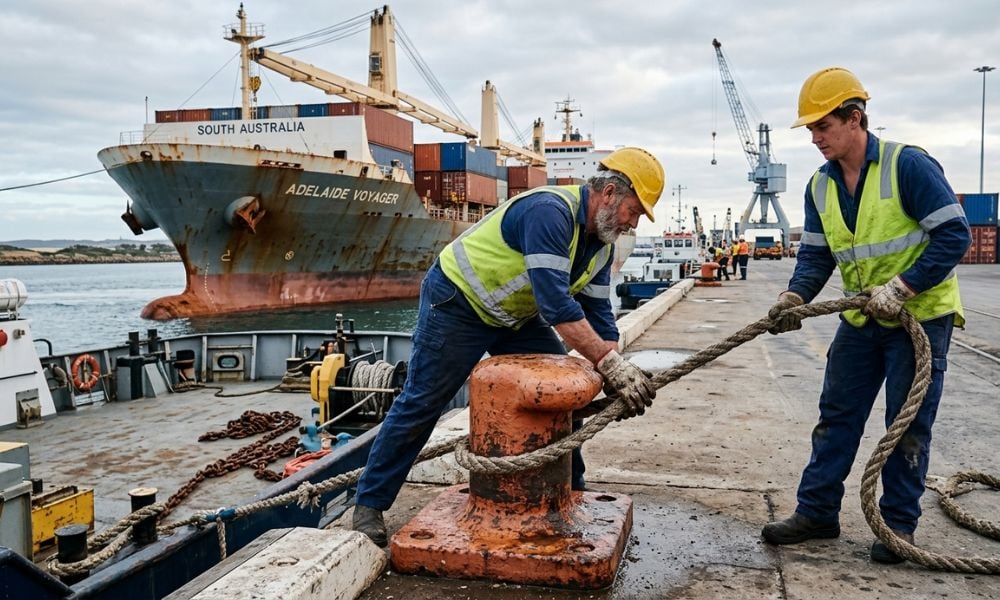
A casual port worker who was paid for more hours than he actually worked has lost a long service leave dispute after the Federal Court found that "hours worked" means exactly that.
The Full Court on September 25, 2026 allowed an appeal by Flinders Ports Pty Ltd, overturning a South Australian Employment Court decision that had ordered the company to pay $544 in compensation for what the lower court found was an underpayment of long service leave.
The worker had been employed as a casual marine services employee at the Port of Thevenard, near Ceduna in South Australia, since March 2010. His job was straightforward but unpredictable: he sat on a rotation roster of about 19 casuals, called out by phone or text to help moor or unmoor ships. Around 120 vessels berthed at the port each year, generating roughly 240 jobs split among the crew.
Each call-out came with a guaranteed minimum payment under the enterprise agreement. If a job took 45 minutes but the minimum was three hours, the worker got paid for three and could leave. If it ran longer, he stayed and got paid for the extra time. Flinders Ports tracked both figures separately: actual time worked, and the minimum payment hours.
That gap sat at the heart of the dispute.
Under the South Australian Long Service Leave Act, a casual worker's leave entitlement is calculated by averaging the "number of hours worked per week" over the preceding three years, then multiplying by the current hourly rate. The CFMEU, acting on the worker's behalf, argued that "hours worked" should include all the hours he was paid for under the call-out minimums - not just the hours he was physically on the job or standing by.
The lower court agreed. The Full Court did not.
The three judges held that "hours worked" carries a well-established meaning in employment law: hours where the employee is actually performing duties, or standing by and available at the employer's direction. Once the worker was told the job was done and he could go, the remaining hours in the minimum payment window were not hours "worked" in any ordinary sense.
The court acknowledged this means some casuals will take home less on long service leave than they earn in a typical working week. That result, the judges found, is simply how the formula works. They noted the minimum payment structure works somewhat like a call-out allowance - it compensates for the inconvenience of being summoned to work, not for hours of actual labour.
The appeal also tackled a second question: whether two periods when the worker was absent - a fortnight in November 2020 and a week in mid-2023 when he had COVID-19 - should have been excluded from the averaging calculation as "unpaid leave."
Under the Act, weeks of unpaid leave are disregarded when averaging hours, which can push the calculated rate upward. The lower court found both absences counted as unpaid personal leave, partly because Flinders Ports had no system in place for casuals to apply for or be granted leave.
The Full Court disagreed on both periods.
For the 2020 absence, the worker had submitted a leave form, but it was never signed or approved by anyone at Flinders Ports. The manager responsible did not recall approving it and did not believe casuals were entitled to personal leave at all. The court found that simply not rostering someone during a period they said they would be unavailable did not amount to "tacit approval" of leave. A casual telling their employer they are unavailable - which they can do at any time, for any reason - is not the same as being granted leave.
For the 2023 COVID-19 absence, the worker did not even submit a leave form. He called his supervisor to say he was sick and would not be available. While the reason was consistent with a personal leave entitlement, nothing in what he said communicated that he was applying for leave rather than simply making himself unavailable.
The enterprise agreement did provide casuals with 10 days of unpaid personal leave per year - a point both sides accepted. But the court found that entitlement could only be exercised where the employee was genuinely unfit for work due to illness or injury, and even then, the employer had to actually approve it.
The judges were pointed about the employer's own shortcomings. They accepted Flinders Ports "ought to have maintained a system" for casuals to apply for leave, and that the failure to do so may itself have breached the agreement or the Fair Work Act. But the absence of a system did not, on its own, turn an unapproved absence into approved leave.
For HR teams managing casual workforces, the decision draws a hard line between hours paid and hours worked when it comes to long service leave - and is a practical reminder that leave administration systems need to cover casuals too, even where the entitlements are unpaid.
The allegations in the original proceeding have now been dismissed. No penalties were imposed.