New report finds Australia's largest companies disclose limited information on grievance mechanisms and worker remediation

Australia's largest companies have major gaps in publicly disclosing how workers affected by modern slavery can safely report concerns, according to a new report, amid the government's plan to strengthen legislation to stamp out the global issue.
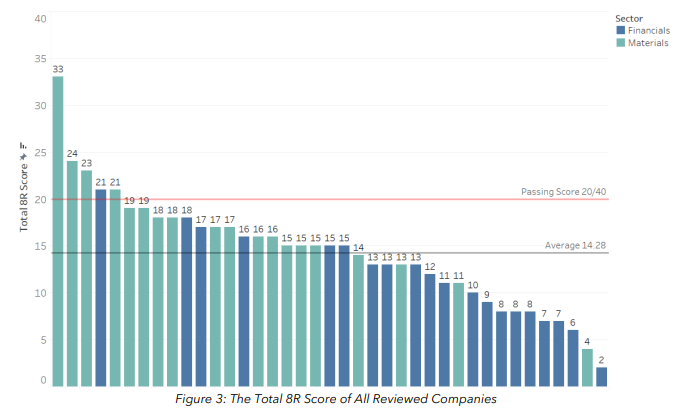
The report, Grievance Mechanisms and Remediation, led by Monash University, reviewed the 2024 financial year modern slavery statements of the 39 largest companies in the Financials and Materials sectors of the Australian Securities Exchange (ASX) 100.
On average, the companies addressed 14.28 of the 40 questions in the researchers' new 8R Framework, or about 36%. Only five companies addressed at least half of the questions, while nine addressed fewer than 10.
The 8R Framework assesses how transparently companies disclose information about the design and operation of modern slavery grievance mechanisms and whether their remediation processes are effective.
Grievance mechanisms allow workers, communities, and other stakeholders to report actual or suspected harms, including exploitation, unsafe or unfair working conditions and other rights violations. Remediation covers the steps taken to correct the harm, provide redress and prevent it from recurring.
The report found that only 10% of companies disclosed evidence of consulting affected stakeholders or their representatives when designing grievance mechanisms.
Just five per cent disclosed a full range of potential remedies, and the same proportion reported asking complainants whether the remedy they received was adequate. Another five per cent disclosed remediation outcomes or the share of cases resolved to complainants' satisfaction.
No company disclosed the average or median time taken to complete remediation.
Associate Professor Nga Pham, lead author from the Monash Centre for Financial Studies at Monash Business School in Melbourne, said the findings raise questions about whether companies' complaint systems actually work.
"A grievance mechanism should be more than a hotline or a policy on paper," Pham said, adding that such systems must be safe, trusted by workers, warn companies early of harm and offer a pathway to remedy.
"Our findings suggest that companies are much more comfortable reporting on their policies, committees, and complaint channels than explaining what happens after a concern is raised."
Pham warned that harms could remain hidden if workers cannot report exploitation through safe and accessible grievance channels backed by effective remediation.
"Workers, especially migrant, temporary, and low-skilled workers, are vulnerable," Pham said, pointing to limited knowledge of their rights, language barriers, and fear of retaliation.
Push for stronger laws
The findings come as the federal government has consulted on strengthening Australia's modern slavery laws, including a proposed criminal offence for companies that fail to prevent modern slavery in their operations and supply chains.
Under the proposed reforms, showing that reasonable steps were taken to prevent modern slavery could become critical to a company's defence.
Pham said the 8R Framework could help companies identify gaps in their grievance and remediation reporting, as well as support the government and regulators in developing clearer guidance on what constitutes reasonable steps.
Esty Marcu, Director of Responsible Business and Human Rights at the University of Sydney, said many organisations have found it difficult to set up effective grievance mechanisms.
She said the framework "provides a clear set of principles to guide good practice" while allowing organisations to assess their own maturity and find areas for improvement.
The authors recommend clearer communication and disclosure of grievance and remediation processes, stronger stakeholder participation, greater transparency on remediation outcomes and safeguards to protect complainants' privacy and safety.
Co-author Matthew Coghlan, a business and human rights lawyer, said effective mechanisms should be designed with affected people, respond safely and promptly to concerns, provide appropriate remedies and draw on lessons from grievances to prevent repeat harm.
The researchers noted that the report assesses the quality of public disclosure in modern slavery statements and does not necessarily reflect companies' underlying practices or information shared through other channels.