Employment lawyer reveals the 'unintended' impact of junior pay rate restructuring

Employers across all industries are being urged to brace for sweeping changes to junior pay, with experts warning that recent award reforms in retail, fast food and pharmacy are likely to set a precedent for the broader workforce.
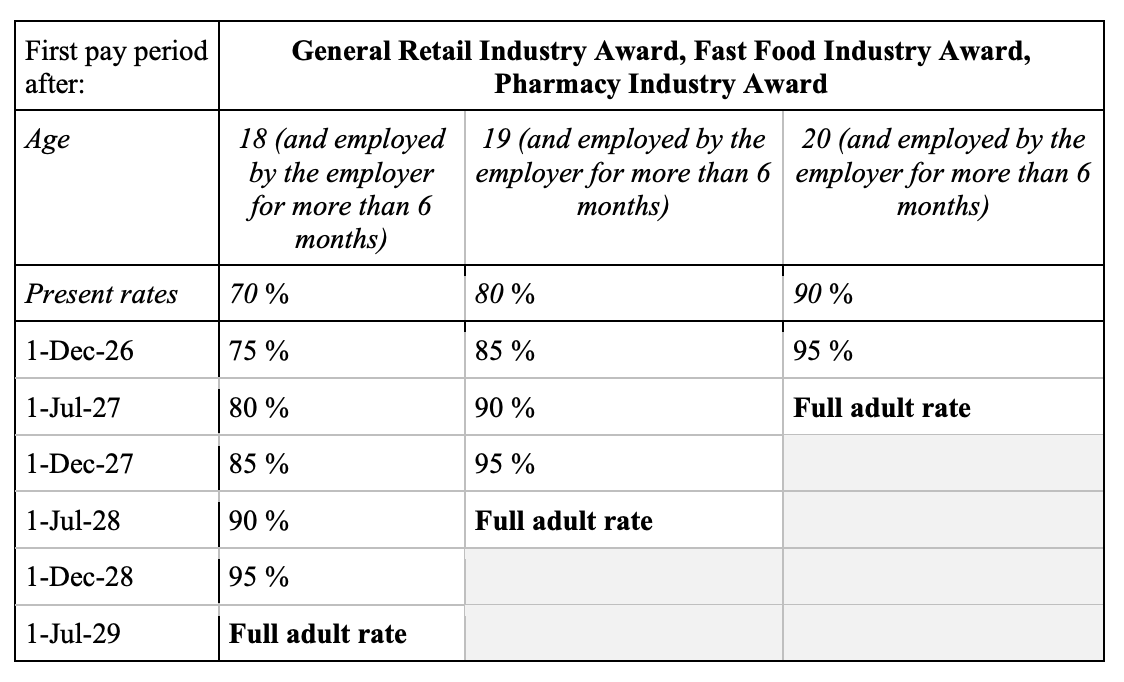
The Fair Work Commission’s provisional decision in March will overhaul junior pay structures in the General Retail Industry, Fast Food Industry, and Pharmacy Industry Awards. Under the four‑year phase‑in, junior employees will move much more quickly to adult rates of pay, with adult junior employees reaching 100% of the full adult rate after six months of experience.
From December, employees aged 18 covered by the three awards will receive 75% of the full adult rate, 19‑year‑olds will receive 85%, and 20‑year‑olds 95%. These rates will then rise by five percentage points every six months until the full adult rate is reached.
Employment lawyer Jordan Hardinge of Herbert Smith Freehills Kramer said that while the immediate impact is confined to retail, fast food and pharmacy, the decision has clear flow‑on implications for employers in other sectors.
Once operative, the higher junior rates under the modern awards will become the base rate of pay for the purposes of section 206 of the Fair Work Act 2009 (Cth). This will require employers with enterprise agreements across all industries to regularly check that EA rates remain above the relevant award rates – not just at the usual 1 July increase – or risk having to apply the award rates for all purposes under the EA, creating additional compliance and administrative pressures.
Hardinge cautioned that employers outside the currently affected awards should "watch closely" as the Full Bench’s approach may be extended more broadly, effectively reshaping junior pay settings across multiple industries. If that occurs, businesses nationwide will need to review their junior workforce profile, upgrade payroll systems to handle more complex age and service thresholds, and reassess labour cost assumptions for entry‑level roles.
He also flagged potential unintended consequences if similar junior rate reforms are rolled out more widely, including higher labour costs, pressure on hiring decisions involving young workers, reduced mobility for juniors who risk losing higher rates when changing employers, and possible incentives for some employers to limit junior tenure beyond key service milestones – all of which could impact how junior employment is structured across the economy.
Ross Heron, CEO of Australian Payroll Association said the changes were a "meaningful shift for employers, particularly in industries with a younger workforce."
"The impact isn’t just increased wage costs it also requires a close look at payroll systems, award coverage and existing enterprise agreements to ensure everything remains compliant as changes are phased in," he said.
Heron also urged employers to "get ahead of it".
"Businesses should be auditing their workforce now understanding who will be impacted and when and building those changes into their financial forecasts. It’s also worth reviewing onboarding and early tenure strategies given the move to full adult rates after a relatively short period."
 'Unintended' impact on employment
Employers across Australia have warned that the decision will impact staffing arrangements in businesses, particularly hiring decisions surrounding junior employees.
Hardinge aired a similar warning, as he noted that the proposal will increase labour costs for employers.
"This may ultimately make it harder for junior employees to secure employment," he said.
He also warned of "unintended" effects of the proposal, including a potential decline in pay for junior employees should they decide to transfer to a new employer after their six-month service milestone.
"This may mean that junior employees are less likely to change employers and try new roles for fear of losing income," he said.
Employers will also be less incentivised to keep junior staff beyond six months, according to Hardinge.
"While there would be obvious general protections risks associated with dismissing an employee or reducing their hours of work because they are about to become entitled to a higher rate of pay under an industrial instrument, it is not unimaginable that some employers will take this approach – at considerable risk – to reduce their labour costs," he said.