Worker challenges termination, claims over-the-counter medication caused collapse but won't specify substances
The Fair Work Commission (FWC) recently examined an unfair dismissal claim involving a worker who was terminated for failing to submit to a drug test following a workplace incident.
The case arose when the worker became unconscious at work for over an hour and required paramedics to wake him, leading to concerns about drug use and a subsequent direction to undergo testing.
The worker argued his dismissal was unfair, maintaining he had only taken over-the-counter medication for hay fever and a headache.
He claimed personal circumstances prevented him from complying with the drug testing direction and that too much time had passed since the incident for any meaningful test results. The worker sought reinstatement to his former position.
The employer contested the worker's claim, arguing the dismissal was justified due to his failure to comply with a lawful and reasonable direction to undergo drug testing.
The company maintained that the worker's evasive responses about what substances he had taken, combined with his refusal to take the test, warranted termination under their drug and alcohol policy.
Workplace incident raises serious drug use concerns
The employment relationship involved a worker at a poultry processing company who experienced a significant incident on 17 September 2024.
The worker's day had started at approximately 3:30 am, and in the afternoon, he was a passenger in a work vehicle travelling from a farm back to the company's premises.
During the 1.5-hour journey, the worker fell asleep and could not be woken when the vehicle arrived.
Co-workers tried for 45 minutes to rouse him before calling an ambulance. Paramedics found the worker unconscious in the front passenger seat, describing him as responsive only after verbal and physical stimulation.
Records from the ambulance service noted: "drug/medication related, unknown substance PT ADMITTED TO TAKING DRUGS HOWEVER REFUSED TO STATE WHICH DRUG."
The worker refused further medical assessment, observations, and numerous offers to be driven home, choosing instead to walk home from the workplace.
An injury and incident report was filed the next day, documenting what the worker had told paramedics about taking drugs.
Worker provides conflicting explanations about substances taken
In his witness statement, the worker claimed he had taken over-the-counter medication during the day, stating he had hay fever and a headache and took some pills after finishing work.
He explained that when paramedics asked if he had taken anything, he replied that he took some pills but did not specify what medication.
At the hearing, the worker explained he refused to tell paramedics what he had taken because he was shocked and "didn't like the fuss."
However, his explanations became increasingly inconsistent when questioned by management. Two days after the incident, the human resources manager contacted the worker to ask about the substance and directed him to submit to a drug test.
During this conversation, the worker initially said he had taken "prescription meds and had a bad reaction to them."
When asked for proof of the prescription, he said he couldn't provide it, then changed his story to say it was another household member's prescription medication, but again couldn't provide evidence of what it was.
Employer issues drug testing direction following policy
The human resources manager informed the worker that he would need to take a drug and alcohol test in accordance with company policy.
The manager provided three options: coming to another company site, having the manager conduct the test at the worker's location, or going to the worker's general practitioner for testing.
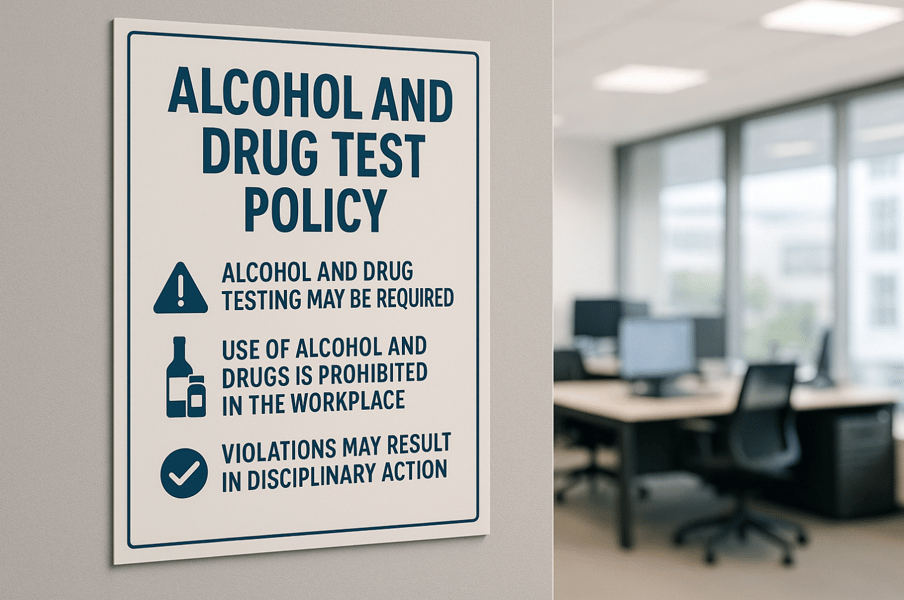
The company's drug and alcohol policy stated that any use of illicit drugs or misuse of legal drugs would render a person unfit for work, and that testing could be carried out on anyone reasonably suspected of being affected by drug use.
The policy warned that offenders would be subject to immediate disciplinary action.
The worker acknowledged the importance of following lawful instructions and said he could spare time to get the test completed, but ultimately did not undergo the testing as directed. He later cited personal issues as the reason for non-compliance.
Worker fails to attend disciplinary meeting
On 23 September 2024, the worker was invited to attend a meeting to discuss his failure to take the drug test as directed.
The meeting was scheduled for the following day, and the worker was advised he was entitled to bring a support person, such as a family member or friend. However, the worker did not attend this disciplinary meeting.
On 26 September 2024, the worker sent a text message to the human resources manager indicating that he was close to resolving his personal circumstances and was ready to return to work. Despite this communication, the worker's employment was terminated on 30 September 2024.
The worker argued that the drug testing direction was unreasonable because too much time had passed since the incident, claiming any drugs would no longer be detectable. However, the company maintained that their concerns were reasonably held given the circumstances of the incident.
Commission examines valid reason for dismissal
The FWC found that the worker's evidence about the drugs he took was "not satisfactory," noting several logical inconsistencies in his explanations.
The Commission observed that if he had only taken over-the-counter medication as claimed, there was no logical reason why he wouldn't tell the ambulance officers. The worker's explanation that he "didn't like the fuss" was deemed unsatisfactory.
The Commission noted that the worker told management he had taken a prescription drug, but the medication he claimed to have taken was not a prescription drug.
The worker's inability to provide clarity "caused even greater concern about whether [the worker] was affected by drugs at work."
The FWC determined that despite the time delay, "the direction to submit to a drug test was lawful and reasonable," given the significance of the incident and the worker's evasive responses.
The Commission found the incident was significant and the worker's information about drugs was "evasive and entirely unsatisfactory."
Application dismissed on valid dismissal grounds
The FWC concluded that the worker's dismissal was not unfair, finding there was a valid reason related to his conduct.
The Commission determined that the worker's failure to take a drug test contravened company policy and was a failure to follow a lawful and reasonable direction. The employer was entitled to treat the refusal to test the same way as failing a drug test.
The Commission noted that while the worker had personal circumstances that were significantly difficult, they were not so difficult that he could be excused from submitting to a drug test given the employer's significant concerns about the incident.
The FWC found the worker had been given proper procedural fairness, including notification and opportunity to respond.
The FWC concluded that the failure to take a drug test warranted dismissal considering the worker was unconscious for over an hour, required paramedics to rouse him, admitted taking drugs but refused to identify them, and provided unsatisfactory explanations to management.
The Commission dismissed the application, finding: "I find that the dismissal of [the worker] was not harsh, unjust and/or unreasonable."