He kept working on eight Panadol a day - then his body gave out
A drover fell from a cattle truck at a Victorian abattoir. Nearly five years on, the court has ruled his injuries changed his working life for good.
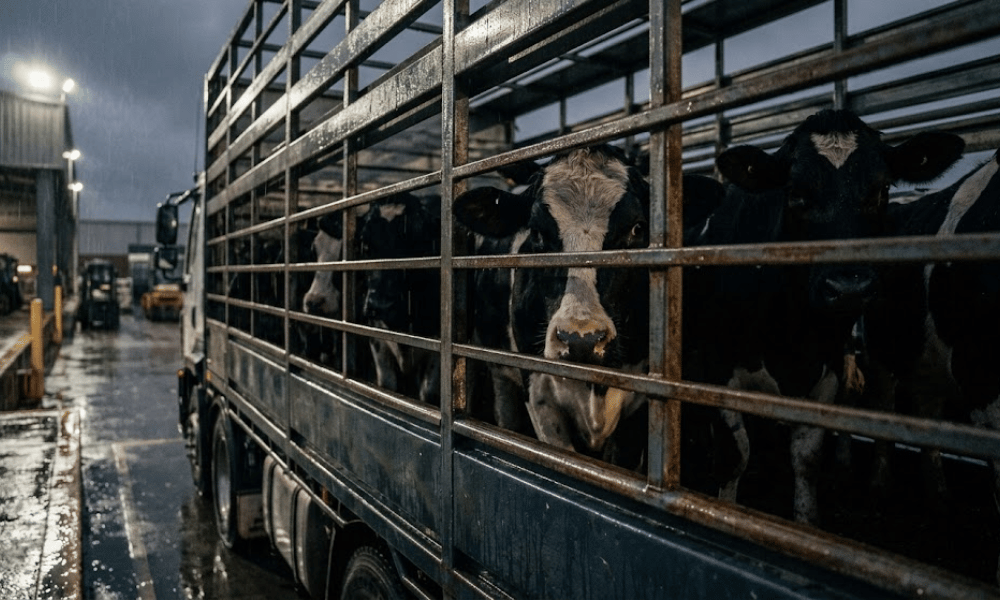
The worker was loading cattle on the night of November 12, 2021. It was raining. The cows were distressed. He climbed onto the side of a double-decker trailer, electric prod in hand, trying to push them up to the second level.
He slipped and fell roughly 2.5 metres onto concrete, landing on his feet. His left ankle took most of the weight. His lower back jolted on impact.
He kept working for another month, getting through each shift on eight Panadol tablets a day.
From abattoir floor to courtroom
The County Court of Victoria delivered its judgment on October 1, 2026, granting the worker - now 39, single and living in Queensland - a serious injury certificate under Victoria's Workplace Injury Rehabilitation and Compensation Act 2013. That certificate is a gateway: it means he can now bring a full damages claim for pain and suffering and loss of earning capacity against the Victorian WorkCover Authority.
His employer at the time of the accident, Australian Meat Group Pty Ltd, ran the meat processing facility where the fall took place. The WorkCover Authority accepted the worker had hurt his left ankle and lower back in the fall. What it disputed was whether those injuries were serious enough to cross the statutory threshold.
The court found they were.
What the scans showed
An MRI taken six weeks after the fall revealed an undisplaced fracture of the distal fibula - the small bone on the outer ankle - along with a torn ligament and likely bone bruising. The court found the fracture probably went undetected on earlier imaging because the surrounding swelling masked it.
A follow-up MRI in May 2022 showed the swelling had eased, but moderate inflammation had developed in the joint and the ligament damage remained.
His lower back told a similar story. An MRI in March 2023 revealed a disc bulge and a tear in the outer wall of the disc at the base of the spine. None of the medical experts attributed that to an older motorbike fall in 2013. The work accident was the accepted cause.
An honest witness
The court found the worker credible. The defendant's own counsel conceded credit was not in issue - a concession the court called "sensible."
"The plaintiff presented as an honest witness," the court held. "He freely acknowledged his shortcomings and gave frank answers to questions asked of him."
That honesty cut both ways. The worker admitted he had not genuinely applied for jobs while on JobSeeker payments - filling out four applications just to meet the requirements. He also had a history of amphetamine addiction in 2019, a cervical spine fracture in 2015, a tibial fracture in April 2021, and pre-existing bipolar disorder and ADHD managed with medication.
The court accepted that none of those earlier issues had stopped him from working before the fall.
The Boxing Day training course
Much of the hearing turned on whether the worker had done enough to retrain. His insurer had enrolled him in a civil construction course scheduled over the Christmas period. He did not attend.
The reason: he thought Boxing Day was "quite an odd day to do a course" and could not reach the training provider by phone to confirm. The defendant argued this showed avoidance. The court disagreed.
By the date of the hearing, the worker had completed the civil construction course - but still did not think his body could handle that kind of work full-time.
What he lost
The judgment painted a detailed picture of a life constrained by pain.
The worker has constant lower back pain that ranges from a persistent ache to sudden shooting sensations down his right leg. His left ankle pain sits between 3 and 8 out of 10. He wakes most nights around 1am and sometimes walks the house for half an hour before he can get back to sleep. He avoids prescription pain medication because, as the court noted, he was previously addicted to drugs and taking pain medication is a worry for him.
He can no longer ride a motorbike or bicycle, go horse riding, fish the way he once did, or set up camp. He cannot play with his brother's children - a significant loss, the court noted, because he has no children of his own. He struggles with basic personal care because his back cannot manage the twisting involved.
He had been a hands-on worker all his life. A carpenter for years, then a drover. School until Year 10. Basic computer skills. The kind of worker whose value was in what his body could do.
The earning capacity gap
The court found the worker was not permanently incapacitated but could manage only about 24.5 hours a week. It accepted that just two of the six roles put forward by vocational assessors were realistic for him: courier driver and forklift driver. Rental administrator and facilities manager were rejected - they bore no resemblance to his education, skills, or work history.
The key question was whether his earning capacity had dropped by at least 40 per cent, the statutory threshold. Two competing reports offered very different wage figures for the same jobs. The defendant's report put courier earnings at levels that would have kept the worker above the line. The worker's report - prepared by Flexi Personnel, more recent, and in the court's view more reliable - put them below it.
On the Flexi Personnel figures, a courier working 24.5 hours a week would earn about $643 per week. Against pre-injury earnings of $1,104, the loss exceeded 40 per cent. The threshold was met.
The court also found, separately, that each injury on its own met the serious injury test based on pain and suffering alone - described as at least "very considerable" and certainly more than "significant" or "marked."
For HR teams and safety leaders in high-risk industries such as meat processing, the case is a practical example of what happens when an injured worker's return-to-work pathway breaks down and vocational rehabilitation does not bridge the gap between their old life and their new physical reality.