He signed the forms without reading them - the court looked at what he actually did on the farm
Signing forms that labeled him a "director" didn't make him one - and Queensland's Court of Appeal dismissed the insurer's bid to deny his cover.
On July 3, 2026, Queensland's Court of Appeal confirmed that an injured cane worker was a genuine employee covered by workers' compensation, rejecting an insurer's attempt to reclassify him out of cover using a handful of signed forms.
It's worth a few minutes for anyone who owns classification, payroll or workers' compensation risk, because it turns on a simple rule: courts look at what people actually do, not at what a document calls them.
The worker was crushed on August 15, 2018 while repairing a cane harvesting tractor that slipped off a jack. The injury flowed from the negligence of his employer, CRG Harvesting - a point that was not in dispute on the appeal.
The contest was about coverage. Workcover Queensland refused to indemnify the company, arguing the man was not a "worker" under the Workers' Compensation and Rehabilitation Act 2003 (Qld). It ran two main arguments: that there was no genuine contract of employment, and that even if there was, he was shut out of cover as a company director.
On the first, the court agreed there was a contract of employment, even without anything in writing. It could be inferred from conduct - payroll records treated the man as a salaried employee with superannuation, and the company earned the revenue and paid the wages.
Workcover Queensland pointed to a "wages reversal" the family made in 2019, after the injury, to reduce their tax on the accountant's advice. The court held that a change made months later could not rewrite the man's status on the day he was hurt. The insurer also argued the arrangement was a "sham," but the court noted that argument was never pleaded and never put to the witnesses, so it could not succeed.
The part HR readers will use is the director test. Under the Act, a person is not a "worker" if they work for a corporation "of which the person is a director" - and the definition captures anyone "acting in the position of a director," appointed or not. The court asked, objectively, whether the man performed the functions you would expect of a director. It found he did not. He had no say over hiring or firing, no control of the company's finances, no ability to move money in its bank accounts, and offered little at the annual accounting meetings he attended alongside his wife.
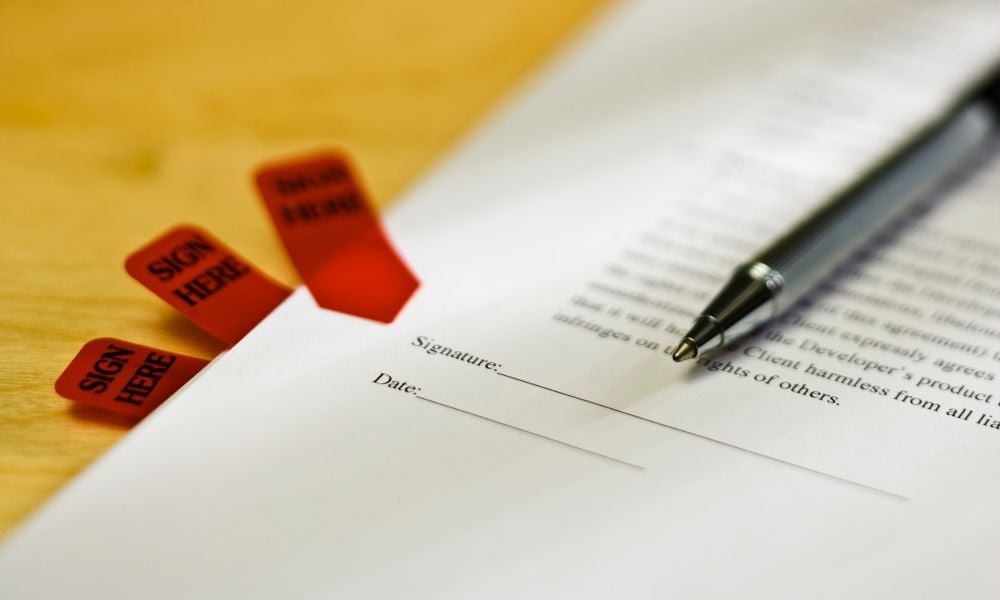
The insurer's strongest evidence was several "Directors' Declarations" the man had signed above the word "director." But the court found those were signed in error, were never sent to the tax office or the corporate regulator, and were signed without being read because they carried yellow "sign here" stickers. The company's accountant confirmed the "director" label was an administrative mistake. Isolated signatures like that, the court held, do not make someone a director in substance.
The court also left the damages undisturbed. It upheld an award of $109,000 for past lost farm earnings - based on $300 per week over seven years - and, while it identified some errors in how the trial judge reached that figure, it held the end result stayed within the limits of a sound assessment. It also upheld a 15 per cent discount on future economic loss for contingencies, including a pre-existing shoulder condition that medical experts said might have limited the man's farm work within five to ten years in any event.
With the insurer failing on every ground, the appeal was dismissed and it was ordered to pay the respondents' costs.
For HR and workplace-policy leads, the signals are practical. Classification turns on the actual role, not the title on an internal form. Clean payroll, PAYG and superannuation records support employee status. And in family-run or loosely structured businesses, having people sign "director" documents they do not understand can hand an insurer an argument later - while a tax-driven restructure after the fact will not change the status someone held when they were injured.