The group had drawn down $1.65m in government funding, then argued it couldn't afford the fine
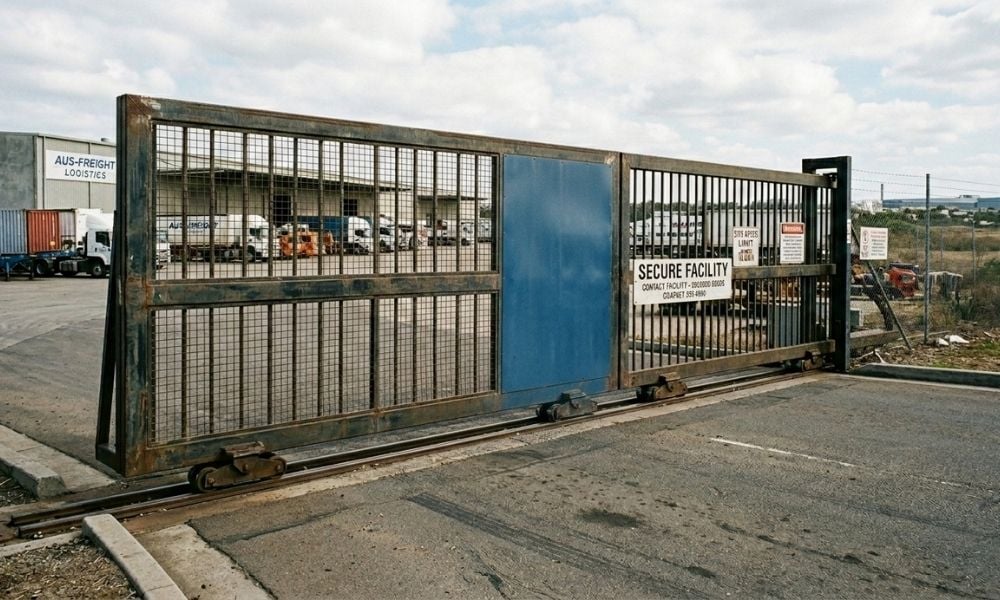
A NSW court has fined a family-run transport business over a workplace injury, after an 800-kilogram gate fell on a worker - and it rejected the company's argument that it couldn't afford the penalty.
The problem behind the case was simple, and it went unfixed for almost two years. In June 2020, a truck damaged the powered entry gates at the group's yard in western Sydney. Rather than repair them, workers began opening and closing the gates by hand. They kept doing it many times a day for 21 months, with no written procedure and no regular check by anyone qualified to inspect the gates. Each gate ran about 11 metres long and weighed 800 kilograms.
It went wrong on March 24, 2022. A worker was closing one of the gates by hand after a truck drove out. The gate rolled past its end supports and fell on him. He was left with lasting lower-back pain and nerve symptoms in both legs, and the court heard he can now work only about 25 hours a week. He has stayed on with the business in a reduced role.
The workplace safety regulator, SafeWork NSW, brought four cases: one against the company that ran the business, one against a related company that employed and supplied the workers, and two against the man who was sole director of both. All three pleaded guilty, and the case reached sentencing in August 2026.
The part worth a second look for HR is what the court did with the employment company's argument. Its lawyers said it should get a much lighter penalty because it didn't run the operation or own the gates - it only supplied staff. The court didn't accept that. Under work health and safety law, a safety duty can't be passed off to someone else, and more than one business can hold the same duty at the same time. Because one person was the sole director and, as the court put it, the “controlling mind” of both companies, each had the same power to deal with the risk. The court placed both companies in the middle of the range for seriousness and refused to treat the labour-supply company as a mere go-between.
The director was sentenced in his own right too, as a company officer who failed to take reasonable care that the businesses met their safety duties.
Then came the question of money. The defendants argued that a large fine could put the business at risk. The court wasn't convinced. It noted the group had applied for a $2 million government loan and drawn down $1.65 million - and that $200,000 of that was then lent to the director's daughter, something that did not appear in the loan application. The director gave little detail about his own finances, listed his solicitors' office as his address on a sworn statement, and had recently spent two months in Europe. On that record, the court found the defendants had not shown they couldn't pay.
The director had also asked to walk away without a conviction, a step the law allows in a narrow set of cases. The court said no. The offences weren't trivial, and a clean record and good character - common among directors who face these charges - didn't make the case unusual enough to justify it.
On penalty, the court fined each company $180,000, and fined the director $15,000 and $45,000 across his two matters. Each figure already includes a 25% discount for the guilty pleas - more than the 10% the regulator had pushed for. Every defendant was ordered to pay the prosecutor's costs.
For HR and safety teams, two lessons stand out. First, informal, “we've always done it this way” safety habits offer no cover - the court pointed out the fixes were simple and cheap, and were all put in place right after the injury. Second, splitting a workforce across separate employing and operating companies does not split the safety duty. If your structure runs staff through a labour-supply entity, that entity carries the same obligations as the business running the site.