The accessible bathroom doubled as a storeroom for years - Apple couldn't prove that was reasonable
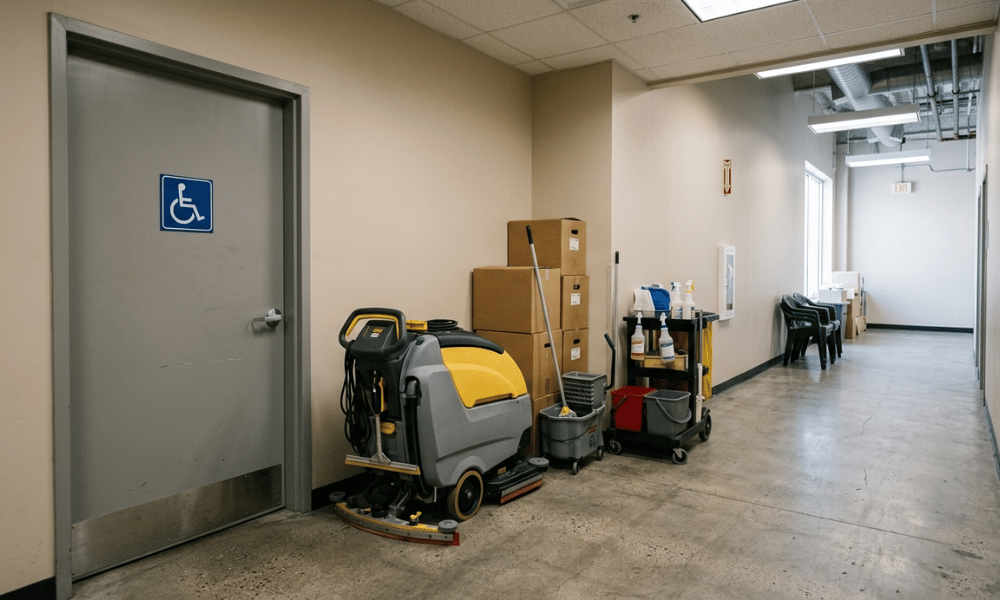
The accessible toilet at Apple's Canberra store doubled as a storeroom - and that has cost the tech giant $18,000.
The ACT Civil and Administrative Tribunal handed down its decision on August 31, finding Apple Pty Ltd indirectly discriminated against an employee with a bowel disability by maintaining bathroom arrangements that disadvantaged him at its Civic store.
The employee, who worked as a specialist at the store from September 2019 until his resignation in March 2024, had a condition that required him to use the toilet up to ten times a day, often with sudden urgency.
The store had three staff toilets in its back-of-house area - two standard self-contained cubicles and one larger accessible toilet. The problems, as the tribunal found them, stacked up around that accessible bathroom.
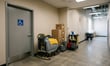
A large floor cleaning machine was stored inside it, at one point obstructing access to the hand towel dispenser. A cleaning cupboard sat behind it, meaning cleaners had to walk through the accessible toilet to reach their supplies - and at times propped both doors open while they did so. Other staff used the accessible toilet as a change room. And with around 30 to 40 workers on shift at any given time sharing three toilets, the employee sometimes had to wait.
He raised the issues early. A few weeks after starting in late 2019, he told a manager about his condition and asked for the cleaning equipment to be removed and the accessible toilet reserved for people with disabilities. The response, as the tribunal recorded it, was that there was nowhere else to store the equipment. Some cleaning materials were removed, but the floor cleaner stayed.
In July 2021, he injured his hand in the accessible toilet while trying to reach the towel dispenser around the floor cleaner. He raised the issue again. The dispenser was relocated to the other side of the sink. The floor cleaner did not move until August 2023 - more than two years later.
A full renovation in 2024 finally resolved all the bathroom issues, adding extra toilets and separate change rooms. By then, the employee had been on leave since late 2021 and had resigned.
The tribunal found that Apple's bathroom setup amounted to indirect discrimination. In plain terms, even though the arrangements were not targeted at the employee specifically, they put him at a disadvantage because of his disability. The accessible toilet - used as a storeroom, shared with cleaners, and doubling as a change room - combined with the occasional wait for the standard toilets, meant he did not have ready access to a bathroom when he needed one urgently. The tribunal noted that just because he could still manage to use a toilet did not mean the arrangements were acceptable.
Apple had to prove the arrangements were reasonable. It did not. The tribunal found there was little evidence or detailed argument from either side on this point, and Apple did not establish that the disadvantage was proportionate or that fixing it was not feasible.
The direct discrimination claims did not succeed. On the bathroom issues, the tribunal found no evidence that Apple failed to act because of the employee's disability. The store took steps - removing some equipment, relocating the dispenser, adjusting his schedule, telling him he could leave the floor to use a toilet without asking permission first. The things it did not do in the short term, like removing the floor cleaner, were for practical reasons unrelated to his disability. There was simply nowhere else to put it at the time.
The employee also brought four complaints about Apple's refusal to let him work from home. He had worked from home during COVID lockdowns through Apple's Retail Customer Care program and wanted to continue. Apple's position was consistent: all retail roles were store-based, and work-from-home positions sat in a different division. The employee was encouraged to apply for those roles and was supported in doing so. He was unsuccessful.
The tribunal found no evidence that the refusals were because of the employee's disability. Apple's retail structure simply did not include remote positions for store-based roles.
On compensation, the employee had sought $50,000 for psychological harm and roughly $20,500 for lost earnings. The tribunal awarded $18,000 - and nothing for economic loss.
Several factors kept the payout modest. No medical evidence was provided linking the bathroom discrimination specifically to psychological injury. The discrimination was not intentional or calculated - the tribunal found the store's managers showed genuine concern for the employee and did what they could. Apple had also progressively fixed every bathroom issue, and by the time the employee resigned all of them had been addressed.
The lost earnings claim did not hold up either. The figures were not supported by reliable evidence, and key payments - including workers' compensation settlements and a medical negligence payout - had not been accounted for. The tribunal also found that the employee's underlying health conditions, rather than the workplace discrimination, were a significant reason he could not work.
For HR teams managing shared facilities, the case carries a practical message: indirect discrimination can flow from the physical layout and everyday use of a workplace, not just from policies or decisions. An accessible toilet that exists on paper but is compromised in practice by storage, shared access and competing uses may not survive a reasonableness challenge - particularly when the employer carries the burden of proving it does.
The decision is final. Apple was ordered to pay the $18,000.