Chip Wilson's comments at a Calgary women's leadership forum show why pregnancy discrimination in recruitment remains a live risk for employers
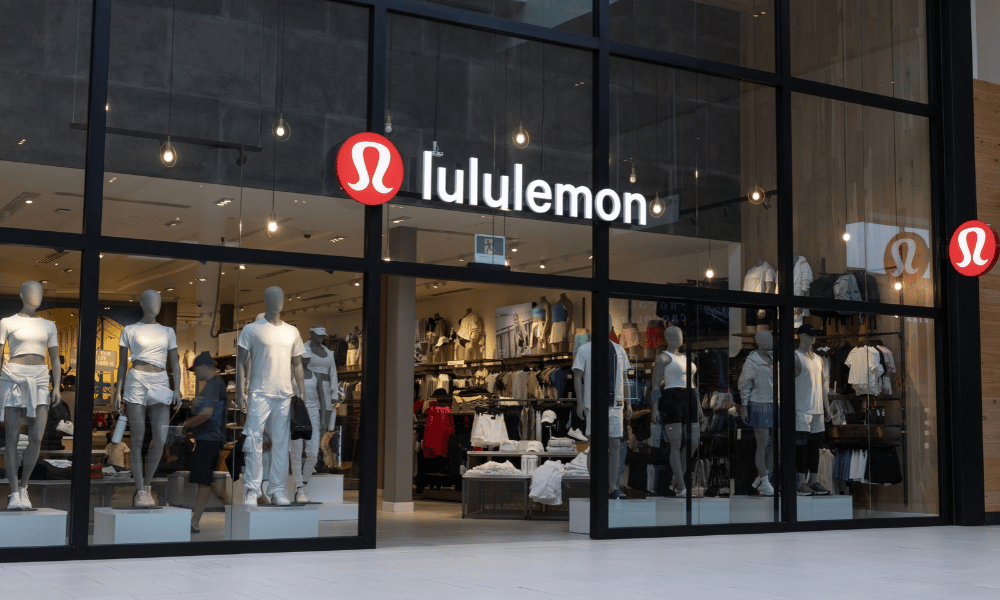
Lululemon founder Chip Wilson has drawn widespread criticism after telling a women's leadership conference in Calgary, Canada, that employers may be reluctant to hire young women because they could become pregnant and take maternity leave.
For HR leaders, the remarks are more than a reputational misstep by a billionaire founder – they describe a hiring logic that is unlawful in many jurisdictions, and one that research suggests still quietly shapes recruitment decisions.
Wilson was a featured speaker at the Axis Connects Leadership Forum at Calgary's BMO Centre on 23 November 2026. More than 700 people attended, most of them women. No recording or transcript of the session has been made public, but attendees who spoke to The Guardian and The Globe and Mail said Wilson suggested companies would hesitate to hire a 22-year-old woman in case she became pregnant at 23.
He also reportedly credited birth control with making employers more willing to hire women in their early 20s, and suggested some men might look for brides from Thailand because Canadian women were not having as many children as men wanted.
"There were audible gasps in the room and everyone was clearly uncomfortable," one attendee told The Guardian. The session, scheduled to run for an hour, was ended early by its moderator, Nuvyn Peters, CEO of non-profit Axis Connects.
Peters later said several of Wilson's comments were "offensive and inconsistent with the values and mission of Axis Connects".
"His comments also underscore an uncomfortable reality: attitudes and assumptions that hold women back in the workplace and in leadership have not disappeared," she said.
A spokesperson for Wilson pushed back on the coverage. "This is an effort to discount Chip Wilson's record of mentoring women who have become executives and entrepreneurs in their own right to drive revenue with a clickbait headline," the spokesperson said, as reported by The Times of India.
Lululemon moved quickly to distance itself. In a statement to Daily Hive, the company said Wilson's comments "do not reflect [the] company's views or beliefs" and that he "has not been directly involved with lululemon since his resignation from the board in 2015". Wilson nonetheless remains one of the athleisure company's largest shareholders.
It is not the first time his views on women have caused controversy. Wilson stepped down as Lululemon's board chair in 2013 after telling Bloomberg TV that some women's bodies "just actually don't work" for the company's yoga pants. At the Calgary forum, attendees said he told the audience those remarks had been taken out of context.
Why the remarks matter: pregnancy discrimination in hiring
What made the comments jarring for many in the room was not only their setting, but that they voiced openly an assumption many employers act on silently: that a young woman is a riskier hire than a man because she might one day need parental leave.
In Alberta, where the forum took place, that reasoning runs directly into human rights law. The Alberta Human Rights Commission states that the Alberta Human Rights Act prohibits discrimination based on gender, and that this includes pregnancy – covering decisions such as refusing to employ someone. Across Canada, pregnancy discrimination has been treated as sex discrimination since the Supreme Court of Canada's 1989 ruling in Brooks v Canada Safeway.
The evidence suggests the bias is far from theoretical. A survey by UK charity Young Women's Trust found nearly one in five HR decision-makers in England and Wales admitted being reluctant to hire women they thought might start families, compared with 13 per cent who said the same about men.
The financial consequences for women are significant. CIBC Economics, in a March 2026 analysis, found that 2021 Census data points to an average motherhood penalty – the earnings gap between mothers and women without children – of 18 per cent for women with children aged up to five. Citing research from Université du Québec à Montréal, CIBC said mothers' earnings fall by 49 per cent in the year their first child is born, with a long-run penalty of 34 per cent.
What should HR leaders take from the controversy?
The first lesson is about hiring practices. Allison Venditti, founder of Moms at Work, previously told HRD that reluctance to hire women who may start a family is "beyond bias – it's discrimination". HR teams should check that interview guides, hiring manager training and selection criteria leave no room for questions or assumptions about family plans, and examine whether your organisation is biased against pregnant women in subtler ways, such as stalled promotions after leave.
The second concerns leave planning. Treating parental leave as a predictable part of workforce planning – with clear backfill processes, return-to-work support and leave policies open to all parents – removes much of the operational "risk" that fuels discriminatory hiring.
The third relates to external voices. Many of the conference's attendees were there representing their employers. Organisations that sponsor events, book speakers or send staff to them carry some reputational exposure when a platform goes wrong, and leaders who appear publicly on a company's behalf should understand that their remarks will be read as a signal of its culture.
For one attendee, the episode was a reminder of how much work remains. "It's just sad that this is what women still have to deal with, in a forum literally for women," she told The Guardian.