Expert warns employee assistance programmes fall short
Poor mental health is quietly draining productivity from Singapore's workplaces, and the bill is steep.
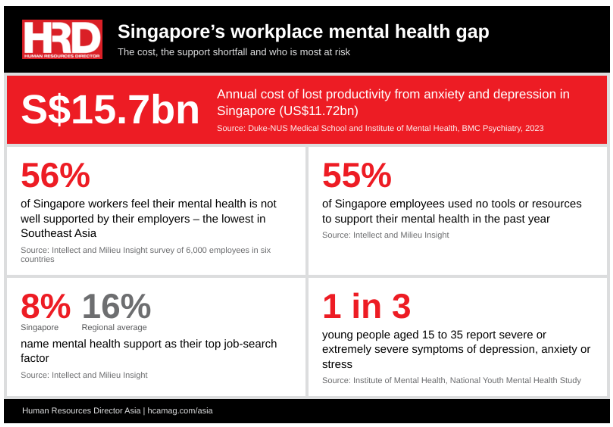
Lost productivity from anxiety and depression costs Singapore an estimated S15.7billion (US11.72 billion) a year, according to a 2023 study by researchers from Duke-National University of Singapore Medical School (Duke-NUS) and the Institute of Mental Health (IMH), published in BMC Psychiatry.
Yet most employees say their employers are not keeping pace. Some 56% of Singapore workers feel their mental health is not well supported by their employers, the lowest result in Southeast Asia, according to a survey of 6,000 employees across six countries by Intellect and Milieu Insight.
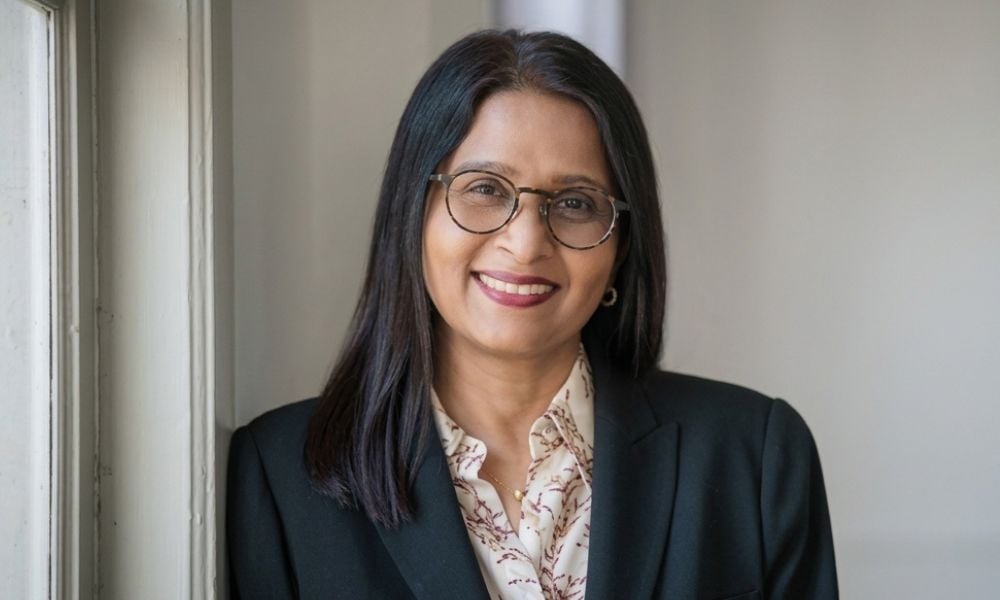
Dr. Mythily Subramaniam, Director of the Research Division at IMH and Associate Professor at the National University of Singapore's Saw Swee Hock School of Public Health, wants employers to close that gap.
She says the answer lies in how HR’s mental health-focused work is organised. "The shift is therefore from viewing mental health primarily as an individual employee issue to recognising it as an organisational responsibility," she says.
What the third Singapore Mental Health Study will measure
Her latest research could sharpen that argument. Subramaniam leads the third Singapore Mental Health Study (SMHS), launched in May 2026. The three-year study is led by IMH with KK Women's and Children's Hospital and funded by the Ministry of Health.
It will measure the economic burden of mental health conditions, including productivity losses, across the full continuum from good to poor mental health.
Subramaniam says local estimates could push employers to evaluate programmes "more systematically, rather than simply measuring participation in wellness activities". She adds a caveat: "I would caution against viewing mental health investment solely through the lens of productivity or financial returns."
Why employee assistance programmes fall short
That broader view shapes how she believes support should be designed. Subramaniam points to excessive workloads, poor supervisory relationships and job insecurity as drivers of distress, which no counselling hotline can offset on its own.
"Employee assistance programmes and counselling services are important, but they should complement, rather than substitute for, efforts to create psychologically healthy workplaces," she says.
The data bears this out. More than half (55%) of Singapore employees used no tools or resources to support their mental health in the past year, the Intellect study found, and Intellect CEO Theodoric Chew has said an employee assistance programme "is not the be-all and end-all."
Singapore also trails its neighbours. Only 8% of Singapore respondents named mental health support as their top job-search factor, well below the regional average of 16%, according to HRD Asia's report on why Singapore workers feel under-supported on mental health.
Young and migrant workers fear disclosure
These gaps weigh heaviest on workers already reluctant to speak up. "Our National Youth Mental Health Study found that approximately one in three young people aged 15 to 35 reported severe or extremely severe symptoms of depression, anxiety or stress," Subramaniam says.
She urges structured onboarding, regular feedback and mentoring, and says managers should be trained to spot distress without trying to act as mental health professionals.
The risk is sharper still for migrant workers. Migrant workers and migrant domestic workers hesitate to seek formal support because they fear losing their jobs, according to a study by IMH and the Saw Swee Hock School reported in March 2026. Subramaniam says employers must state plainly that seeking help "will not, in itself, result in punitive action or automatic termination of employment".
What should employers change?
For Subramaniam, the change starts with parity. "If I could change one thing, it would be the tendency to view mental health conditions differently from physical health conditions in the workplace," she says.
Policy already points in that direction. The Ministry of Manpower (MOM), the National Trades Union Congress (NTUC) and the Singapore National Employers Federation (SNEF) jointly released Singapore's Tripartite Advisory on Mental Well-being at Workplaces as a practical guide for employers. Subramaniam would go further, treating mental health first aid as routinely as CPR training.
Leaders benchmarking their own culture work can also look to those profiled in the latest APAC's Top Women in the HR Industry special report.
For Subramaniam, the test is simple. "Ultimately, we need workplaces that do not simply encourage people to seek help, but make it safe and practical for them to do so."