Inspectors found 300 bed spaces and 173 migrant workers from four firms inside factory premises
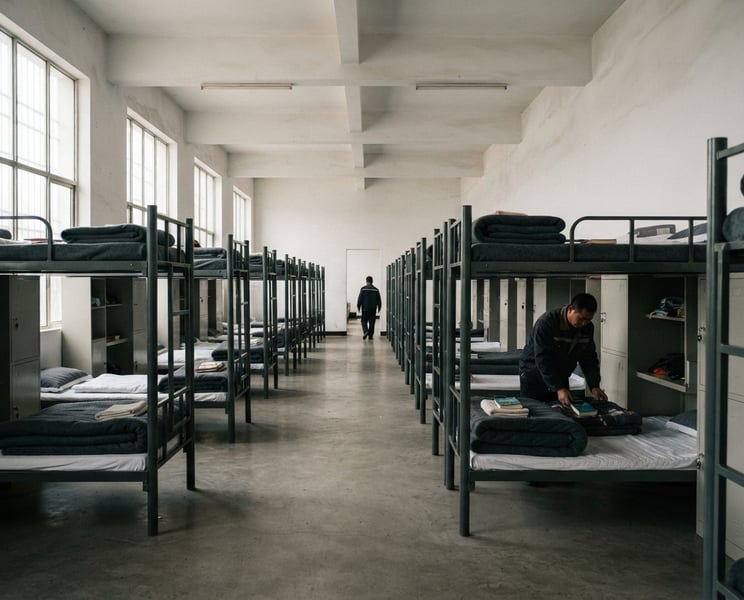
A Singapore construction firm allegedly turned its own factory into a 300-bed unlicensed worker dormitory.
LBD Engineering Pte Ltd and its general manager have been charged in court for allegedly running a foreign employee dormitory out of factory premises without a valid licence - housing 173 migrant workers from four different companies in a setup that bypassed every safeguard the law was designed to enforce.
The charges, announced by Singapore's Ministry of Manpower (MOM) on October 29, 2026, were laid under the Foreign Employee Dormitories Act 2015, or FEDA - the legislation that governs how employers and operators must house migrant workers. The penalty exposure is steep: a fine of up to S$500,000, imprisonment of up to two years, or both.
300 bed spaces inside a factory
It started with an inspection. On January 6, 2026, MOM officers visited a factory at 58A Sungei Kadut Loop and found approximately 300 bed spaces on the premises.
That address is LBD Engineering's own registered business location, according to publicly available Singapore corporate records. The company, a building contractor, had allegedly converted parts of its own factory into a dormitory.
MOM's investigation found that between July 2025 and January 2026, LBD housed 173 migrant workers from four companies at the site - all without holding a valid FEDA licence.
The general manager allegedly knew
The company faces one charge under section 7(1) of FEDA for operating an unlicensed foreign employee dormitory during that period.
Its general manager faces a separate charge under section 7(1) read with section 27(1)(a) of FEDA. According to the charge sheet, he allegedly knew that LBD did not hold a valid licence to operate the premises as a dormitory and "nevertheless allowed LBD to continue operating the premises."
That is not a charge that flows automatically from a job title. It is an allegation of actual knowledge.
MOM signals enforcement appetite
In its press release, MOM said licensing requirements "are in place to ensure that dormitories provide safe and proper living conditions for migrant workers," and that operating without a licence "circumvents these safeguards, and may put the safety and well-being of migrant worker residents at risk."
The ministry added that it "will not hesitate to take firm enforcement action" against unlicensed operators.
It also directed a pointed reminder at employers more broadly: they "are also responsible for ensuring that their migrant workers are housed in accommodation that complies with the relevant regulatory requirements." That line extends the compliance obligation beyond dormitory operators to any employer whose workers live in third-party or ad hoc housing.
Since April 2023, FEDA's reach has extended to all dormitories with seven or more beds - a significant expansion from the previous threshold of 1,000 beds - bringing roughly 1,600 dormitories under a single licensing framework.
For HR and compliance teams operating in Singapore's construction sector, the case is a practical signal: dormitory licensing is an area of active enforcement, personal liability can attach to managers who allegedly knew what was happening, and converting your own premises does not put you beyond the regulator's reach.