Dr. Kevin Cheong of University of Newcastle explains why flexible work goes far beyond convenience, the trust-building required to make it work, and why performance-based models must replace time-based thinking
A recent report reveals that 44% of former part-time workers would consider rejoining the workforce if flexible work options were available, while 63% of current part-time workers would increase their hours if they could work more flexibly.
These findings underscore a shift that Human Resources (HR) leaders can no longer ignore: flexibility has become one of the most powerful drivers of workforce engagement and retention.
But what makes flexibility so compelling? And why do many flexible work arrangements fail to deliver on their promise of employee empowerment?
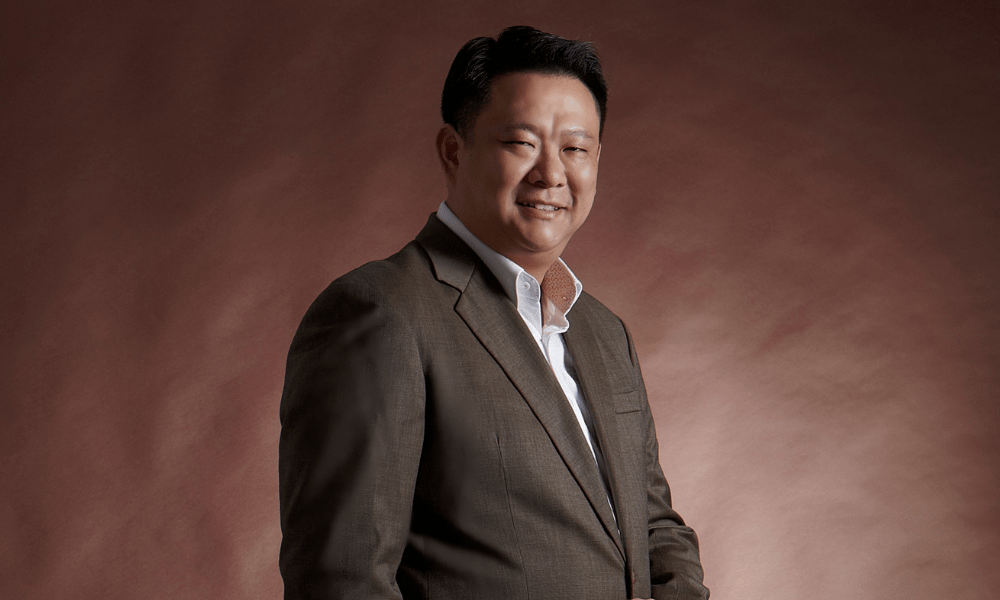
To understand the deeper dynamics at play and what organisations must do differently, HRD Asia spoke with Dr. Kevin Cheong, lecturer (business) at the University of Newcastle in Australia.
Defining flexibility from both sides
The term "flexible work" gets used frequently, but its meaning differs depending on who's speaking.
Cheong argues that this ambiguity creates problems from the start.
"What does 'flexibility' mean from the premise of a working and employment environment? I think 'flexibility' may not have been defined adequately and we need to see 'flexibility' from the perspectives of the employer and employee," he says.
From the employer's perspective, flexibility centers on physical arrangements and scheduling. For the employer's' perspective, "Flexibility centres around physical work arrangements. Examples of 'flexible' work arrangement include: flexi-attendance, work-from-home or remote working, part-time hours, compressed or condensed work-hours, flexi-time, staggered work-hours, temporary and fixed term employment terms."
"However, there are conditions to this 'flexibility', such as type of work, quality and promptness of work done and personnel availability and accessibility," he added.
Employees often define flexibility more broadly, including the ability to switch roles, determine task priorities, and even engage in outside work while employed. These divergent definitions create friction when expectations don't align.
The appeal of flexible work arrangements goes beyond mere convenience. Cheong identifies specific benefits that explain why flexibility has become such a powerful motivator.
"Work arrangement 'flexibility' from the employees' perspective has several benefits: First, self-managed time allows for reduced time for commute and to prioritise family commitments such as shuttling children to school; Second, reduced personal expenses on commute between home and work, personal grooming and dining."
"Third, greater autonomy with less supervision may result in employees feeling more trusted and less 'micro-managed'; and, lastly, these often lead to employees experiencing less tension and less stressed," he concluded.
These benefits compound over time. Financial savings from reduced commuting, practical gains from managing family obligations, and psychological benefits from feeling trusted all contribute to a stronger relationship with work itself.
"As a result, the combined effect of work arrangement 'flexibility' and the above benefits have become key factors driving 'flexibility' where employees are able to experience better work-life balance and greater sense of psychological empowerment," he concludes.
From convenience to genuine empowerment
Not all flexible work arrangements empower employees equally. Cheong explains what separates minor accommodations from genuine shifts in power dynamics.
"Paid or salaried work is performed to serve the purpose of having the financial means to support one's living necessities and lifestyle choices. I usually describe this as 'what I do from 9 to 6 provides me with the means for 6 to 9'. Therefore, the 2 time zones (9 am to 6 pm and 6 pm to 9 am) are distinct in terms of purpose and outcomes."
"With work arrangement flexibility, the employee is given the opportunity and power to prioritise his/her family and social time over work. Not only does work become second in priority, in some cases and situations, the distinction between the 2 time zones becomes blurred and starts to encroach into each other." he says.
This blurring creates both opportunity and risk. Managing it requires clarity about where work happens, what time expectations exist, and what performance outcomes matter.
"To manage this, there should be clarity in [the] definition and administration of work arrangement flexibility, particularly when employee output shifts from time-based to performance-based," Cheong explains.
Expectations must be articulated with precision: performance outcomes, task management, meeting attendance, [and] reporting structure. Work and home priorities need [a] clear definition to reduce friction from misinterpretation.
Cheong cautions that not all roles can accommodate flexibility, especially those specific to location and functional outcomes. For roles that can support it, he recommends performance-based incentive schemes.
"Employers could consider how a performance-based incentive or reward scheme can be introduced over and above the basic remuneration to encourage employees with flexible work arrangements [to] be more productive, respond more promptly to internal and external communications and exercise self-discipline more judiciously."
Technology platforms also support effective remote team management.
"Lastly, team-based project and workflow management applications such as Microsoft Teams, Monday, Slack and Zoho could be implemented to manage off-site and remote team members," Cheong adds.
The link between flexibility, performance, and customer outcomes
Flexible work existed long before the recent surge in remote arrangements. Cheong points to examples that reveal what makes flexibility succeed.
"Flexible work has been around for longer than we think, in outsourced and freelance job roles, high commission-based sales roles such as insurance and real estate, and in the creative arts industry."
These roles share a common characteristic.
"One factor stands out in these roles: linkage between individual performance and customer satisfaction. In these roles, the employee's (agent or contractor in some cases where there is no employment relationship) individual and personal performance contributes directly to a specific business outcome and customer satisfaction, and, in doing so, the employee is rewarded accordingly."
"This is where the employee understands that he/she has the power to decide on the business outcome and personal reward and has the choice to exercise time and task priorities appropriately," he adds.
This direct linkage between individual performance and outcomes creates genuine empowerment because employees can see how their choices affect results and receive corresponding rewards.
How meaning from work has evolved
The shift to flexible models has changed how people think about work itself.
"In the past, paid or salaried work in a defined workplace and within a determined timespace [was] considered the norm. From today's flexible work perspective, that looks very restrictive and regimented," Cheong says.
Flexibility creates psychological benefits beyond practical conveniences.
"Being able to exercise freedom and personal priorities, employees should start to feel more respected and trusted, particularly as professionals and individuals. There is definitely a certain amount of psychological empowerment and liberty experienced and this, in turn, can result in reduced employment-related stress and anxiety."
However, Cheong emphasises important limitations. Flexible arrangements may not apply to all job roles and industries. Individual readiness also varies, requiring self-discipline and judgment. Working from home creates its own challenges in distinguishing home activities from work commitments.
The prevalence of flexible arrangements is reshaping both employer competition and career decisions. Job seekers now compare flexibility between employers. From an education perspective, youths may shift training toward knowledge-based roles that allow flexibility.
"Work-life balance is no longer about less overtime, rather more about less work time and flexible work time," Cheong observes.
Building accountability and trust while extending autonomy
Leaders face a paradox: maintaining shared culture and accountability while giving employees greater autonomy. Cheong says it starts with organisational values that embody employee rights, treatment, and expectations.
"It must be a two-way street: on one hand, the employer or organisation allows flexible work arrangements, and on the other hand, the employee must be able to exercise good judgment, be disciplined, motivated and responsible to deliver expected performance and outcomes. It also needs to be consistently applied. However, every employee's non-work priorities and commitments are different and therein lies application and implementation differences and challenges."
Within-organisation variations create additional complexity. Not all job roles allow the same flexibility level, creating seemingly different rules.
"Employees of the same company or organisation will start to compare and have their own opinions of what's deemed to be fair and just. Leaders and managers must be prepared with defensible and consistent responses to these queries."
Cheong observes an imbalance in current discussions. "So far, there is more talk about employees' work-life balance and not enough on job role and performance expectations."
Mutual accountability requires reciprocal expectations.
"Leaders will start to expect more from employees in terms of performance while extending flexible work arrangements. There needs to be an equitable balance and exchange between what the employer wants and what the employee demands."
"Having clear guidelines and more explicit expectations with defined parameter of flexible work arrangements should be the start. Be it leaders, managers or supervisors, they need to 'walk-the-talk' and exercise 'management-by-example'," he says.
Trust ultimately determines whether flexible arrangements succeed or fail. "It will ultimately be trust that will sustain flexible work arrangements between employers and employees, and, it will be a 'psychological contract' between the employer and employee," Cheong says.
"As employers extend flexible work arrangements, employees will have to demonstrate good judgment in exercising their work and non-work priorities through being responsible and accountable for their time and task performance. Employers, on the other hand, must show their commitment towards work-life balance by not micro-managing, be focused on job performance and task outcomes."
This trust develops slowly and requires patience from both sides.
"It will be over time and over a long, bumpy road that trust will be built. There will be speed bumps along the way with employees who stretch their flexible work privileges and managers who are overly zealous in maintaining and enforcing discipline," Cheong notes.
The relationship requires ongoing negotiation. "This relationship of giving-and-taking will need to be a 2-way exchange, balancing flexibility and empathy while ensuring quality and timeliness of work and performance," he explains.
Clear foundations support trust development. Employers need clear guidelines and parameters communicated to affected employees. Tools for remote working should provide a common platform for communications, performance monitoring, and reporting.
Employee education matters as much as employer clarity.
"Employees should also be educated on how these priorities and flexible work arrangements can be exercised in a judicious manner. There will also be times counselling will be required and employers and their supervising managers should also be kept informed [about] how employees exercise their priorities and flexible work privileges," Cheong says.
"Critically, trust will not be forged overnight, but it must start with the right beginning with clarity of roles, responsibilities, expectations and boundaries, deploying suitable resources and work and system platforms, and, communications and engagement between employers and employees."
Cheong offers one caution. "However, I will need to highlight that when flexible work arrangements become a privilege, it will be a matter of time before employees take it as an entitlement and 'birthright'."
Including part-time and contingent workers
The report showing that 44% of former part-time workers would return if flexibility were available highlights a retention opportunity.
Cheong explains what makes flexibility meaningful for this group.
"Part-time and contingent workers often feel left out or not being part of the larger organisational family. This could be the result of not enjoying the full set of welfare benefits, incentive and bonus payouts which full-time employees receive. They need to be recognised for their contributions and develop a greater sense of ownership to the organisation."
The same principles apply: clarity of roles, responsibilities, expectations, boundaries, suitable resources, and communication.
However, inclusion requires deliberate effort through informational dissemination, engagement events, performance incentives, and recognition beyond contracted pay.
Development opportunities also signal inclusion. "Another way of keeping part-time and contingent workers engaged and [feeling] included is to assign work mentors and offer skills and competency training opportunities. These will not only help them develop professionally, [but] also provide non-financial benefits as forms of organisational inclusion and recognition."
Cheong's analysis shows flexibility drives engagement through psychological empowerment, reduced stress, and financial benefits while reshaping workplace trust and autonomy.
To attract workers back or increase hours, organisations must shift from time-based to performance-based metrics, build sustained trust, ensure genuine inclusion, and set clear expectations.
Ultimately, success requires treating flexibility as a strategic framework with mutual accountability, not a privilege to be granted.