Traditional workplace practices remain more prevalent in Singapore, report finds

More than a third of employees in Singapore are working in the office five days a week, emerging as one of the markets globally where a full in-office week is extremely common, according to a new report.
Morgan McKinley's 2026 Workplace Trends Report revealed that traditional workplace practices remain strong in Singapore, despite government efforts to modernise the way of working in the country.
The report found that 37% of workers in Singapore work in the office five days per week, beating the global average of 17%.
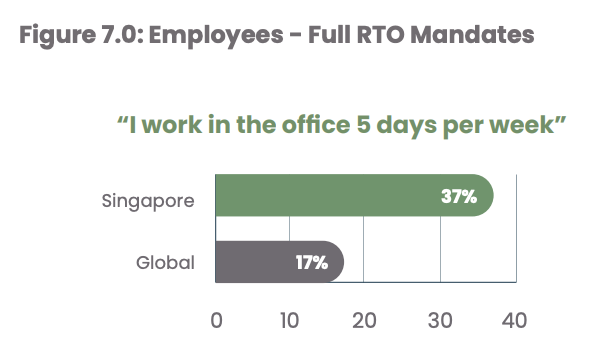
It is one of the few markets revealed in the report where working onsite is higher than the global average, with the other being Hong Kong, where 60% of employees are working in the office five days per week.
Additionally, the report found that 49% of employees in Singapore are concerned that their role is at risk of being impacted by restructuring, automation, or cost cutting.
"Together, these findings suggest a market where traditional workplace practices remain more prevalent and employees are more conscious of potential workforce disruption," the report read.
Traditional workplace norms still strong
The strong presence of traditional workplace norms in Singapore comes despite the government's initiatives to adapt to the modern way of working.
In 2024, the government began mandating employers to consider formal requests for flexible work arrangements, such as flexi-place, flexi-time, and flexi-load arrangements.
But even then, a Ministry of Manpower report earlier this year showed that requests for flexible work arrangements in the country remain low, despite a 94% approval rate for employees asking for this arrangement.
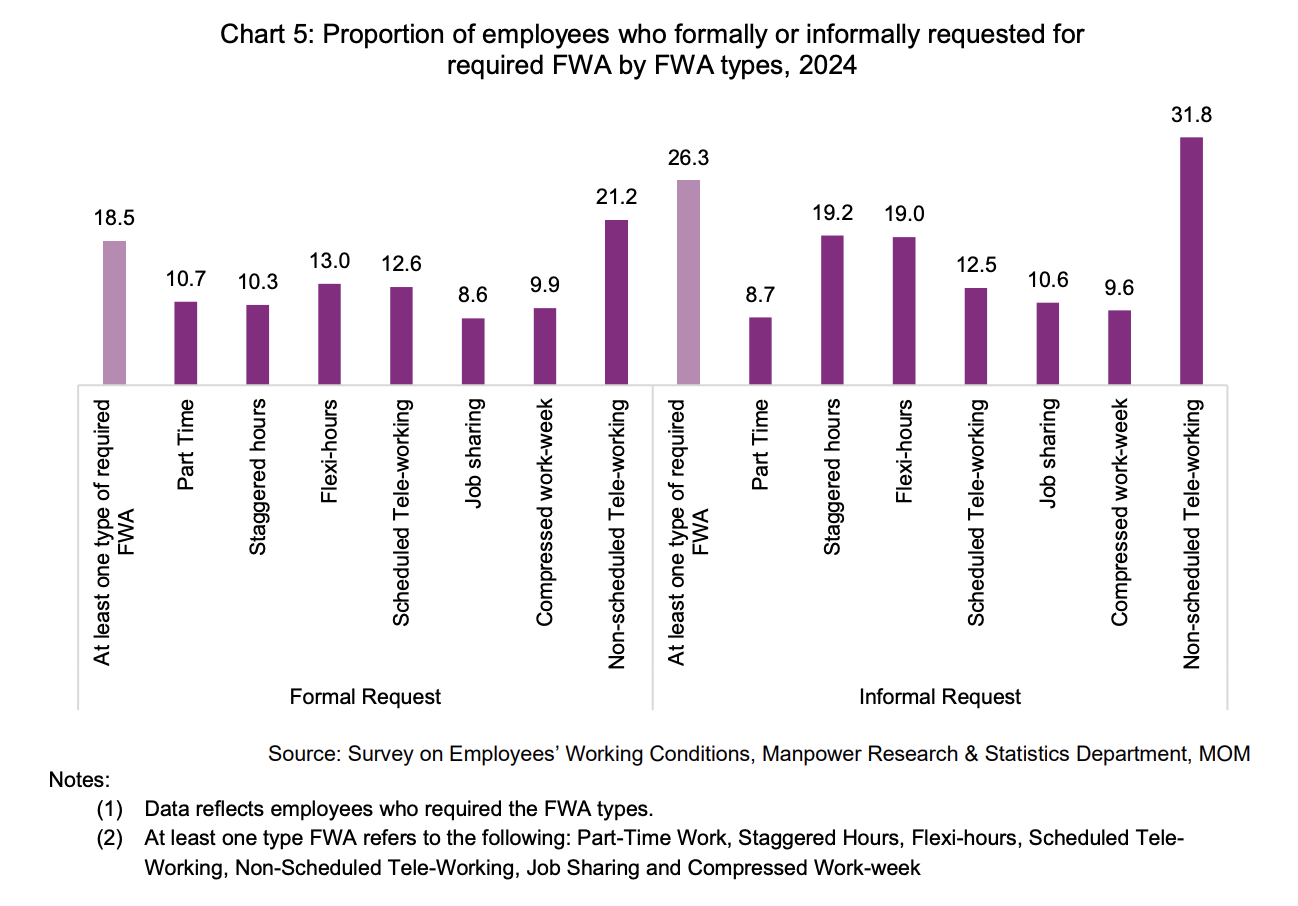
"This gap suggests the presence of transitional, informational, cultural, or procedural frictions, rather than employer resistance," the ministry's report read.
MOM previously suggested that one way to address the low request rate is to raise awareness of available Work-Life Harmony (WLH) initiatives and workplace support.
"This strategy should encompass manager training programmes, peer support networks, and clear communication strategies that normalise the use of WLH initiatives," MOM said.
Global flexibility trends
Globally, the report found that hybrid work is the new standard in workplaces, with the most common office policy requiring employees to attend onsite at least three days a week.
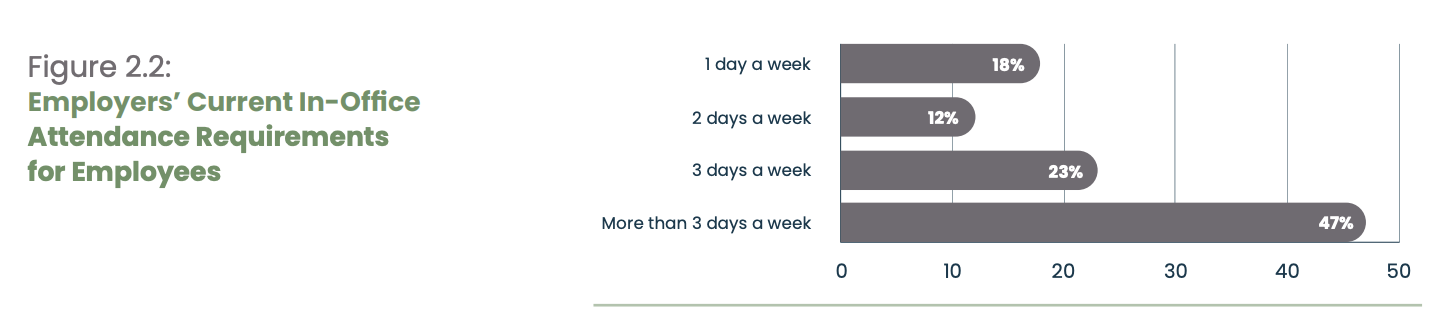
Demand for fewer onsite days, however, is still strong, with 45% of employees saying they prefer to be in the office for only one or two days a week.
"The data here highlights a continued gap between employee flexibility preferences and employer expectations," the report read.
"If the organisation is committed to a five-day on-site model, or hybrid working is not feasible due to the nature of the role, consider adopting policies such as flexible working hours to help bridge the gap in employee expectations."