Workers are facing frequent, intense change from every direction, and the toll on teams may take years to reverse
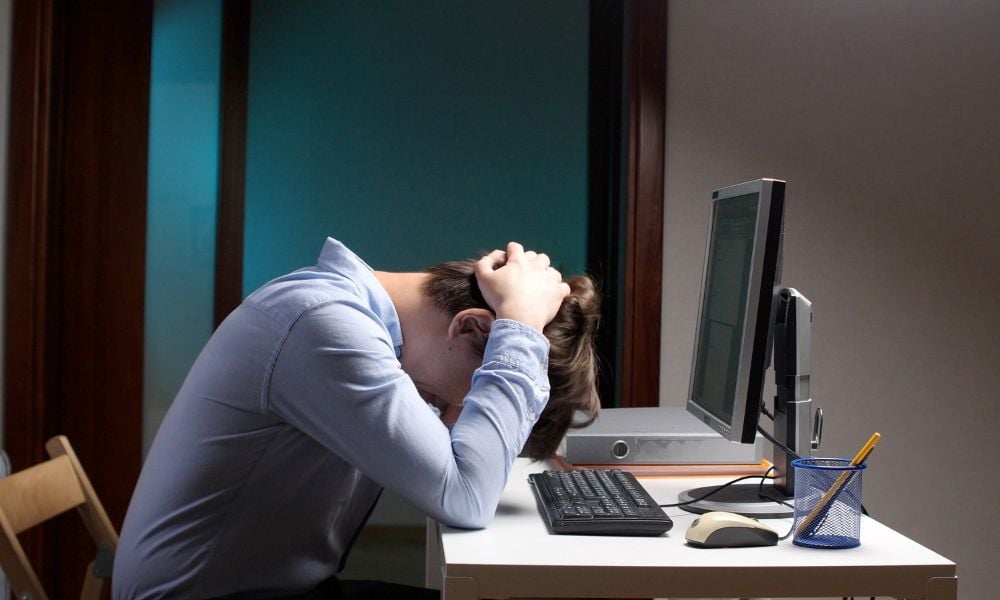
Layoffs, restructurings, return-to-office mandates and a steady stream of AI rollouts have left many workers feeling as though the ground never stops shifting.
And the data backs that up. One-third of workers surveyed worldwide for Deloitte's 2026 Global Human Capital Trends report said they'd experienced 15 major changes in the past year alone.
Engagement is slipping, too. U.S. employee engagement fell to 29% in the third quarter of 2026, its lowest level since 2011, according to Gallup.
Joseph Drasin, assistant vice president for enterprise service strategy at the University of Maryland in College Park, has spent several years studying where that kind of upheaval leads. He co-authored research published in EDUCAUSE Review last year on spotting change fatigue in teams.
"We describe it as a debilitating state paralleling physical fatigue," Drasin said. "It's really caused by frequent, intense changes. It does affect the individuals, but it's really felt by organizations at the group level."
Where fatigue differs from burnout
Change fatigue overlaps with burnout, but Drasin said the two differ in both breadth and depth.
"When you think about things like burnout, those are usually considered more individual experiences," he said, "while fatigue is usually experienced at a departmental, divisional or even a whole organizational level."
Drasin also described fatigue as long-term.
"Even burnout can be recovered from in a matter of years," Drasin said. "With fatigue, the data's still obviously being developed, but we're seeing it as a multi-year challenge."
Early on, Drasin said, the assumption was that the pandemic was the cause of the fatigue; however, it has persisted.
"It's been several years and we're not seeing people recover," he added.
The pressure coming from outside the office
Drasin, whose background is in change psychology, offered an analogy for how fatigue builds.
"I've always described it a little bit like our ability to adapt is like a battery," he said. "When [our adaptive systems] get overwhelmed with stimuli, our battery drains really low. And if we're not given enough time to recover from it, it's like overworking your muscles and you tear a muscle."
Work isn't the only thing draining that battery anymore, Drasin said.
"What's different now is the stimulation outside the organization is equal to or greater than the stimulation inside the organization," he said.
Drasin said he suspects anxiety from outside the workplace is part of the problem. He pointed to the steady stream of social media, news and technology shifts, which he said can leave people emotionally unsettled.
When workers get overwhelmed, Drasin said, their fight-or-flight response can start to engage.
"We kind of see that fight or flight response appear at work," he said. "It gets misinterpreted a lot, but a lot of times it's seen as disengagement and things like that."
Disengagement can have other causes, too. HRD America recently covered rust-out, a boredom-driven form of disengagement that differs from burnout.
AI adds another layer, and Drasin said the worry reaches beyond job security.
"I think it causes people to have a bit of an existential crisis," he said. "Like, what does it even mean if a computer can do what I can do?"
HRD America has reported that strong manager support can substantially reduce AI-related job anxiety among frequent AI users.
What leaders and HR can do about it
Companies can't simply stop changing, Drasin said. Organizations that stop adapting risk becoming the next Blockbuster or BlackBerry, and that puts leaders in a bind.
"The crux of what they have to manage is, how do you deal with this tension between I need to change and my capacity in my organization to change is not as strong as it was?" he said.
Drasin and his co-author are still developing interventions, and he said many of the things he would normally recommend aren't realistic for business leaders. His guidance so far centers on watching for warning signs, slowing unnecessary changes and measuring how employees are doing.
He listed warning signs for leaders to watch, including increased absenteeism, slower work production, poor work quality, less innovation and less collaboration. He also urged leaders to think strategically about delaying changes that aren't necessary.
"Things like reorgs are really, really, really psychologically debilitating to people large scale," Drasin said.
Restructurings can also stir visible pushback, as Meta's restructuring and the employee protest inside the company illustrated.
Drasin said HR's role varies by organization, but the function has a strategic part to play in monitoring fatigue.
"From a strategic standpoint, they should be taking the temperature of the organization," he said.
He described fatigue as another area to investigate, much like the employee attitudes HR often already tracks. He and his co-author are exploring how to build a survey instrument that tests for it, though organizations can begin with simpler questions.
"At least you could start with questions like, how are you feeling when you leave work?" Drasin said. "How do you feel when you come back from vacation?"
Beyond tracking fatigue, Drasin said, the response also involves how people treat one another. Managers and senior leaders are feeling the same strain as their teams, he said, and people at every level should extend colleagues some grace.
"When an employee doesn't seem engaged, don't assume it's that they're lazy or whatever," he said. "Just recognize that they're probably dealing with a lot."