US forced labour tariff puts pressure on Singapore's role as global trading hub
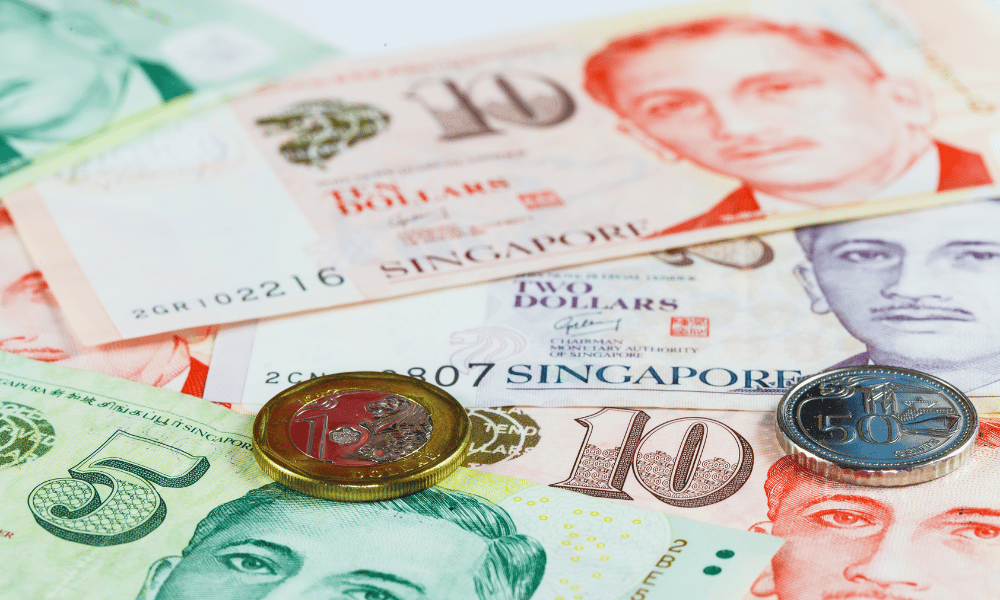
The Singapore Business Federation (SBF) has called for "clear guidance and adequate transition periods" for businesses after the United States imposed a 12.5% tariff on Singapore's exports over forced labour concerns.
The Office of the United States Trade Representative (USTR) published its determination last week, covering 60 economies investigated under Section 301 of the Trade Act of 1974.
The USTR concluded that all 60 economies had failed to impose a forced labour import prohibition and/or to effectively enforce such a prohibition.
Mark Lee, Chairman of the Singapore Business Federation, said businesses recognised the importance of addressing forced labour risks but called for industry consultation on any new regulatory requirements.
"Businesses recognise the importance of addressing forced labour risks in global supply chains and are prepared to play their part. Singapore has not introduced an import prohibition on goods produced with forced labour, and we appreciate that the government has been mindful of the potential impact on our companies and Singapore's position as a global trading hub," Lee said.
"Clear guidance and adequate transition periods will be essential to help businesses to comply effectively. SBF stands ready to work closely with the government and industry stakeholders and provide feedback from the business community."
The SBF advised businesses to first determine whether their exports are covered by the tariff or fall within the stated exclusions before assessing the impact, and to review product classifications, engage customers early, and assess any implications for pricing, contracts, and supply chains.
Impact of US tariffs
The additional 12.5% duty on Singapore's exports to the US took effect from 12.01am on 24 July 2026.
Products subject to Section 232 tariffs are exempted, as are certain categories including energy products, pharmaceuticals, electronics, aerospace products, and semiconductors, according to the Ministry of Trade and Industry (MTI).
Approximately one-third of Singapore's domestic exports to the US will be subject to the new rate.
MTI said Singapore does not condone the use of forced labour and has a comprehensive enforcement framework against such illegal practices within its borders.
"Singapore has also consistently played a constructive role in advancing international labour standards to address the issue of forced labour," it said. "In October 1965, Singapore ratified the International Labour Organization (ILO)'s Forced Labour Convention, 1930 (C29)."
However, MTI stopped short of committing to a forced labour import prohibition, flagging Singapore's role as a major trading hub as a key consideration.
"Forced labour in complex and multi-tiered international supply chains is a transnational issue that requires international cooperation and is most effectively addressed at source," MTI said.
"Singapore is a major trading hub. As such, any trade restriction, including a prohibition on goods produced with forced labour, would need to be carefully considered, which we will continue to do in close consultation with the Singapore Economic Resilience Taskforce and the business community."
MTI said it would continue to engage the USTR to explore options on the matter.