'It is becoming increasingly likely that cocaine… is something employers even in white collar industries need to worry about'
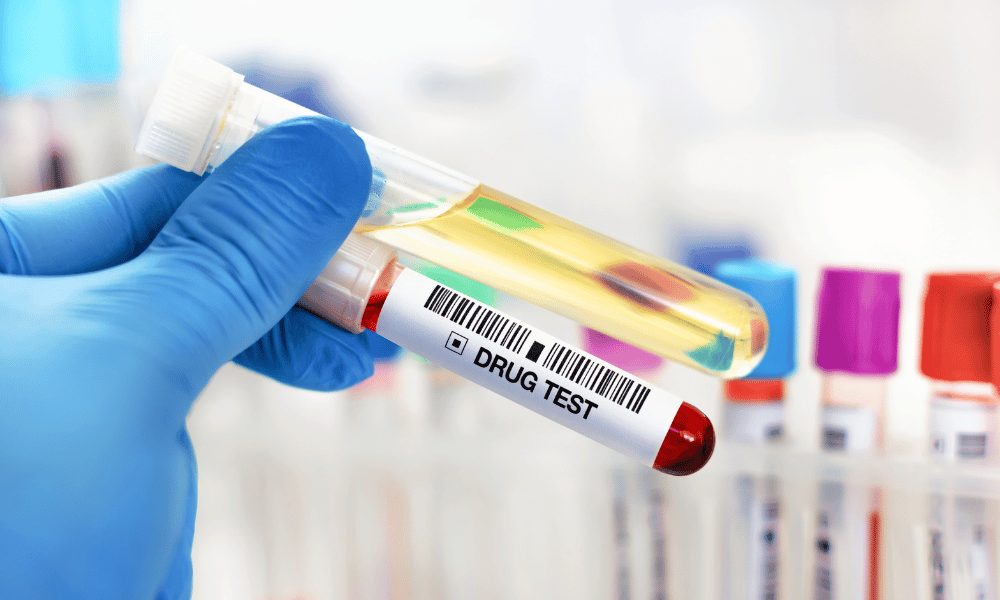
Cocaine detection in workplace drug tests rebounded during the second quarter of 2026 in a sudden surge that The Drug Detection Agency (TDDA) warned is unlikely to be a one-off spike.
TDDA's latest Imperans report showed that cocaine accounted for 2.8% of positive drug tests conducted in workplaces, up 68.5% year-on-year, and following a slight retreat in the first quarter.
"TDDA data is showing that cocaine retreated from Q4 levels, which peaked over Christmas and New Year, but is roaring back in Q2," said Glenn Dobson, chief executive of TDDA.
He warned that the rebound comes as the substance becomes highly available due to supply networks, rather than just a one-off spike.
"It is becoming increasingly likely that cocaine, buoyed by cartels and other South Pacific drug trade activity, is something employers even in white collar industries need to worry about," Dobson added.
One of the biggest surges in cocaine detection was reported in Canterbury, where it accounted for 3.1% of positive tests with a 375.8% increase YoY, according to the Imperans report.
Manawatū-Whanganui also recorded cocaine detections of 5.1% of positive tests in Q2, up from zero detections in the same quarter last year.
Otago reported a 146.2% YoY increase after logging a 4.5% detection rate, while Hawke's Bay saw an 81.3% YoY increase after a 5.3% detection rate in cocaine.
More 'visible stimulants' return
Overall, cannabis, commonly known as marijuana, emerged as the most detected drug type in New Zealand's workplaces after accounting for 64.4% of positive tests, up 1.7% YoY.
Amphetamine-type stimulants (ATS) also accounted for 32.7% of positive tests, up 5.2% YoY, while opioids accounted for 18.2% of positive tests, in Q2, down 14.0% YoY.
"In Q1 we warned that opioids were spreading quietly, and this quarter the more visible stimulants are returning alongside them," Dobson said.
"In the end, this isn't just about compliance, because every person who turns up on site each day deserves to finish the day and get home safe."
Dobson warned that outdated drug and alcohol testing programmes in the workplace can immediately fall behind when cocaine and ATS rise across regions.
"Cocaine and ATS interfere with the way the brain judges risk, producing misplaced confidence and slower decisions at exactly the wrong moment," Dobson warned.
"On safety-critical sites, where a small margin or a split second can be the difference, that combination can turn deadly fast. When judgement slips on a construction site or behind the wheel of a truck, the consequences reach past the workers and colleagues, and into families waiting at home."
Employers' safety duty
Employers have a duty under the Health and Safety at Work Act 2015 to manage foreseeable risks, such as substance use in safety-critical roles, according to Dobson.
"The starting point is a drug and alcohol policy that covers illicit, synthetic and prescription drugs alongside alcohol," he said.
"It also gives managers and supervisors who sense something is off, yet don't really know how to act, a clear path to follow."
He also recommended the use of pre-employment testing at work, as well as random testing for employees.
"Pre-employment testing catches drug use at the door and shows on day one that the policy is more than words on paper. To keep catching fast-clearing substances like stimulants after that, random testing works well alongside it," he said.