She worked regular hours on a set roster - but her contract said casual
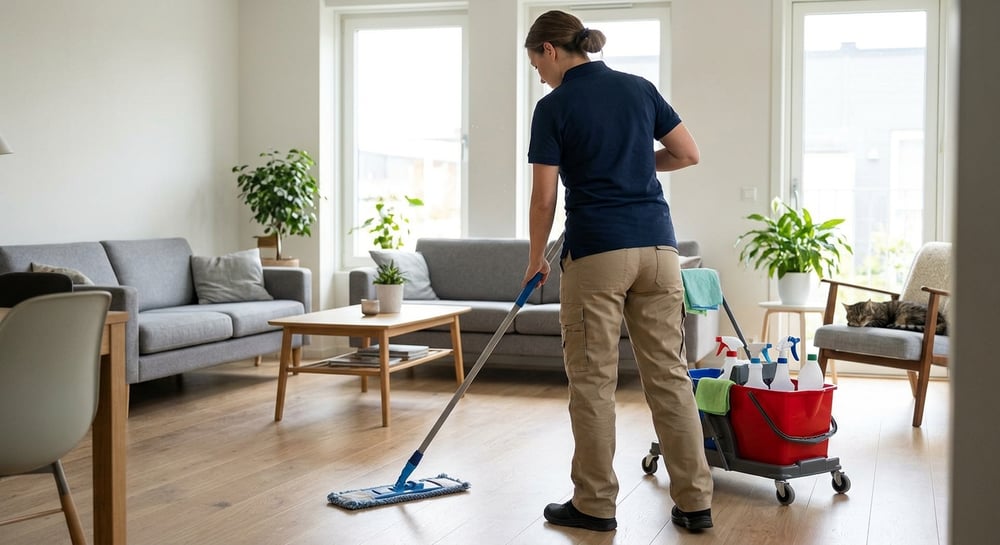
She cleaned houses on a regular roster for over a year. Her employer still called it casual.
The Employment Court of New Zealand has dismissed a company’s challenge to a finding that its cleaner was a permanent part-time employee - not the casual worker the company claimed she was.
The decision, issued on October 12, 2026, upheld an earlier Employment Relations Authority determination that Da Hai Investment Limited unjustifiably dismissed and disadvantaged the worker.
The worker was employed as a cleaner and housekeeper from February 4, 2022, until the relationship ended in late May 2023. The company maintained throughout that she worked on a casual, on-call basis. She filed a grievance with the Authority arguing otherwise.
The Authority framed the central question simply: was the employment relationship genuinely casual, or was it permanent part-time? After examining the evidence, it found the latter. The company challenged that determination in the Employment Court, opting for a non-de novo hearing - meaning the Court worked from the Authority’s existing factual findings rather than rehearing the evidence.
What the evidence actually showed
The Authority had found the worker’s role involved regular hours. She was reliable in making herself available whenever required. Work was allocated to her over time in a way that created a reasonable expectation of ongoing, regular employment. A new manager gave evidence that the worker did not operate on an “on call” basis. The worker herself said she expected regular hours and at times made clear she was available for more.
In August 2022, there had been some discussion between the parties about guaranteed minimum hours. The worker turned down what the Authority described as a “tentative offer” to agree on a floor and sign an employment agreement. The company leaned heavily on this point, arguing it showed nothing changed - that the relationship stayed casual.
The Court was not persuaded. It found the Authority had treated that evidence cautiously, noting Da Hai Investment Limited never actually produced a draft employment agreement. Despite being aware it was a legal requirement, the company continued to operate the arrangement on what it unilaterally considered a casual basis.
No single moment needed
The company’s challenge rested on a reading of the Authority’s determination that, between August 2022 and the end of the relationship, nothing materially changed. The Court found that reading did not survive a careful look at the full determination.
One paragraph the company relied on - paragraph [30] of the Authority’s determination - identified what the employer considered the relationship to be. It did not make a finding about what the relationship objectively was. The Court noted that the same paragraph recorded features pointing away from a conventional casual arrangement: regular hours, and a worker who reliably showed up when needed.
The Court also made clear that no discrete event was required to transform a casual arrangement into a permanent one. A change in the character of an employment relationship can emerge from an accumulated pattern of conduct. It does not need to be traced to a particular conversation, agreement, or date.
The label did not match the reality
Applying the framework from Jinkinson v Oceana Gold (NZ) Ltd - the leading authority on the casual-versus-permanent distinction - the Court confirmed that the key question is whether mutual employment-related obligations continue between engagements, or are confined to periods of work. Continuity is a question of substance, not label. The written terms of an agreement are relevant but not controlling. Conduct, practical reality, and the relational setting may demonstrate that whatever label was applied stopped accurately describing the relationship over time.
The Court found the Authority had applied settled case law in an orthodox way and made findings of fact that were open to it. The company’s attempt to characterise the arrangement as casual amounted, in the Authority’s words, to an attempt to legitimise a zero-hours arrangement unconnected to the worker’s actual pattern of work.
The challenge was dismissed. The Authority’s determination stands, including the remedies it awarded for unjustifiable dismissal and disadvantage. The worker was also awarded costs.
For HR teams managing casual workforces, the case is a pointed reminder that rosters, regular hours, and a pattern of ongoing work can quietly convert a casual arrangement into permanent employment - regardless of what the contract says.