Inside Atlassian’s bold new work model, fuelling sharper focus, deeper engagement and faster innovation
Atlassian is betting that the future of work is less about place and more about practice – and the early signs suggest the gamble is paying off in both productivity and engagement.
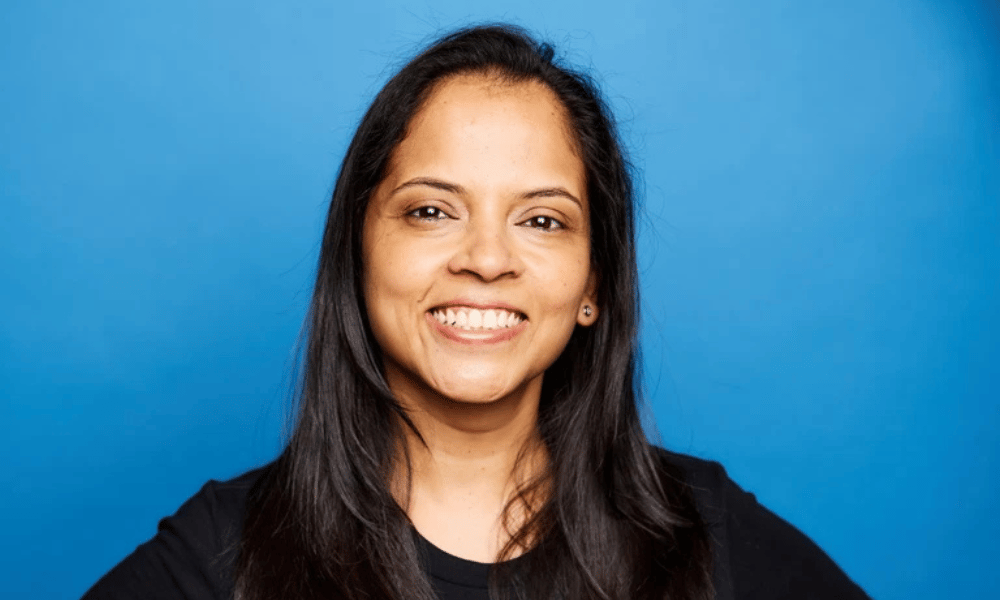
Speaking to HRD, Atlassian’s CPO Avani Prabhakar says the company’s gains are being driven by a deliberate redesign of how work happens, anchored in its Team Anywhere distributed work model and a human-centred approach to AI.
Rather than mandating a return to the office or chasing blunt output metrics, Atlassian has focused on creating the conditions in which innovation, autonomy and connection can flourish.
“Our focus is on how work happens – instead of where it happens,” said Prabhakar. “An innovation mindset underpins our approach – and this supports and enables a highly productive and deeply engaged global workforce.
At the heart of this is Team Anywhere, Atlassian’s distributed work model that allows employees to choose where they do their best work, within clear guidelines. The model is supported by shared tools, playbooks and practices that make asynchronous work and digital-first collaboration the default.
According to Prabhakar, this combination of autonomy and structure has been critical. By pushing work into shared systems and out of siloed inboxes or meeting rooms, Atlassian has created more transparency and reduced friction for teams working across time zones.
Decisions, context and next steps are documented where work happens, so projects keep moving even when teams aren’t online at the same time. The result is more space for deep focus, faster problem solving and more inclusive collaboration.
If Team Anywhere sets the stage, AI is rapidly becoming the co-star. Prabhakar argued that for most organisations, AI’s potential is still largely unrealised, not because of the technology itself but because of how it is introduced and embedded.
Atlassian’s own AI Collaboration Index recently found that only 4% of companies are seeing real ROI from AI, and just one in five leaders believe it has improved innovation. For Prabhakar, those numbers reflect a common mistake: treating AI as a purely technological transformation instead of a cultural one.
“AI transformation is much more than just tools; it’s about shifting mindsets, building trust and shaping behaviours – and HR sits right at the intersection of all three,” she said.
Rather than rolling out a single top-down AI platform, Atlassian encourages teams to experiment with AI “in the flow of their work”. Leaders model this behaviour, employees are given safe spaces to play and test, and successful use cases are refined and scaled. AI is framed as a teammate that helps people learn faster, iterate more quickly and focus on higher-value work.
The company’s AI onboarding agent NORA has become a flagship example of that philosophy. Built in just two weeks by the People team – without engineers – using Atlassian’s own AI capabilities, NORA now handles close to 100 questions a day for about 70% of new hires.
The impact has been two-fold: new employees get faster, more consistent answers and a smoother start, while HR operations and managers have cut manual onboarding work by 60%, freeing them to focus on “high-trust, high-value, human conversations”. Since NORA’s launch, 86% of managers have reported that their new hire is performing at or above the level of a tenured employee within three months.
For Prabhakar, that kind of outcome is only possible when AI is tied to real business workflows and clear goals rather than deployed as a generic productivity tool. Teams at Atlassian identify specific use cases, plug AI into the right data, design it into their workflows, measure results and then refine and scale what works. Productivity and engagement, she said, are the results of that environment, not standalone targets.
Atlassian has also deliberately moved away from a “meeting-first” culture. Meetings must have a clear purpose and format, and their length is tailored to the task rather than defaulting to 30 or 60 minutes.
Most are anchored by a confluence page that sets expectations, captures decisions and keeps everyone aligned. Internal experiments have shown that page-led meetings make attendees almost a third more likely to feel energised and significantly less likely to leave feeling frustrated.
Timeboxing is another key practice. Internal research found that when employees cap pre-planned meetings at around 30% of their week, ringfence 30–40% for deep focus and limit reactive time spent on messages, they report clearer goals and more progress on top priorities.
Distributed teams also use “timezone halos” – defined blocks of overlapping hours – to ensure there is enough shared time to collaborate and make decisions, without sacrificing flexibility globally.
Face-to-face interaction has not disappeared from Atlassian’s culture, but it is now more targeted. The company’s Teamwork Lab has developed “Intentional Togetherness Gatherings”, where teams come together in person a few times a year to work on mission-critical projects and relationship-building moments.
Internal research suggests the positive impact of these gatherings on morale and connection can last for up to four months, especially when paired with strong day-to-day digital practices.
Across all of these initiatives, Prabhakar insisted the company’s starting point has never been “how do we get more output?”. Instead, Atlassian has asked how it can design ways of working that unlock better ideas and more sustainable performance.
“By designing for flexibility, clarity and connection first, we’ve created the conditions for innovation,” she sid. “The increases we see in engagement and productivity are a direct result of that environment, rather than a target we’re trying to hit in isolation.”
In a landscape where many organisations are still wrestling with return-to-office mandates and chasing elusive AI returns, Atlassian’s experience suggests that the real gains may come from rethinking culture, not just tools – and from treating productivity and engagement as outcomes of good design, not ends in themselves.