Hoyts' chief people officer on how the cinema chain trains, protects and promotes first-time teenage workers
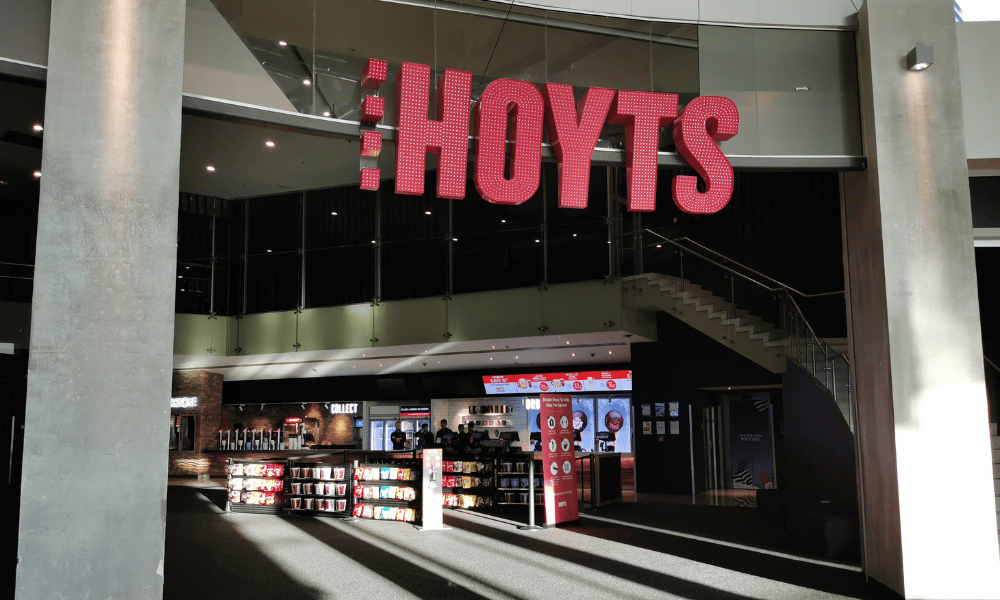
Roughly 85 per cent of Hoyts' workerforce are under the age of 20, according to Jodi Paton, chief people officer (CPO) at HOYTS Group, the Sydney, Australia-headquartered cinema operator with 61 locations across Australia and New Zealand.
Speaking with HRD Australia, Paton said that scale of youth employment shapes almost every part of the company's people strategy, from onboarding through to succession planning, and sits at the centre of a broader conversation facing Australian employers in retail, hospitality and entertainment about how to responsibly employ first-time, often still-at-school, staff.
For many Hoyts crew members, the cinema is their introduction to paid work altogether. "The majority of our employees start with us as kind of a 15 or 16 year old, not having worked anywhere else," Paton said.
That reality, she added, is treated as an opportunity rather than a limitation – a chance to help teenagers recognise transferable skills they already have, even without a resume to show for it.
"If they're part of a sporting team, we see that as a really great characteristic in terms of coming in and working in a team environment," she said, pointing to reliability, punctuality and problem-solving as competencies drawn out of school and extracurricular experience rather than prior jobs.
Onboarding built around a buddy system
Hoyts' onboarding runs on what the company calls a FIERCE champion – a team leader named for the company's values framework, FIERCE, who is paired with every new starter for their first five or six shifts.
"They have that person as their buddy to be able to not only take them through the training and make sure that they know everything, but also to be that person that they can ask questions," Paton said.
New crew rotate through different sections of the cinema in five-shift blocks – starting on the floor, then moving to the candy bar, and so on – "until they learn every part of the business and feel confident with it," she said.
Compliance built for a workforce still in school
Employing a workforce that is largely under 18 brings compliance obligations that vary by state, since Australia has no single national minimum working age or uniform set of protections for young workers.
Paton said Hoyts responded by building an internal young worker policy that draws on best practice across every state it operates in, covering working hours, meal breaks and rostering during school terms.
"We've actually taken almost a review of every state and the best practice from each of those, put it into one policy so that we've got a consistent practice across the board," she said.
Parents are brought into the process early, too. New starters and their families receive information during onboarding covering rostering during school holidays – the business's busiest period – and how to request time off around exams.
"We acknowledge that teenagers may not be reading the fine print of their employment contracts," Paton said, adding that parents are also invited in for two free movie tickets so they can see the workplace firsthand.
Where performance conversations are needed, employees are encouraged – and for younger staff, more strongly directed – to bring a parent or support person. "It just makes that a much more transparent process," Paton said.
From cinema floor to head office
Paton said Hoyts relies heavily on internal promotion rather than external hiring for management roles, with around 80 per cent of the company's location managers having started as teenage crew members.
Staff who stay with the business beyond a year typically remain for three to five years, giving Hoyts a pipeline of frontline experience feeding into duty manager, team leader and even head-office roles. "It's actually pretty rare for us to have somebody come in externally at a management level," she said.
That progression sits inside a wider Australian debate about the value, and the cost, of entry-level jobs for young people. HRD Australia has previously reported on how the Fair Work Commission's annual wage determination is reshaping hiring for young Australians, as well as on the Fair Work Commission ruling that abolished age-based junior pay rates for 18 to 20 year olds in retail, fast food and pharmacy.
Paton said the wider opportunity and responsibility of a young-heavy workforce is in shaping "some of those fundamental foundational competencies that those employees will take with them into their future career, whether that's with Hoyts or with somebody else."
The trade-offs of a young team
Paton was candid about the challenges too. Younger workers – and sometimes their parents – can underestimate the seriousness of a part-time role, she said, particularly around punctuality.
"Sometimes both the employee and perhaps the parents can sometimes go, 'oh, it doesn't really matter, it's just a part time job'," she said. "Of course, obviously we're running a business, so it does matter."
Hoyts' approach, she said, is to treat performance issues as a last resort after other support has been tried, given how many staff are navigating their first experience of a workplace altogether.
For an industry where entry-level roles are increasingly scrutinised – from wage settings to rostering and poly-employment pressures facing shift-based retail and hospitality staff more broadly – Hoyts' experience offers a case study in how one large employer is structuring itself specifically around the needs of workers who are still in school.
Paton's comments build on her earlier conversation with HRD Australia about why Hoyts has moved to actively welcome workplace friendships, part of the same culture-building approach she credits for the company's strong staff retention.