Pilot was offered a lower-paid position after turning 65
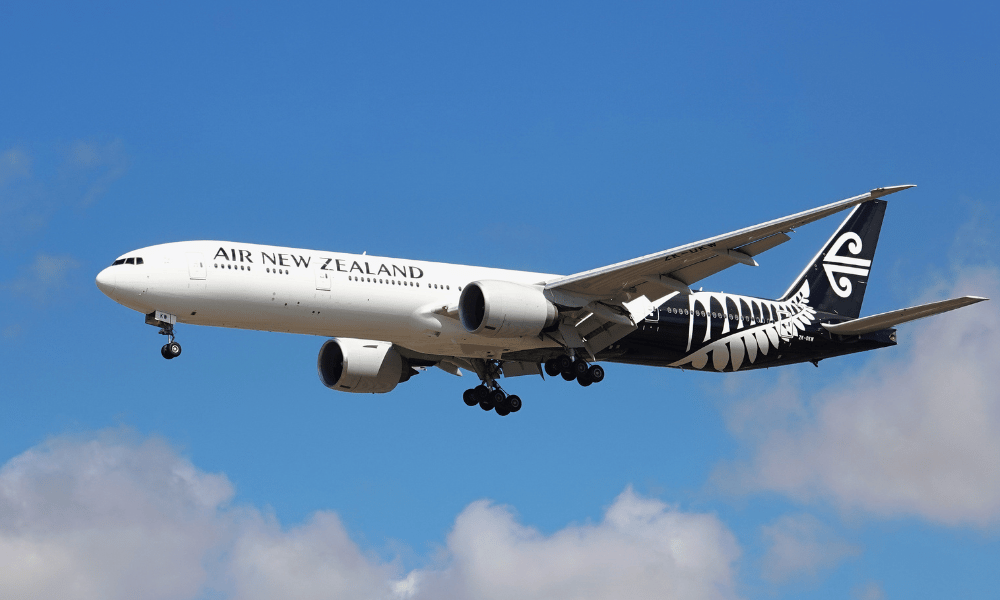
A senior pilot has won a legal battle against Air New Zealand after the Employment Court found the airline unlawfully discriminated against him on the basis of age and unjustifiably disadvantaged him after he turned 65.
The court determined that Air NZ's actions breached both the collective agreement and anti-discrimination statutes. It overturns a previous decision from the Employment Relations Authority, which ruled in favour of the airline in the case.
The dispute began when the veteran pilot, who was the most senior line pilot (C7) on Air New Zealand's Boeing 777 fleet, turned 65 in July 2017.
International aviation rules, specifically those of the International Civil Aviation Organisation (ICAO), restrict pilots over 65 from operating most international flights.
Air NZ interpreted these rules as requiring the pilot to transfer from the higher-paid Boeing 777 fleet to a lower-paid A320 position.
Despite the pilot's repeated requests to remain as a captain on the wide-body fleet, the airline insisted its hands were tied by both international law and the collective agreement with the New Zealand Air Line Pilots' Association (NZALPA).
When the pilot refused the transfer, Air NZ placed him on leave without pay. After internal discussions failed, he brought a personal grievance claim before the Employment Court, alleging unjustified disadvantage and unlawful age discrimination.
Decision of the Employment Court
The Employment Court found Air NZ's approach unlawful, ruling that it failed to make the required individual assessment of whether the pilot could continue flying as a captain under the prevailing rostering system.
"The failure to make an individual assessment amounts to a breach of the terms of the collective agreement and as such, an unjustified action on the part of Air NZ," the court ruled.
"Air NZ's decision to treat [the collective agreement clause] as triggered without undertaking an inquiry was a breach of the collective agreement and/or wrong on its merits. The decision to place [the pilot] on leave without pay in those circumstances was also unjustified."
The court also ruled that Air NZ unlawfully discriminated against the pilot by reason of his age.
"The unlawful discrimination occurred through Air NZ's failure to make adjustments to ensure that [the pilot] could continue as a C7 – adjustments which did not amount to unreasonable disruption of its business activities."
The court further found it was not reasonable to expect the pilot to accept what he viewed as a demotion, especially as it would have been "an acceptance of his discrimination" from his perspective.
"Flying as a C7 was a matter of pride for him and he had been pursuing his right to continue to fly at that rank for some time. That cannot be regarded as irrelevant," the decision stated.
Remedies such as compensation for lost income are yet to be determined.