A recent report has highlighted how AI will shape workplaces in 2026, with a balance of positives and negatives to weigh up
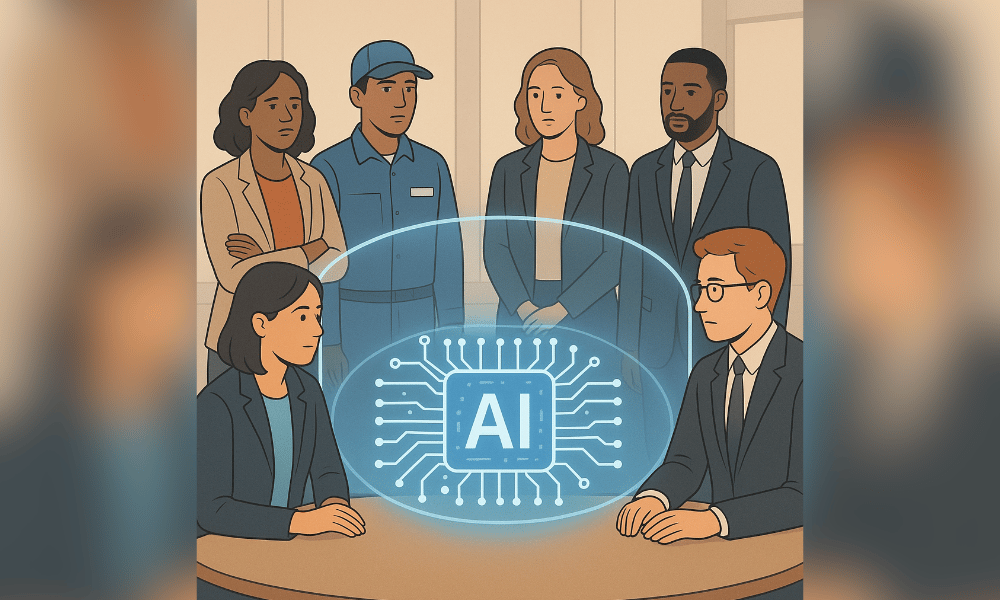
AI continued to sweep workplaces in 2025 and has solidified itself as a crucial component in the future of work.
As we enter 2026, these trends will continue. While there are certainly gains to be made from the thoughtful implementation of AI, challenges persist and stand to disadvantage organisations which don’t provide guidance.
As highlighted in DHR’s Workplace Trends Report 2026, in the past year, 39% of employees have reported noticeable productivity gains through the use of AI tools.
Despite the widespread adoption of AI and positive developments that have come with it, one in five of the 1,500 global white‑collar professional respondents said they have encountered misinformation, errors, or misleading outputs from AI tools.
Close to half (44%) of respondents said they have had to manually redo or correct work generated by AI tools, 43% have seen inaccurate content end up in internal communications, and 39% said these issues caused confusion or hindered efficiency.
A major factor behind the “double-edged sword” label given to AI is a lack of communication.
Only around a third (34%) of respondents said their organisation communicated the proper use of AI for their roles “very clearly”.
The disparity between junior employees and leadership is immense. While 69% of C-suite leaders and 51% of VPs agreed their organisation communicated very clearly about AI, this figure drops to 12% of entry-level staff and 22% of associates.
The lack of guidance among junior staff could be what is hindering AI from having a more substantial impact.
The appetite is there. Nearly a quarter (24%) of workers said a clear plan for how AI will affect their job is one of the top three changes they’d like to see in 2026.
Leaders can help to make AI adoption more impactful by providing transparency and support throughout implementation.
While senior leaders are the most obvious choice for communicating these themes, involving more junior level employees in the process could make it more effective.
New technology, especially something as complex and confusing as AI, can understandably make people nervous.
Guidance is necessary with any change. AI adoption is likely to continue to ramp up as these systems become more sophisticated. Employers can prepare for this by keeping people at the centre of the change.