Leaders are cutting L&D budgets to save – but the long-term damage could be severe, warns a workplace futurist
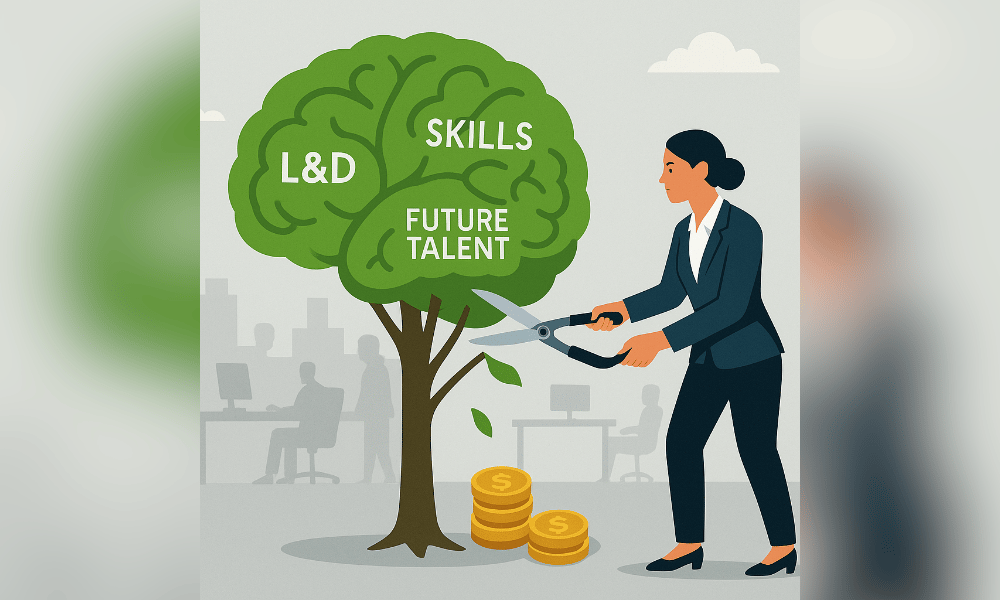
As economic pressure mounts and AI hype intensifies, many organisations are quietly targeting learning and development (L&D) as one of the first places to cut – a move that may undermine the very capabilities they need to survive and grow.
In a recent conversation with HRD, coaching psychologist and workplace futurist Aaron McEwan warned that L&D is again emerging as a prime casualty of cost-cutting drives, even as companies insist they are investing heavily in AI and digital transformation.
“Usually, the L&D budget is the first to be impacted by cuts within the HR function,” McEwan said, noting that this pattern is re‑emerging as leaders look for quick savings.
Short-term savings, long-term pain
On the surface, trimming training budgets can appear to be a low‑risk way to protect quarterly results – but the data and experience tell a different story.
McEwan said most broad cost‑reduction campaigns succeed in the short term but weaken organisations over the medium to long term. As headcount and development spend are cut, companies often find themselves scrambling to rehire at a premium when growth returns.
“They might reduce their workforce to a point where when the economy returns to stability or growth, it ends up costing them more to hire the staff that they let go, because those staff are now in higher demand,” he said.
“They have to pay a premium. They have to compete with all other organisations that are also focusing on growth. They often lose really good people.”
The same dynamic plays out with skills: once L&D infrastructure and capability are cut, rebuilding them in a tighter labour market is costly and slow.
In the meantime, service levels, innovation and customer experience can all suffer, with reputational impacts that don’t show up until future reporting periods.
McEwan stressed that these consequences rarely appear in the same quarter the cuts are made.
“It won't be felt in the next immediate quarter. It'll be felt potentially in the next financial year,” he said – a lag that encourages leaders to underestimate the damage. Cutting learning while chasing AI: a dangerous contradiction
The renewed assault on L&D is especially risky given the scale of investment many organisations have already poured into AI and automation.
“There’s not being enough qualified and experienced AI talent to deliver on those investments that we were talking about before and make them actually work,” McEwan said, noting that many organisations are still facing “a deficit in good talent” for AI and other advanced technologies.
Despite that shortage, leaders are simultaneously stripping back the very training and development programs that could grow those capabilities internally.
This contradictory trend of spending less on learning and development while simultaneously trying to build up your AI capability is harming the growth prospects for many companies.
From blanket cuts to smart pruning
McEwan is not arguing that budgets should be left untouched – but he insists that how leaders cut is far more important than how much they cut.
Instead of blanket reductions to L&D, he advocates a forensic review of programs to identify those that are not required for compliance and “are not adding value to the organisation”.
Those should be candidates for reduction or removal, while strategically critical development – particularly related to future capabilities such as AI, digital and leadership – should be protected.
The same “smart pruning” approach, he said, should apply to other people investments such as wellbeing. During the pandemic, many organisations expanded their wellbeing offerings rapidly, only to discover “diminishing returns” once a certain level of support had been reached.
“An example of that might be rolling out company-wide well-being apps,” McEwan said.
“Those things tend to not be used very effectively, and they don't tend to have a significant impact on reducing the issues that they're focused on.”
Such low‑impact initiatives without undermining core psychosocial risk obligations or genuine employee support.
“In terms of cost optimisation, there's always ways to find savings,” he said. “The trick is to make sure that you're not cutting the areas that will limit your ability to grow when you're in a better position, whether it's economically or for the broader economy.”
Think beyond the next quarter
A core problem, McEwan suggested, is the overwhelmingly short-term lens applied by many listed companies.
“For publicly listed companies it's a quarter by quarter world that they live in,” he said. “Cutting costs this quarter will make the next quarter, hopefully, look better. And sometimes that's all they're worried about.”
More resilient organisations, by contrast, recognise economic slowdowns as moments to invest intelligently, not just retrench.
“The companies that are really effective, particularly long-term, [are those that] make bold bets during economically difficult times in the areas that will position them for growth when the time is right to grow,” McEwan said.
Rather than planning solely for the next earnings call, he urged leaders to view today’s L&D and talent decisions through the lens of future growth cycles: “Whatever decisions we make today in this difficult period [should be] aligned with capturing growth opportunities in the future – whether that's, you know, 18 months, or two years, or three years.”
A lesson for HR and business leaders
In a year marked by volatility, AI hype and rising shareholder demands, cutting L&D may feel like an easy win – but the real cost will likely arrive later, in lost talent, stalled innovation and missed growth.
For HR and business leaders, McEwan urges focused cuts on low‑value, non‑essential programs; fiercely protect the development of critical capabilities; and resist the temptation to sacrifice long‑term strength for short‑term optics.