Report warns against neglecting leave management processes at work

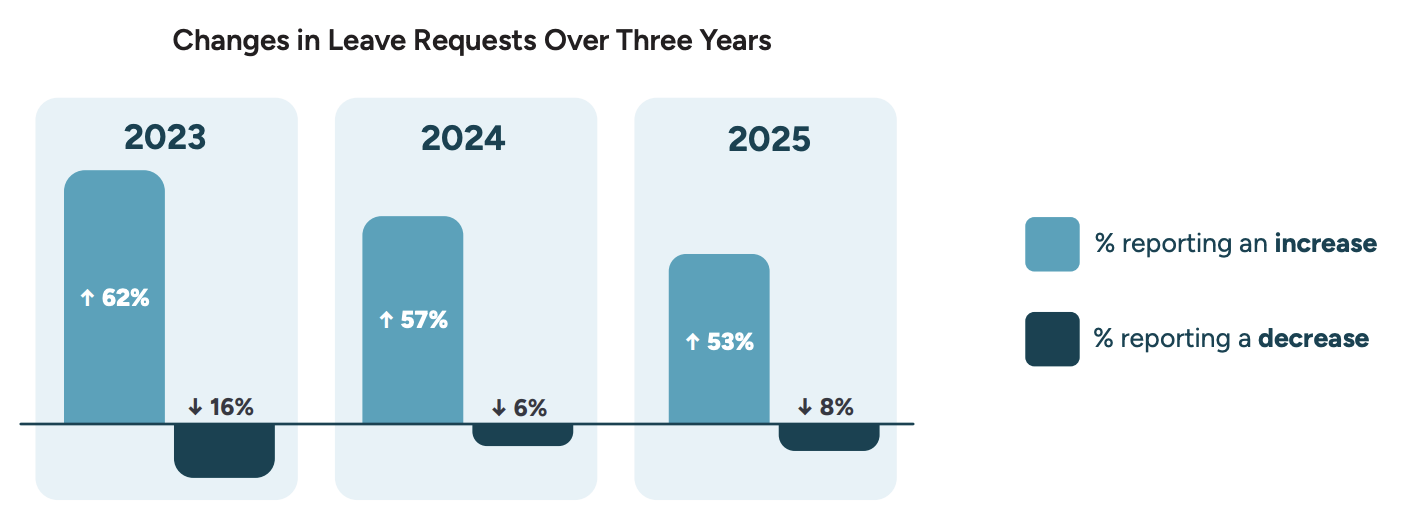
Leave management cannot remain as a "compliance checkbox" in 2026, a new report has warned, as new findings indicate a surge in leave cases over the past three years.
Data from a new AbsenceSoft study revealed that the average cumulative growth in leave volume might be more than 120% following consecutive increases in leave requests since 2023.
The surge comes despite growing compliance risks and HR teams not having the budget or enough headcount to support this growth, according to the findings.
"That means many HR teams could be handling twice as many leave cases as they were just three years ago. And they're doing it with the same or fewer resources," the report read.
Common leave requests
Recovery from illness or injury has emerged as the most common reason for taking leave, as cited by 51% of the report's 600 respondents in the HR field.
This is followed by the death of a loved one (44%) and bonding with a new child (36%).
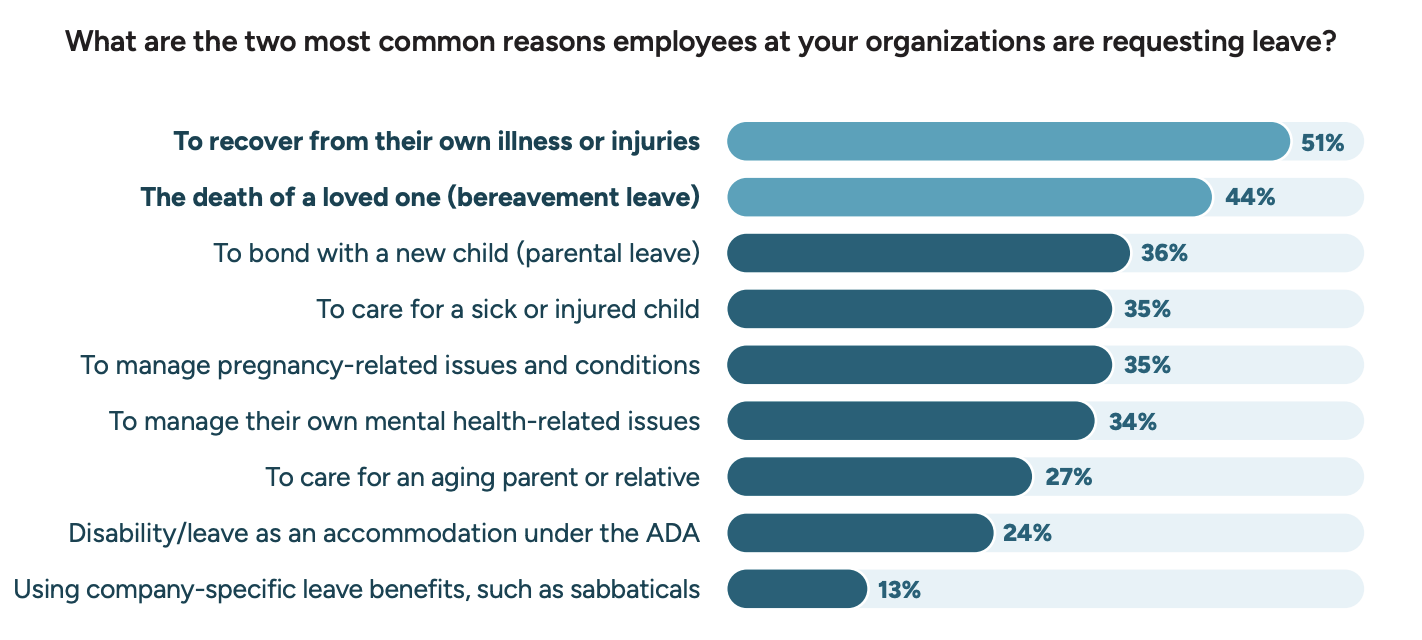
Mental health, which was previously the most common reason, declined from 55% in 2023 to 34% in 2025.
It remains, however, the top reason why Gen Z employees are taking leave days (24%).
Gen X employees are driven by caregiving (23%) and medical procedures (23%). On the other hand, Boomers request leave for recovery from physical illness (31%) and family caregiving (27%).
The diversity in reasons for taking leave highlights the varying needs of today's workforce, according to the report.
"This growing workforce diversity, highlights the need for flexible, responsive leave programmes that address the full range of employee life experiences, not just medical events," the report read.
Leave management challenge
But with the growth of leave requests, and their diversifying nature, leaves HR leaders with the challenge of managing them.
More than a third of HR leaders surveyed said managing intermittent leave and reduced schedules (38%) and tracking and reporting leave usage and data (35%) are among their biggest challenges in managing leave.
Nearly a third of them also said it was a challenge to:
- Deliver an overall positive employee experience (32%)
- Know how much to communicate with employees on leave (32%)
- Accurately calculate employee pay during leave (32%)
- Calculate eligibility for leave entitlements (31%)
More than 40% of employers also noted they are still relying on a manual approach to leave management with spreadsheets, emails, and reminders.
The report warned that the current landscape underscores the need for employers to modernise their leave management approach.
"In 2026, leave management cannot be left as a compliance checkbox," the report read. "Experiences during these work-life transitions play a direct role in employee trust, retention, and operational success."
The majority of organisations (60%) said they are planning to invest more resources in leave management next year, according to the report.
In fact, 38% said they already have leave management software with compliance tools, and 45% noted that AI already plays a role in their leave process.
Seth Turner, AbsenceSoft's Founder and Senior Advisor, stressed that HR teams need better tools to catch up with the shifting leave landscape at work.
"Every generation in today's workforce is taking leave, and they are doing it through some of the hardest moments of their lives. When the process fails them, the consequences are real. Compliance violations, lost trust, and employees who don't come back are not edge cases," Turner said in a statement.
"HR teams deserve better tools, and employees deserve better outcomes."