New report reveals elevated leave periods and impact of employee assistance benefits

Employees taking days off for mental health have surged by 300%, according to a new report, which revealed the pandemic's impact on leaves of absence in the workplace.
New data released by ComPsych revealed that overall leaves of absence rose by 30% between 2019 and 2024.
Specifically, employees taking mental health leave days surged by 300% - up from two per cent in 2019 to eight per cent in 2024.
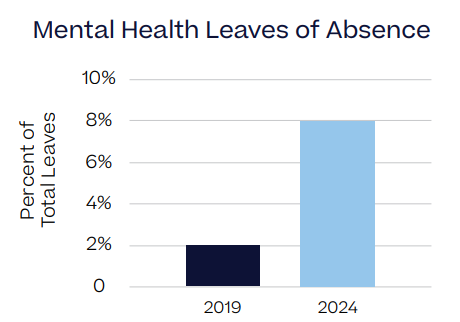
"The pandemic fundamentally reset norms in absence management for employers," said ComPsych CEO Paul Posey in a statement.
"In the 'new normal,' we're seeing elevated levels of leave across the board, and especially for mental health. This means employers need to reevaluate both their approach to absence management and overall employee well-being to foster workforces that thrive."
Increased mental health awareness
The findings come as awareness and demand for mental health benefits shot up during the pandemic, as employees struggled in isolation and uncertainty.
Data from Jobseeker last year revealed that 77% of employees now view mental health support, such as paid time off and wellness programmes, as essential components of job satisfaction.
The amplified demand for mental health benefits prompted a widespread response across organisations, with a Mercer report in late 2023 showing that 94% of large employers in the US have strengthened their coverage for mental health care in the last three years.
These employers also increased support or implemented new programmes or systems to help employees, according to the Mercer report.
How benefits help during leave days
According to ComPsych, having employee assistance benefits can ultimately reduce the length of leave days for employees.
"Employees who leverage their available employee assistance benefits are back to work six days sooner than those who don't," the report stated.
This is also the case for employees who take leave for mental health reasons, as leave lengths increased 12% overall for an employee who did not use available mental health services.
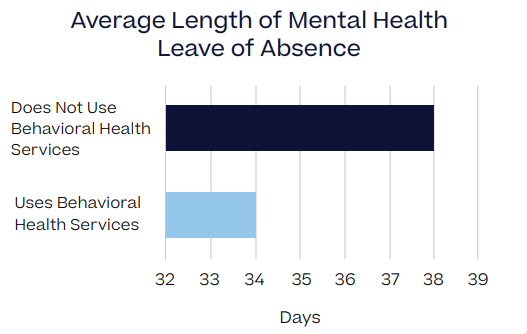
The trend extends beyond employees taking mental health leave, as it is also observed among those on leave for surgeries, according to the report.
Notably, it found that employees on leave due to pregnancy who do not engage with behavioural health services have leave periods that are 15% longer than those who utilise these offerings.
"Ultimately, the data consistently shows that regardless of the type of leave, engaging in behavioural health services shortened the duration of the leave, helping to get people back to work faster," the report stated.
Dr. Jennifer Birdsall, Chief Clinical Officer at ComPsych, said the findings are "encouraging."
"It's especially encouraging to see this remains true regardless of the leave reason – mental health, physical, parental – as it demonstrates investing in well-being is beneficial across diverse employee populations and life events," Birdsall said.