New findings show HR job functions have fastest AI growth

Job postings for HR roles that require artificial intelligence skills had a 66% growth rate as of 2024, as the growth in generative AI roles across non-tech industries has jumped a staggering 800% rise since 2022.
HR job functions had the fastest AI growth, despite only two per cent of HR job postings requiring AI skills, according to the latest report from labour market intelligence firm Lightcast.
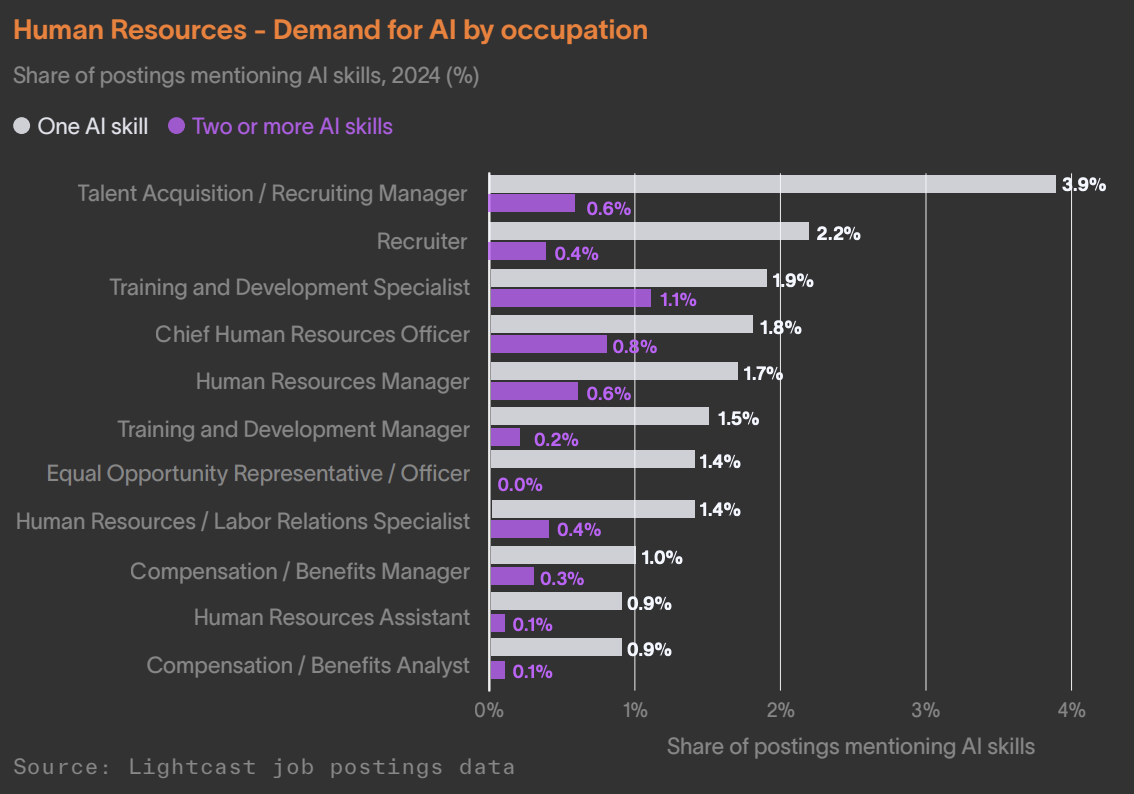
Its growth is driven primarily by frontline roles rather than management positions.
"Unlike other functions where AI adoption flows from leadership down (with high demand for managers and lower demand for less-senior workers), HR's transformation is more balanced," the report read.
"AI demand is concentrated in operational roles like recruiting and training, requiring immediate capability building at the practitioner level."
Talent Acquisition and Recruiting Managers lead AI adoption in the HR field, as 3.9% of related job postings require one AI skill.
"Traditional HR support roles like compensation analysts and HR assistants show minimal AI requirements, indicating selective rather than universal automation," the report read.
In-demand AI skills in HR
AI skills that cover the development of algorithms and models that enable machines to perform tasks are the most-requested skills in the HR sector.
"HR professionals use AI to automate resume screening, conduct initial candidate assessments, and provide employee self-service support through chatbots," the report read.
Machine Learning, a subset of AI, is also in demand in HR for its capability to make predictive analytics for employee retention, identify high-potential candidates, and optimise compensation benchmarking.
Generative AI skills are also in demand, according to the report. HR professionals use them to create job descriptions, develop training materials, and draft personalised employee communications at scale.
Other in-demand AI skills in HR include text retrieval systems and predictive modelling.
Disruption in HR
According to the report, core HR skills such as talent management, talent acquisition, and workforce planning have medium or low exposure to AI because they require significant human input.
On the other hand, operational and analytical skills are highly exposed to AI. People Analytics and Performance Management skills are leading the AI transformation.
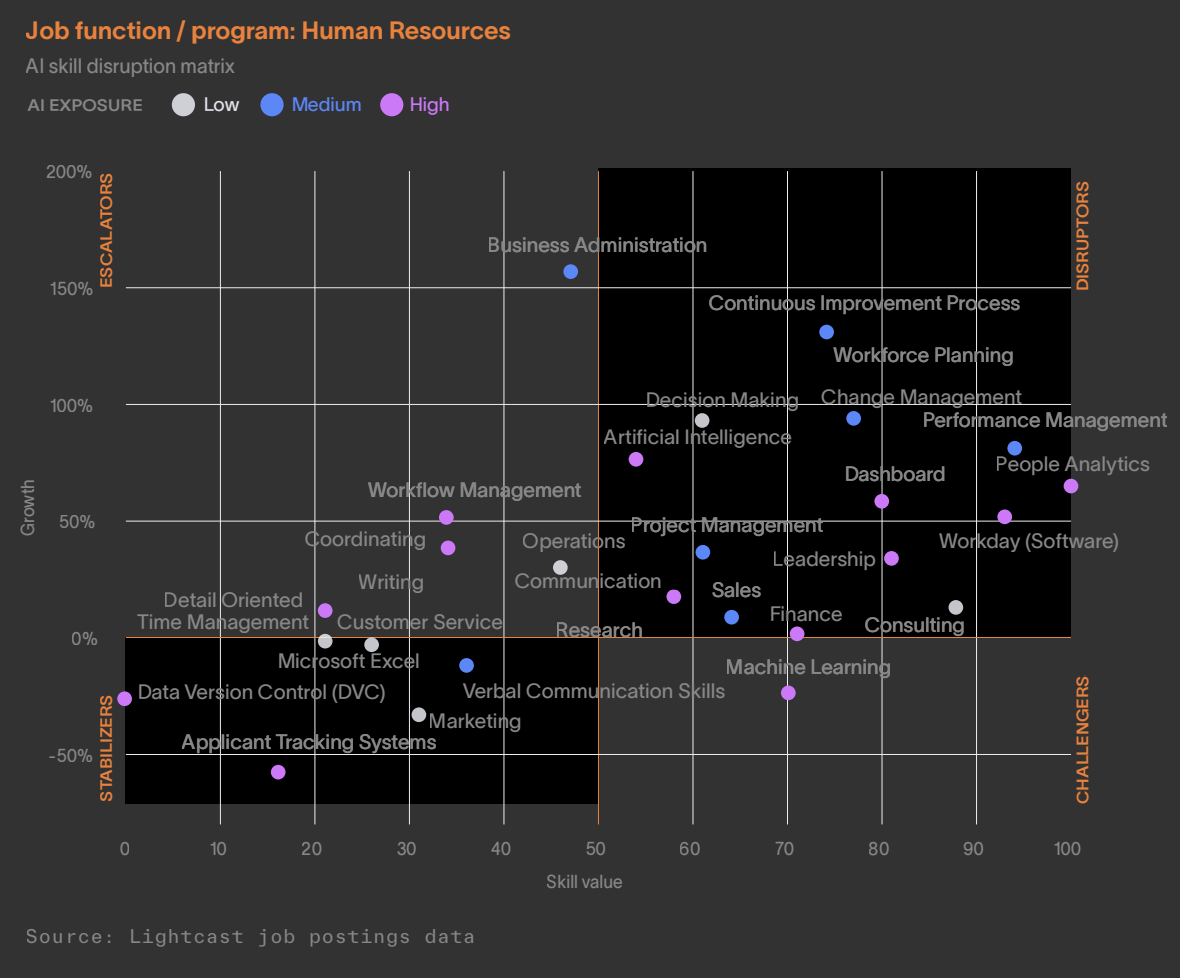
"This data indicates HR programmes should prioritise AI training for recruiting and L&D specialisations while maintaining human-centred approaches for strategic HR roles," the report read.
"Programmes should emphasise the integration of AI tools with relationship management and strategic thinking rather than treating AI as a separate technical competency."
According to the report, HR's bottom-up AI adoption pattern reverses traditional change management approaches, prompting organisations to train practitioners first before executives.
"Companies that recognise this operational-first adoption pattern can build AI capability where it creates immediate value rather than where hierarchy suggests it should start," the report read.
Staggering AI adoption
HR's fast adoption of AI skills comes as the report found that job postings mentioning generative AI skills specifically are up 800% outside IT and Computer Science sectors.
"The data presents a clear conclusion: AI has expanded beyond the tech industry, and shows no sign of reversing course," the report read.
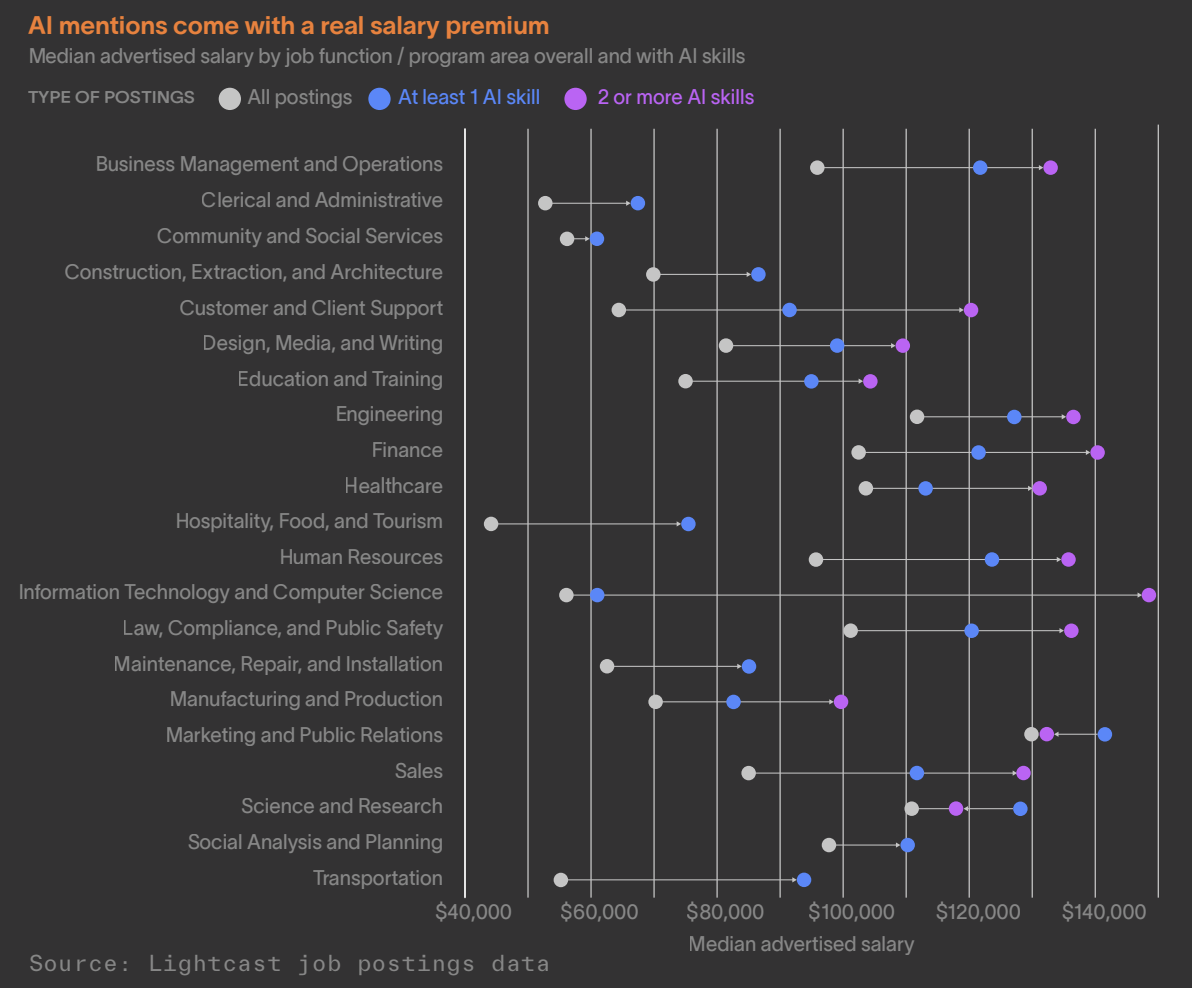
Additionally, salaries for job postings that mention AI skills are also 28% higher than postings that do not, representing roughly $18,000 more per year.
Cole Napper, VP of Research and Insights at Lightcast, said the findings underscore the growing value placed on AI roles.
"Companies that continue treating AI as a niche technical skill will find themselves competing for talent with organizations that have embedded AI literacy across their entire workforce," Napper said in a statement.