The converging of functions will create new opportunity and challenge
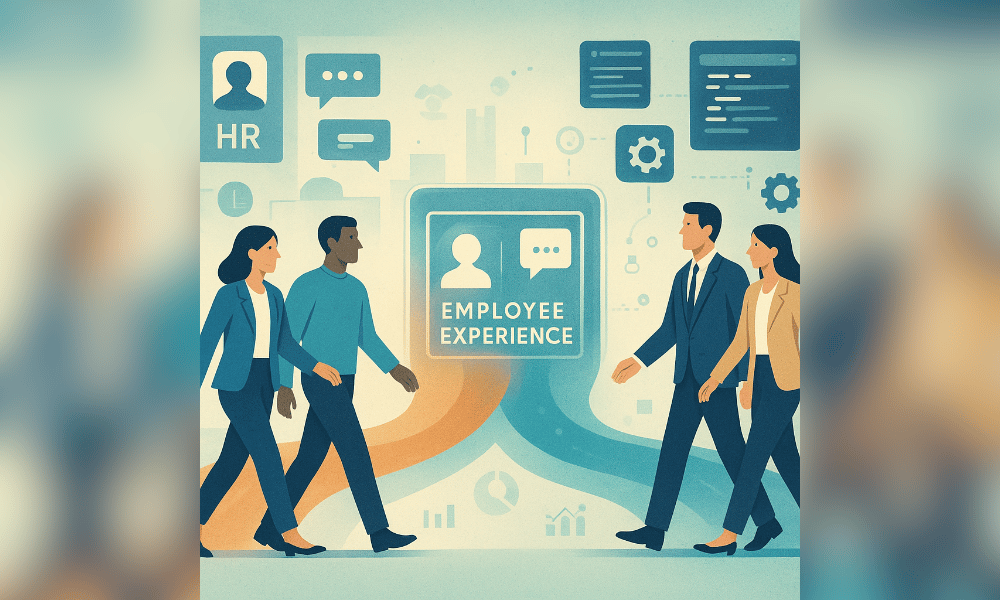
As AI, automation and digital workflows rapidly reshape how work gets done, a quiet but profound structural shift is underway inside many organisations: HR and IT are starting to operate as a single, integrated function.
For Cyril Boisard, director of people and organisational development at Workleap, that convergence is no longer theoretical. IT now reports into HR at the employee experience platform provider – a move he says reflects a broader reality across modern workplaces.
“Over the past few years, HR and IT have been moving steadily closer,” he said.
“As AI, automation, and digital workflows become part of everyday work, organisations have realized they need clear ownership of the end-to-end employee experience.”
According to Boisard, what began as experimentation is now hardening into an operating model where accountability is shared.
“When HR and IT are aligned – both structurally and operationally – you remove a lot of the friction created by siloed decisions and competing priorities.”
At Workleap, the decision to have IT report into HR was deliberate: technology is now inseparable from how people work, learn, adapt and stay engaged.
If HR owns the people strategy but not the systems that shape daily work, Boisard argues, it’s operating with one hand tied behind its back.
“More broadly, organisations that break down these silos are seeing better adoption of people technology and far more seamless employee experiences,” he said.
“HR brings the human and organisational context; IT brings technical rigor, feasibility, and governance. When both functions co-own outcomes like onboarding, productivity, and tech adoption, the result is stronger than what either could achieve alone.”
From tech requester to experience owner
For HR leaders, this convergence demands a different posture.
“HR leaders need to move from being requesters of technology to owners of outcomes,” said Boisard. “That means shifting focus from tools to experiences.”
Instead of approaching IT with a list of system requirements, HR should be defining the employee journey it wants to create, and then co‑designing the tech enablement behind it.
This starts with building shared roadmaps with IT:
- Stronger data fluency, so people leaders can interpret analytics and behavioural signals
- Tighter governance, enabling HR to influence decisions with evidence and hold partners accountable to shared goals
- Earlier involvement in major technology decisions, rather than being consulted only after solutions have already been scoped
“This is as much a cultural shift as a structural one,” Boisard explained.
“HR must start thinking like product owners of work experiences, while tech partners need to think more like organisational designers. The leaders who navigate this best are the ones willing to rethink roles, metrics, and governance models together rather than protecting traditional boundaries.”
The new tech savviness: orchestration, not coding
If HR and IT are converging, does that mean tomorrow’s CHRO needs to be a technologist?
“Absolutely – with an important nuance,” said Boisard. “HR leaders don’t need to code, but they do need to orchestrate.”
In his view, the HR leader of the future will be defined less by deep expertise in any single HR discipline, and more by the ability to connect people, process and technology into a coherent system.
That means being able to ask sharp questions about data, AI and automation, interpret dashboards, analytics and behavioural signals in a business context, and design processes where humans and systems complement each other rather than compete
A more central – and visible – HR function
Some HR leaders worry that as technology plays a bigger role in employee experience, the “human” element could be pushed to the sidelines. Boisard believes the opposite is happening.
“In the past, technology sat on one side and people on the other. HR owned people, IT owned tech. That separation no longer holds. Today, employees experience work largely through technology, and HR is increasingly accountable for that experience.”
From how a new starter is onboarded, to how managers give feedback, to how performance is measured and careers are developed – almost every touchpoint is now mediated by a system or platform.
If those experiences are clunky, inconsistent or poorly adopted, HR is the function that will feel the consequences most acutely in engagement, retention and productivity.
For HR leaders looking to get ahead of this convergence, Boisard’s advice is to start acting like that integrated function today, regardless of the current org chart.
That means:
- Partnering with IT on a shared employee‑experience roadmap
- Building data literacy and governance within the HR team
- Insisting on early involvement in technology decisions that affect people
- Framing HR initiatives in terms of system‑level outcomes: productivity, adoption, adaptability and employee experience
In a world where work is increasingly experienced through digital interfaces, the HR leader who can orchestrate across people and technology will not just have a seat at the table – they will help design the table itself.