As the world’s largest remote company, it needs to think outside the box to maintain culture
When you’re fully remote, in hypergrowth, and employing 7,000 people across 120 countries, you can’t simply copy and paste a traditional HR playbook.
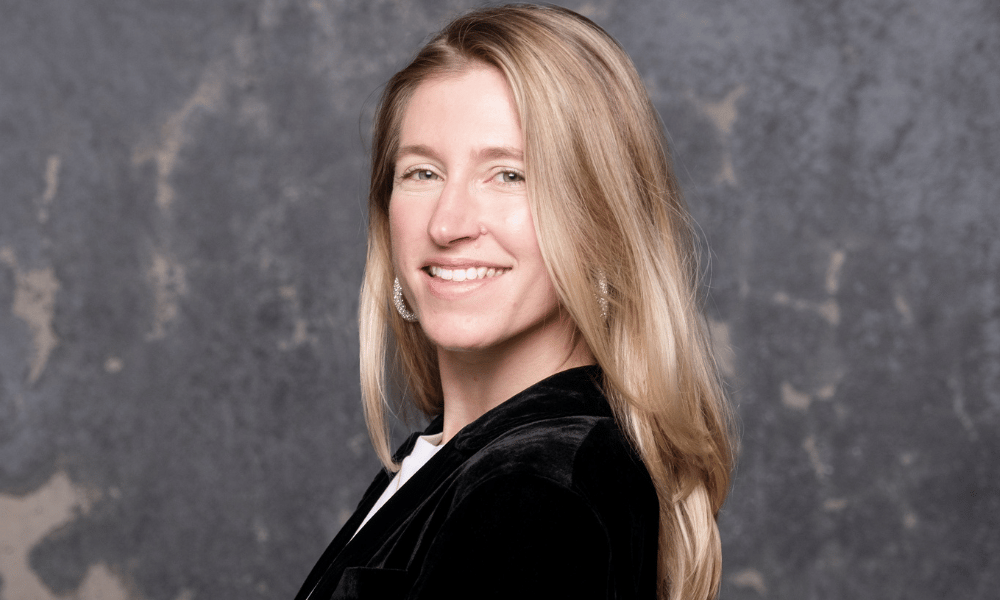
For Deel’s director of people success, Alice Burks, keeping culture and engagement high across a truly global workforce starts with re‑engineering the entire employee journey.
In conversation with HRD, Burks noted that this less traditional approach to culture begins from day zero, not day one, and as with all companies, must be promoted from the onboarding phase.
In a fully remote, global business, you can’t rely on “in‑person charisma” to win people over on their first day. There’s no reception, no office tour, and no coffee run.
Deel also onboards around 300 new hires a week, spread across 120 countries, which makes traditional, office‑based welcome rituals impossible.
Instead, Burks says the team have rebuilt onboarding almost from scratch.
Culture starts from the moment an offer is accepted. New hires receive e‑learning modules, video content, and leadership messages that explain Deel’s origin story, its mission and its values.
Playful assets are used to help people understand the remote reality. One example: an onboarding “joke playbook” that swaps classic office instructions (“go to IT on the second floor”) with remote equivalents (“head to the Ask‑IT Slack channel”).
The aim is to generate excitement while making it crystal clear how work actually gets done in a fully remote environment.
Make values real in hiring and onboarding
For Deel, culture and values aren’t posters on a wall – they’re intentionally woven into assessment and onboarding.
Every candidate goes through a dedicated culture interview where the only focus is how well they align with Deel’s values and how they deliver work in line with those expectations.
Those same values are then repeatedly reinforced in onboarding. There are live sessions for new hires focus on the founding story and values and leaders are spotlighted to talk about what those values look like in day‑to‑day decisions.
This creates consistency between what candidates are promised during recruitment and what they experience once they join.
A major value at the company is “together everywhere”.
In new‑hire sessions, time is carved out for people to talk with one another rather than just listen to presentations. A typical cohort might include people dialling in from all corners of the world in the same call, each sharing why they joined and what excites them.
That intentional exposure to global peers early on makes the “truly global” nature of the workforce something to be celebrated, not simply tolerated.
On top of that, as global teams get stuck into end of year celebrations, Deel has to get innovative.
Rather than flying 7,000 employees to one giant offsite event, Deel leans into smaller‑scale, high‑touch initiatives that still bring people together.
There is a personal travel budget that allows employees to visit and work with a colleague in another location – with the requirement that you actually meet someone else from Deel. There are also “Deel dinners” that fund in‑person meetups in local hubs.
At the end of each year, Deel also runs a global all‑hands “roll‑up” session. One of the most popular elements is a “work from anywhere” photo competition, where employees share their weirdest or most striking work locations. This is a simple way to reinforce both flexibility and a sense of shared community.
Rethinking communication: Slack as “the office”
Having employees spread across multiple countries means countless time zones. The assumption that a whole team can regularly meet live just doesn’t hold. Deel has leaned fully into asynchronous working models.
Slack is treated explicitly as “the office.” Most work, collaboration, and feedback happens on the program.
Voice notes, extensive written updates, and frequent huddles replace many traditional meetings. The quick and informal “are you free to jump on?” huddles help unblock issues without waiting days for a calendar slot that suits everyone.
This approach inevitably breaks some conventional people‑management “best practices” (such as always delivering feedback face‑to‑face in a scheduled meeting), but Burks argues that clinging to the old rules simply doesn’t work in a global, remote context. The priority is speed, clarity, and progress.
As Deel has scaled rapidly, one challenge has been avoiding accidental silos. In a fully remote business, you can’t rely on overheard conversations, corridor updates or lunchroom catch‑ups to share information.
Deel recently appointed its first internal communications manager – a move Burks describes as a real unlock:
This has resulted in company‑wide and product all‑hands have been sharpened and made more consistent.
It’s still early days, but the investment recognises that clear, intentional communication is one of the main ways culture is experienced in a remote‑first organisation.
Flexibility as an inclusion strategy
Remote work at global scale creates a 24‑hour operating environment. For senior leaders, there’s an element of “always on” – not in the sense of working around the clock, but in understanding that the business can’t grind to a halt every time one region logs off.
At the same time, Deel is explicit that flexibility should not translate into 24‑hour workdays. The focus is on output and impact, not presence.
Burks highlighted that flexible hours are as much an inclusion issue as they are a lifestyle perk. Many members of her own team are working parents or have caring responsibilities.
For them, being able to design their day can make life “10% more straightforward”.
Performance is judged on delivery and outcomes, not on whether someone is at a desk from 9 to 5 and flexibility supports people who might otherwise struggle with rigid return‑to‑office mandates – especially carers and parents.
Burks believes organisations often underestimate the downstream cost of strict office requirements on those with responsibilities outside work. In a tight global talent market, policies that respect life commitments can be a significant differentiator.
The next frontier of global culture
Deel is still on the journey. Burks is candid that the organisation remains in hypergrowth and is only at the start of building a truly mature internal communications and culture infrastructure.
But the emerging blueprint is clear. The company is designing every stage of the employee journey for remote‑first, global realities.
The “together everywhere” philosophy is helping to keep culture, engagement, and flexibility high across a global, remote workforce.
It isn’t about recreating the office online – it’s about building something genuinely different.