In a world where AI is no longer optional for HR, leaders who avoid the tech or drown in too many tools risk falling behind
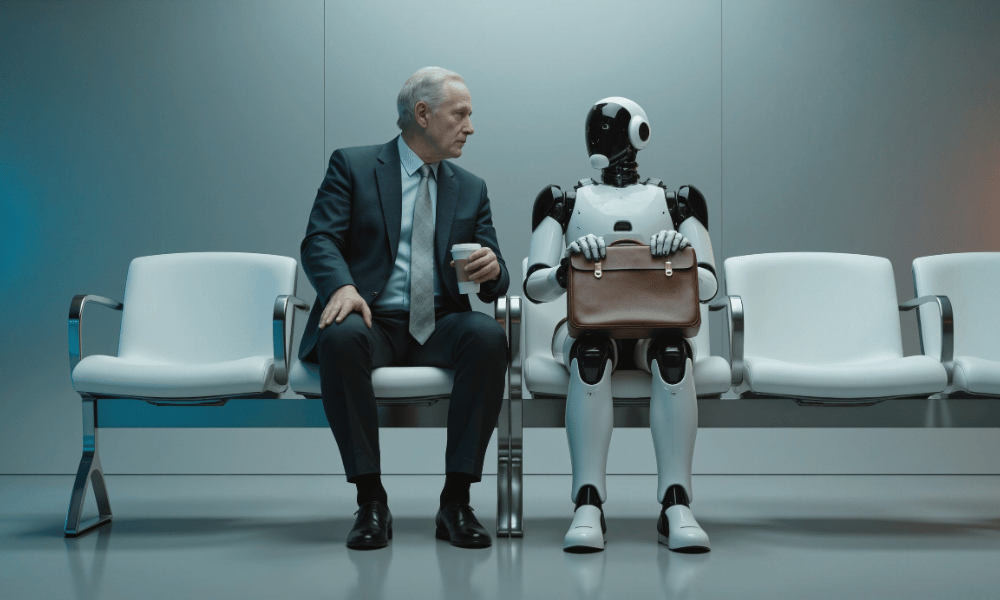
In 2026, senior HR leaders no longer have the luxury of sitting out the AI revolution. The question is no longer if AI belongs in HR – it’s how you deploy it without drowning in tools on one side or falling dangerously behind on the other.
That tension is playing out in real time, according to executive coach and leadership specialist Jade Green and Anna Volkova, head of people and culture APJ at HR tech company HiBob.
Three camps of AI adoption – and only one is future‑proof
Green says she’s now seeing organisations split into three distinct camps when it comes to AI:
-
Those paralysed and “don’t know where to start”.
-
Those that have gone “way too into it”, “dipping their toe into everything” and “implementing it too fast” without clear purpose.
-
A small but growing group who are “tripling down” strategically – and they’re the ones most likely to win in 2026 and beyond.
For HR and executive leaders, Green argues the, but a ruthless look at goals and work design.
“All leaders need to be looking at the business and going, okay, what are our goals for 2026, what are the key things we need to do?” she said. From there, she recommends a task audit: who is doing what across each division, and what portion of that work can be delegated to AI.
Crucially, she pushes back on the idea that AI is simply about cutting headcount.
“There might be some like fat to be trimmed from it, but really, it’s about how do you enable your people to do the peopling more than the admin. So getting smarter at it… how can you really gear them up to do their best work rather than their busy work?”
The trap, she says, is believing that more tools equals more transformation.
“I don’t think more is better. I think less is more. And [you need to be] hyper specific on the tool for the task.”
The hidden cost of overindulging in AI
While some HR teams are still debating where to start, others are enthusiastically deploying AI across every process – often with unintended consequences.
Green warned that many organisations are “busy being busy” with AI: experimenting with multiple apps, platforms and copilots, convinced they are innovating, while actually adding friction and confusion.
Without proper scoping, AI rollouts risk fragmenting focus and fuelling digital noise.
Her prescription:
-
Start with clear guidelines and rules for how each tool is used.
-
Train people “in real time” with experts, not just generic online courses that are outdated by the time they launch.
-
Test rigorously before committing tools into the core tech stack.
The other risk: outsourcing thinking – and humanity – to machines
Beyond operational noise, Green is increasingly worried about leaders “advocating their thinking” to GPTs and other large language models.
“We’re seeing people advocating their thinking to GPTs and LLMs. And then they’re not able to actually back up their reasoning and their humaning,” she said
In HR, that quickly becomes a cultural and talent risk. She drew a firm line around performance conversations and feedback – in both directions.
“Yes, there’s the fluff [AI can help with], but there’s some things that you really shouldn’t be outsourcing to anybody… if you’re doing performance management… pats on the back… do it authentically, do it real.
If leaders lean too heavily on AI to do their emotional labour, Green believes top performers will quietly walk.
“If you’re just always talking to somebody else’s LLM… you glaze over. And it’s really easy to say no to a screen, it’s a lot harder to say no to a human. When it doesn’t come from the person, you just start to filter it. It doesn’t mean as much… you’re kind of like, where was the effort?”
Her message to HR and C‑suite: human‑centric leadership will become a competitive advantage in an AI-saturated market. The organisations that deliberately engineer human connection, belonging and authenticity – not just digital efficiency – will win on attraction and retention.
For laggards, 2026 is not too late – but it will be unforgiving
At the other end of the spectrum, leaders who’ve avoided AI altogether are running out of time.
“Everybody should be going, this is not going away. I can’t just put my head in the sand,” Green said
Her advice is to stop trying to master everything and instead double down on AI in your core strengths.
“If my strength is HR, or in the HR department it’s talent acquisition, then you double down on the tools that are going to make you better at talent acquisition. Not necessarily better at all of the things.”
That means defining what a successful 2026 looks like for you as a leader, identifying the skills and tools needed to become that person, and choosing a small number of AI tools that amplify your “genius”, not turn you into a generalist.
“The best time to plant a tree was 20 years ago and today,” she says. “Same with AI.”
HiBob’s approach: expectation, experimentation – and psychological safety
While Green described the pitfalls, Volkova offered a view from inside a company that has leaned into AI early – both in its HR product and in how it runs internally.
“HiBob has definitely taken a very early entry into AI, both in our product and internally,” she said. “There’s definitely an expectation that our leaders and everyone across the board is embracing it.”
Volkova recognises the same emotional responses she sees across the broader market.
“It’s a bit fight, flight or freeze, isn’t it? Because you really don’t know how much to embrace it so that you’re still being considered valuable. But at the same time, you don’t want to be left behind.”
Rather than pretending to have all the answers, HiBob is treating AI as a managed, company‑wide experiment – with clear parameters.
“We’re still figuring it out in terms of how much do we let it creep into our daily work. And for leaders, how much do we use it for coaching? And how much do we use it for drafting conversations? And where does the human element then belong?”
One of HiBob’s most interesting moves has been to use AI not just as a productivity tool, but as a mechanism for embedding leadership behaviour.
The business has built a leadership framework known as “the Code” – an easy‑to‑remember set of habits: Connect, Own, Disrupt, Evolve.
“We built it in conjunction with our C‑suite, with our current leaders, looking at where are they today and where do they need to get to as the business evolves and scales quite quickly,” Volkova explained.
What could easily have become “a guide somewhere in a PowerPoint” has instead been operationalised through AI.
“I think one of the beautiful things about AI is that it really helps us bring it to life,” she said.
HiBob has effectively turned its Code into a leadership coach inside AI – using tools like ChatGPT to create leadership prompts, coaching scenarios and development planning aligned tightly to those habits and to company values.
“The AI tools that we have, our development planning, performance planning, our leadership journeys… it acts as the foundation for everything that we do that’s leadership related,” Volkova said.
This, she argues, doesn’t replace HR or people leaders – it enhances them.
“When we are coming into the conversation with leaders from a coaching perspective, it’s not coming in completely on a blank sheet of paper. They have been able to go and use AI… to have a framework and a starting point. And then you can steer them in the right direction, overlay the human, overlay their personality. It really accelerates the quality of the conversation.”
Making AI part of culture – not just another tool
HiBob’s AI strategy goes far beyond turning on ChatGPT licences. The company has been deliberate about three things: clarity, capability and community.
Perhaps the clearest signal of where HiBob believes HR is heading is the decision to bake AI usage into performance reviews.
“For this year, for example… the use of AI and how they’re embracing it is included in our performance reviews,” Volkova said.
This isn’t, she stresses, a pass–fail metric or a blunt compliance box. Instead, it’s about assessing questions like how much employees integrate AI into their role, hiow they use it to be more creative and productive, and how they share knowledge cross-functionally.
Volkova is clear‑eyed about the fear employees feel – and rejects the idea that HR should simply tell people not to worry.
“Acknowledging the fear and acknowledging that it’s real – if you don’t upskill, if you don’t start to utilise the tools… then you will fall behind,” she said.
HiBob’s approach is to confront that reality head‑on, while at the same time providing accessible tools and training, normalising AI usage through rituals like AI Day and departmental champions, embedding AI expectations in performance in a way that’s developmental, and keeping the conversation going about long‑term questions – particularly for early‑career employees who have “only ever known” work with AI.
“We still need to think about how it impacts earlier entrance into careers,” she said. “Some of that experiential learning that you need to go through, that AI can’t necessarily provide.”
For HR leaders, that means being candid: AI will reshape roles and expectations, but it can also augment careers when used to free up time for higher‑value work, creativity and connection.
The 2026 mandate for HR leaders
Taken together, Green’s and Volkova’s perspectives point to a clear 2026 mandate for senior HR and people leaders.
AI is no longer optional; avoiding it is a fast track to irrelevance. But overindulgence is just as risky, as a bloated, ungoverned AI stack can erode productivity, fragment culture and dehumanise core people processes.
The answer is strategic focus: start with goals, tasks and strengths, choose a small number of high‑impact tools, and be clear on the job each one is there to do.
In a world where AI can generate endless content and responses, human connection becomes the real differentiator, and organisations that protect and amplify genuine interaction – especially in performance, coaching and recognition – will stand out.
To make this work, culture and capability must move together, with HR leaders pairing clear expectations and measurement with psychological safety, training and visible role‑modelling from leaders.
As Volkova puts it, everyone is still “on the journey” – even the early adopters.