New report finds nearly half of employees uncomfortable seeking help

Nearly half of employees in Australia would not feel comfortable talking about substance use or addiction with their manager, according to a new report from TELUS Health.
Its latest Mental Health Index showed that only 31% of Australian workers would feel comfortable telling their manager if they were struggling with substance use or abuse.
A larger 45% said they would not feel comfortable talking about it, while 24% said they were unsure.
This means more than two in three (69%) Australian workers are unsure or not comfortable talking about struggling with substance use or abuse.
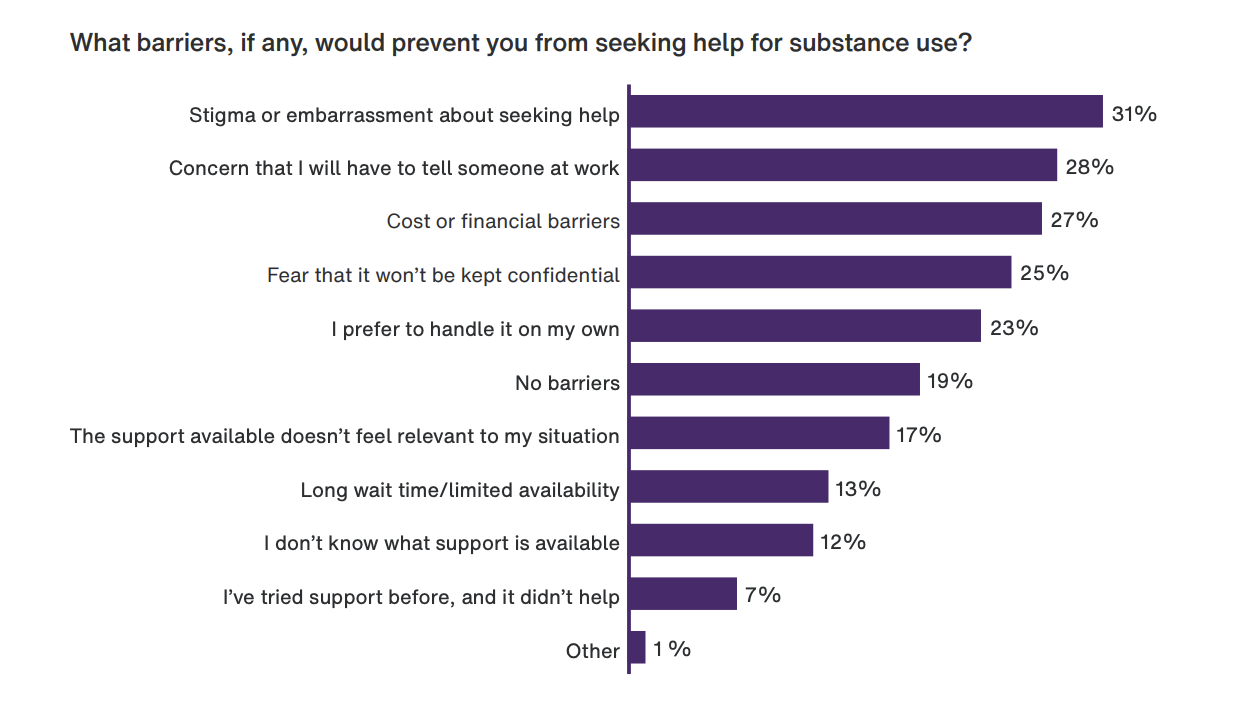
According to the report, the stigma or embarrassment about seeking help is the top factor preventing employees from getting help for substance abuse.
More than a quarter of employees also said they are concerned about the cost or financial burden of seeking help (27%), and that seeking help means they will have to tell someone at work (28%).
Substance use at work
The findings come after recent data showing that cocaine detection in workplace drug tests continued to increase in the third quarter of 2026.
Data from The Drug Detection Agency (TDDA) found that cocaine accounted for 9.2% of all positive drug tests at work in the third quarter, up 7.4% year-on-year, and up from 8.00% in the second quarter.
The data forms part of an increase in overall drug detection in workplace tests in the third quarter, with amphetamine-type stimulants remaining the most detected drugs in tests.
TELUS Health's findings offer a snapshot from the workforce's perspective, with only one per cent of employees confessing that they used drugs, such as cocaine and heroin, in a way that felt difficult to control or that they were concerned about.
Alcohol, meanwhile, was the most-cited item (15%) used by employees in a way that felt difficult to control in the past 12 months. Other items cited are:
- Tobacco or nicotine products (9%)
- Prescription medications (opioids, sedatives, stimulants) not as prescribed (7%)
- Recreational cannabis or marijuana (4%)
Among employees who reported difficulty with substance abuse, 22% said it negatively impacted the quality or accuracy of their output.
One in five employees said it affected their work attendance, while others said it made it difficult to meet deadlines (17%) and concentrate at work (17%).
Another 17% said it impacted their relationships with colleagues or supervisors, and eight per cent said it affected safety procedures at work.