The court called the safety system "informal and undocumented" — the fix cost just $517
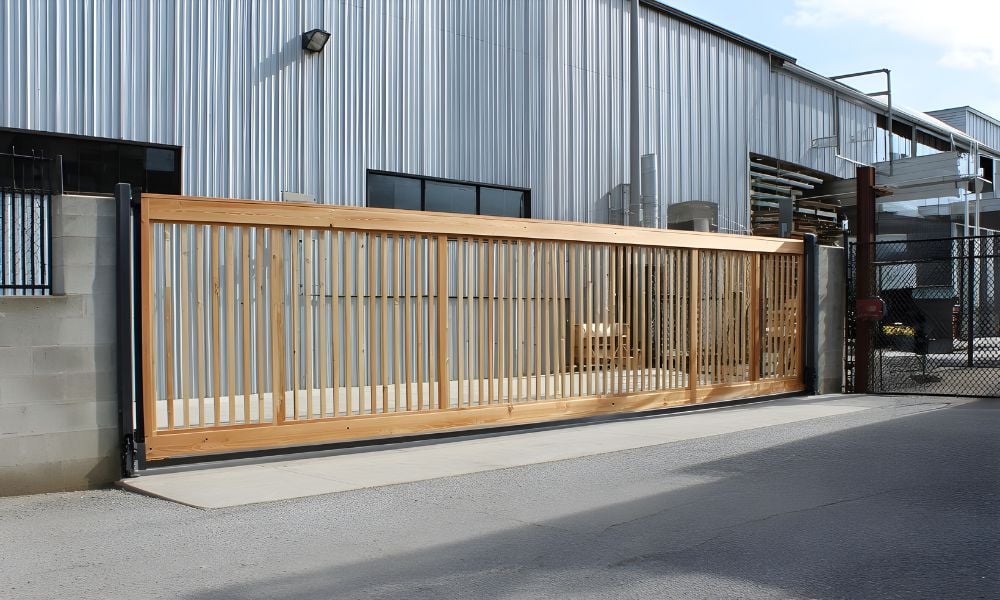
An employer allowed workers to manually operate 800-kilogram industrial gates for nearly two years without a documented safety system — until one fell on a worker.
The NSW District Court handed down findings on 8 April 2026 in SafeWork NSW v SMB Australia Car Transport Employment Pty Ltd; SafeWork NSW v SMB Australia Car Transport Pty Ltd; SafeWork NSW v Mytkowski [2026] NSWDC 90, a workplace safety prosecution that turned on failures most HR professionals would recognise: no written procedures, no adequate risk assessment, and no follow-through on repairs.
The facts were largely agreed. SMB Australia Car Transport Employment Pty Ltd employed about 11 workers at a vehicle storage yard in Seven Hills, western Sydney. The yard was operated by a related company, SMB Australia Car Transport Pty Ltd. Both entities were run by sole director Andrew Mytkowski.
In June 2020, a truck reversed into the site's southern sliding gate and knocked out the powered gate system. Each gate was approximately 11 metres long, nearly two metres high, and weighed approximately 800 kilograms. From that point on, workers opened and closed the gates by hand.
What followed was what the court described as an "informal and undocumented" system of work. No adequate risk assessment was done. No competent person was called in to assess the safety of manual operation. No safe work method statement was written. Workers were given verbal instructions only. Nothing was recorded.
On 24 March 2022, allocator Christopher Brajbisz was closing the northern gate alone early in the morning when its end stop failed. The gate overran its vertical supports and came down on top of him, pinning him against the concrete driveway for about three minutes. He suffered a fractured pelvis, an interior bladder wall injury, and rib and vertebrae fractures. He was 53 years old at the time.
All three defendants pleaded guilty. SMB Employment was charged with failing its primary duty of care to workers. SMB Transport was charged with failing to ensure its fixtures and plant were safe. Mytkowski, as an officer of both companies, was charged with failing to exercise due diligence. The court found the breaches established and made detailed findings of fact. Sentencing is set for 12 August 2026.
What stands out is how little it would have cost to prevent the incident. After the gate fell, additional end stops were welded on for $517. The powered system was fully restored for $6,985. A documented monthly inspection program was put in place. These were not complex or expensive measures. They simply had not been done.
The court also noted that while COVID lockdowns made it difficult to get repair workers to the site during 2020 and much of 2021, those restrictions were lifted in October 2021. The gates remained damaged in March 2022. There was, the court found, no real evidence that efforts were made in that window to get the job done.
For HR leaders, this case is a sharp reminder. Verbal safety instructions, no matter how well-intentioned, are not enough. A system of work that exists only in people's heads is not a system at all. And when damaged equipment stays in service month after month because the repair keeps slipping down the list, the legal exposure compounds quietly until something goes wrong.
The fixes were small. The consequences were not.