Two of this year's HR Awards judges say the standout nominations will go beyond AI adoption to prove meaningful outcomes for people and map where human judgment still matters most
With the 2026 HR Awards approaching, the judges say the submissions that will stand out are not the ones doing the most with artificial intelligence (AI), they are the ones doing it most differently, with clear outcomes for people.
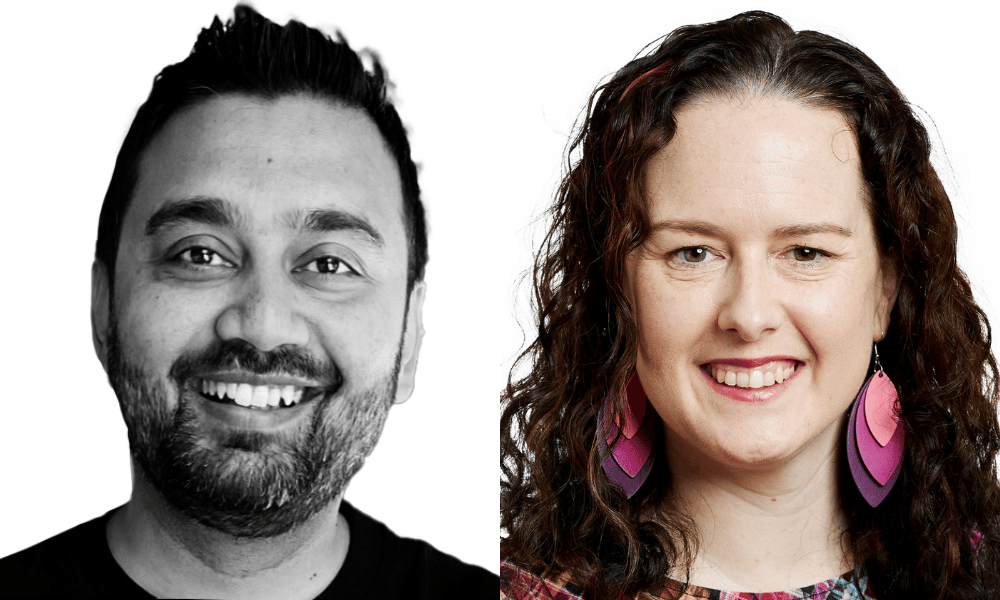
Kate Hickman, chief people officer at Infoxchange, and Pritho Saxena, HR director for Australia, China and Southeast Asia at Amazon, are both looking for nominations that go beyond implementing AI and instead demonstrate how technology is being used with a genuine human lens.
"What I would be looking for someone to stand out with is where they could be doing things differently with clearly articulated outcomes," Hickman said. "Different is what really progresses us to move forward."
Saxena put it in sharper terms: he wants to see organisations that have moved past the adoption cycle entirely.
"I'm actually looking for examples of people who have actually cut through the noise about AI and gone into actually using it for having meaningful impact," he said.
"Most of what I hear about is folks who are stuck with the adoption cycle, how many people are using tools, what are they doing with it, but not really making significant and meaningful change in the way that we operate."
AI integration is the baseline, what matters is how
Artificial intelligence dominated HR conferences and summits throughout 2025 and shows no sign of easing in 2026. But both judges are clear that they are not simply looking for organisations that have adopted AI. They want to see how HR leaders have managed the human and change management aspects of that transition.
"The greatest opportunity for HR is to be partnering with the technology areas in the organisation to make sure that there is a human and people lens across AI," Hickman said.
"That's what's going to provide the greatest opportunity for return on investment value to staff and the organisation."
Saxena echoed that view but pushed further, identifying a gap in current thinking around where human decision-making remains essential.
"The other thing that's around AI is going to be where people have actually found out or developed a point of view of where human intervention is required – or will continue to require," he said.
"The focus has really been on the other side – where can tooling help? But there are aspects where human decision making, judgment, etc. can be required. And if somebody's figured that out, that's going to be a standout."
Psychosocial safety: the other defining challenge
Beyond artificial intelligence, Hickman named psychosocial safety as one of the most pressing and complex issues facing HR leaders in 2026 and the area she considers the greatest risk for organisations that do not act.
Psychosocial safety refers to the protection of workers from psychological harm arising from work design, management practices, and workplace relationships. Under the Work Health and Safety Act and its state equivalents, Australian employers have a positive duty to manage psychosocial risks.
"The growing psychosocial risks in an organisation and managing those is a constant evolution. But it's also critical. Absolutely critical,” Hickman explained.
She said flexible and remote working arrangements, which have continued to evolve since the pandemic, are increasingly intersecting with psychosocial risk from social isolation and disconnection, alongside high job demands, such as capacity and pace, and workplace relationships.
Skills, capability and the augmented workforce
Looking ahead to 2026 and beyond, Saxena sees the rethinking of durable skills and competencies as both the greatest opportunity and the greatest challenge for senior people leaders.
"I'm seeing a lot of deep subject knowledge that's being available to everybody," he said.
"The other thing I'm seeing is a flattening of the software development cycles and the taking away of the coding requirement for non-coders to develop product. Those were typically big limitations for companies to scale and to develop fast enough."
With those barriers removed, Saxena said the HR leaders who help organisations navigate which skills and competencies will remain valuable over the next five years will be providing immense strategic value.
"The folks who help navigate what sort of skills, subject matter knowledge and competencies are going to be required in the next five years – that's just going to be an immense challenge to help to overcome," he said.
On the opportunity side, Saxena is optimistic: the pace at which products reach customers and knowledge becomes accessible is set to accelerate sharply, expanding the mental capacity and output of individuals across the workforce.
"What we didn't like about our jobs, we could likely now have some tool or agent do and that'll free up a lot of time as well," he said.
Hickman reinforced this thinking from an operational perspective, particularly for organisations in the not-for-profit and community services sector where headcount growth can be constrained at times by funding and ongoing opportunities.
"Augmented workforce beyond AI is an opportunity particularly where we are in regards to managing capacity and capability in organisations," she said.
"It's a growing trend around thinking differently about the resource makeup in an organisation."
The 2026 HR Awards is fast approaching. Both judges' advice to potential entrants is consistent: show what you did differently, show the outcomes, demonstrate where human judgment shaped the result, and show how your people were at the centre of every decision.
Saxena put it simply: "Whenever I have a chat with my peers, it inspires me. And I'm looking forward to being inspired by the nominations."