
Unlawful wage deduction and a dismissal tied to a lawyer's letter — a cautionary tale for HR
A pay cut, an unlawful deduction and a sacking that followed a lawyer's letter — one small employer's missteps offer big lessons for HR.
When Michael Jeans joined OCC Management Pty Ltd in September 2020 as General Manager and Senior Portfolio Manager, the deal looked straightforward: a $170,000 annual package including superannuation, a written contract requiring any changes to be signed by both parties, and a portfolio of owners corporation properties to manage out of Melbourne.
Within a year, the arrangement began to unravel.
In September 2021, OCC Management lost a major client contract that had accounted for roughly half the company's revenue. From October that year, Jeans' pay dropped to $130,000. He said the reduction was imposed without his agreement. The company, led by sole director Qian (Michelle) Liu, said Jeans had offered to take the cut himself.
In a judgment handed down on 27 February 2026, Judge Mansini of the Federal Circuit and Family Court of Australia found the truth lay somewhere in between. Despite the contract's written-variation clause, the court held in Jeans v OCC Management Pty Ltd [2026] FedCFamC2G 262 that Jeans had effectively agreed to the lower salary through his conduct — continuing to turn up, do the work and accept the reduced pay for well over a year without formally disputing it in writing until November 2022. On that basis, the breach of contract and underpayment claims did not succeed, and neither did the employer's cross-claim seeking repayment for alleged overpayments.
But the court found OCC Management crossed the line on two fronts that matter for every HR professional reading this.
First, the company deducted $6,176.45 from Jeans' April 2023 pay to "correct" what its accountant identified as past overpayments — without obtaining his consent. The deduction was admitted as unlawful under section 323 of the Fair Work Act. The money was eventually returned with interest, but the contravention stood.
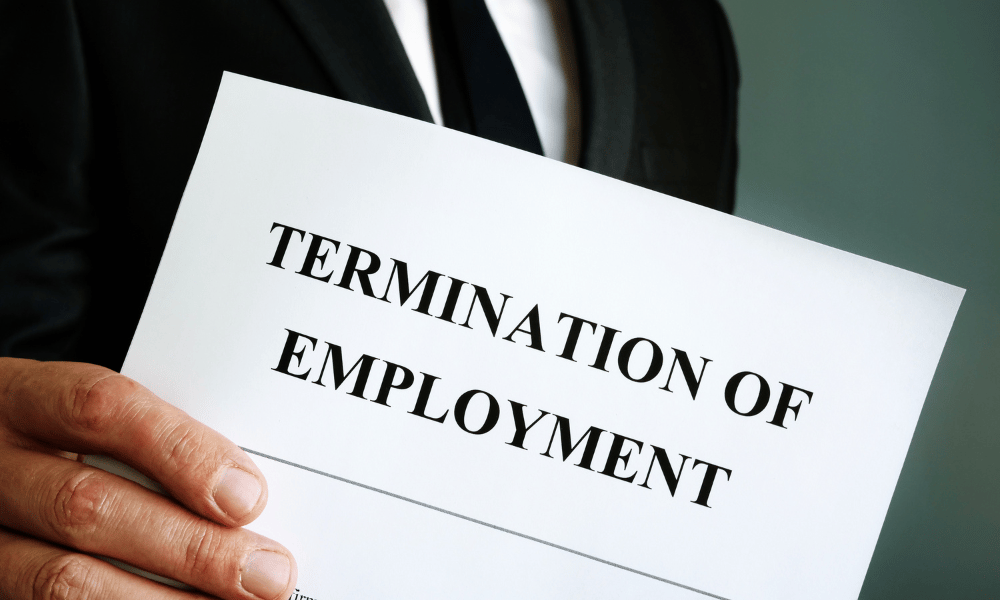
Second, and more consequentially, the court found that when OCC Management dismissed Jeans on 29 May 2023 for alleged serious misconduct, the decision was not entirely driven by the stated reason. Jeans had instructed his solicitor to send a formal demand on 4 May 2023, asserting underpayment and seeking back pay. What followed was a rapid sequence of events: the employer briefly mistook the correspondence for a resignation, cut Jeans' access to the company's property management system, then terminated him days later after he emailed clients from his personal account advising that his employment had ended.
The court accepted that contacting clients in that manner constituted serious misconduct. But Judge Mansini was not satisfied it was the only reason for the dismissal. The timing and substance of the termination letter, coming on the heels of the legal correspondence, indicated that Jeans' exercise of a workplace right — complaining about his pay through a lawyer — was also an operative factor. That contravened the general protections provisions under section 340 of the Fair Work Act.
Relief, including potential compensation and penalties, will be determined at a later hearing.
The takeaway for HR teams is not complicated, but it is easy to get wrong in practice. Accepting a pay change through conduct can override a written-variation clause. Deducting money from an employee's wages without consent remains unlawful regardless of the justification. And once an employee raises a formal complaint about entitlements, every subsequent management decision — from system access to termination — will be tested against the general protections framework and its reverse onus of proof.
Small employer, small team, but the principles run large.


