
New research from the University of Sydney shows the skills leaders need to have to operate in a changing world

AI-related skills have topped the list of "critical skills" leaders need to acquire or improve immediately for management and leadership success, according to a new report from the University of Sydney.
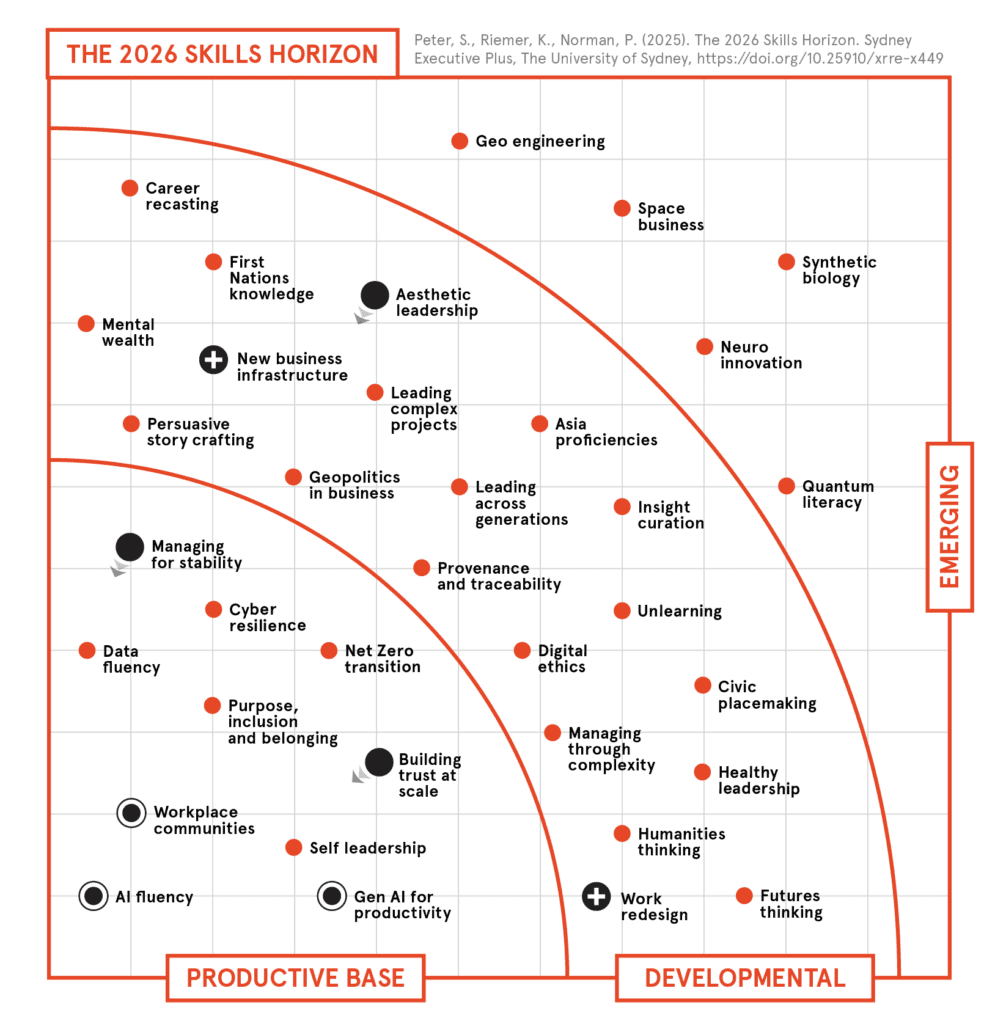
The 2026 Skills Horizon: What leaders need to know next, listed AI fluency, Gen AI for productivity and workplace communities as the skills that can help make an organisation more productive, or gain an edge on its competition.
Managing for stability and building trust at scale were identified as skills that have "suddenly become critical to success" in a world that’s "increasingly complex, uncertain, and messy", according to the report.
The most critical skills were classified under the "Productive Base," or the things that leaders need to know now.
"[These are] the critical skills that should be acquired or honed immediately; baseline capabilities you need for successful ongoing management and leadership," the report read.
"All current and emerging leaders require this essential core to operate effectively in our changing world."
The urgent skills
One of the skills in the productive base is AI fluency, which refers to leaders' ability to understand, engage with, and leverage AI technologies.
"You don't need to code, but as a leader, you need to know the technology deeply enough to make informed decisions - whether that's around the alignment of AI with strategic objectives or its impacts on work and people," the report said.
Gen AI for productivity also came up in the report as an urgent skill in the productive base, where leaders are told they need to understand how Gen AI works, its limitations, how to prompt effectively, and how it fits with their team.
"Get it wrong and productivity can go backwards," the report said. "Get it right and Gen AI will be an amplifier for both your own and your own teams' performance."
The third urgent skill in the productive base is workplace communities, where the leadership team needs to learn how to maintain a balance between flexibility and complexity.
"Your focus will need to be on facilitating workplace communities, enabled by tech, that can function regardless of how and where they work," the report read.
These three skills have also been dubbed in the report as the "amplifiers," capable of "dramatically" speeding up or enhancing other capabilities.
"They are force multipliers that can help you make your organisation more productive, take advantage of other skills, or gain an edge on your competition," the report read.
Skills shifting in importance
There are also other skills that have long been on employers' radar but are now critical amid disorienting times, according to the study.
It dubbed these skills as "movers," which have become more important in response to global trends and social change.
One of these skills is employers' ability to manage change and transformation in a way that can create calm for the team.
"It's about leadership as an anchor: establishing psychological safety that allows your team to tackle difficult work without fear of failure with the necessary transformations ahead," the report read.
The second skill is building trust at scale, which involves leaders taking an active role in strengthening the networks of trust that the industry and business can depend on.
"It requires engagement with policymakers, clear communication in messy public environments, and genuine follow-through commitments," the report read.
Leading amid disorienting times
These skills come as the report underscored that leaders need to learn and upskill in a world experiencing a period of disorientation.
"You'll need to reorient yourself and be responsive to the coming changes to understand emerging risks and make use of new opportunities," the report stated.
"You'll need to learn new skills and unlearn old ones. You'll need to craft initiatives to upskill your leadership teams."
Your teams now differ in what careers mean to them, how they relate to each other, and what they expect from their leaders. The implications are profound for how we create, let alone maintain, cohesion.


